
Introduction
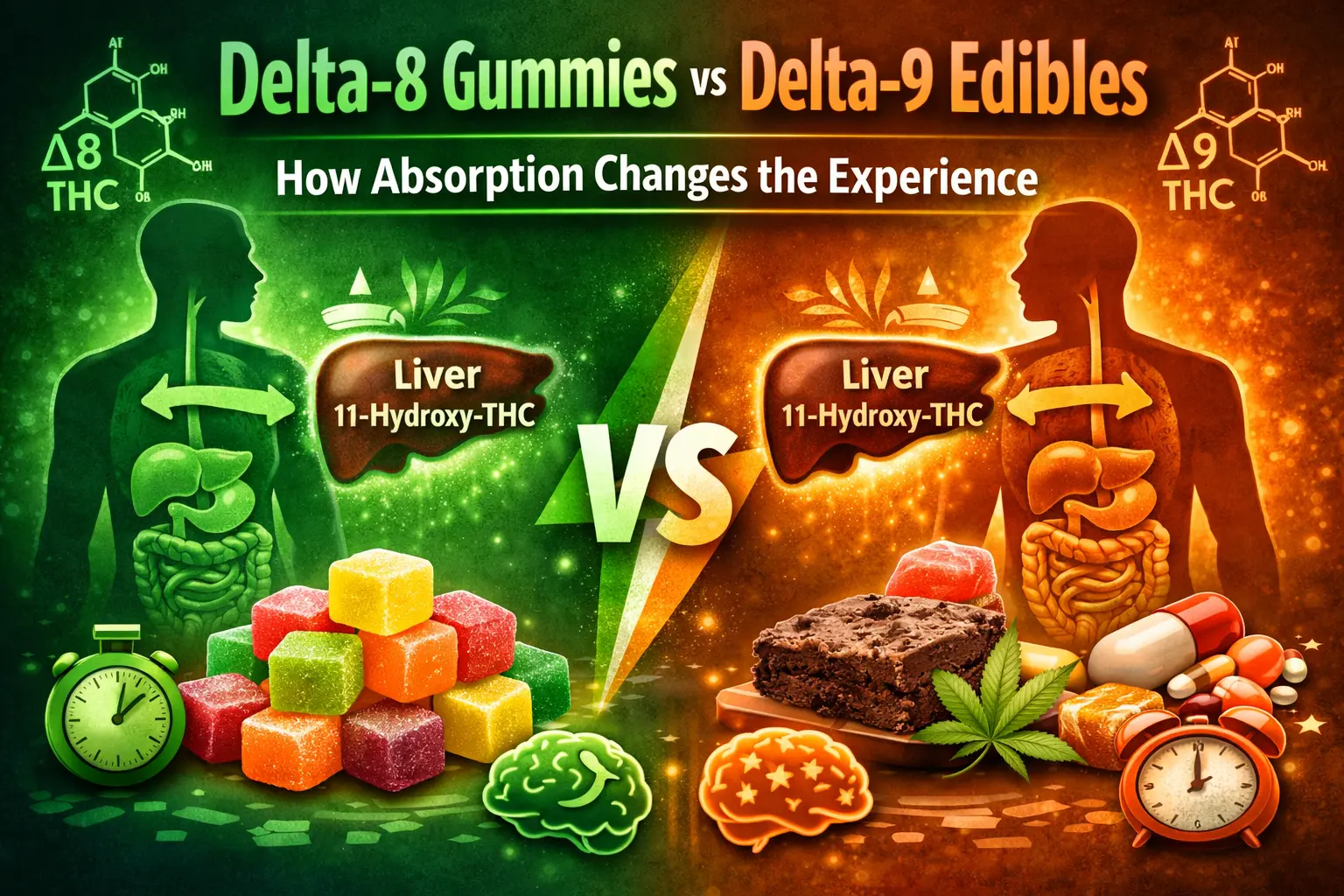
Cannabis edibles have become one of the most popular ways to enjoy cannabinoids. Among the many options available today, Delta-8 gummies and Delta-9 edibles are two of the most talked-about products. While they may look similar—often fruity gummies or sweet treats—the way your body absorbs and processes these cannabinoids can dramatically change the experience.
Understanding how absorption works in edibles is key to knowing why Delta-8 and Delta-9 feel different, how long they take to kick in, and why effects sometimes feel stronger than expected.
In this guide, we’ll explore the differences between Delta-8 gummies and Delta-9 edibles, how the body absorbs them, and how that absorption impacts the overall experience.
What Are Delta-8 and Delta-9 THC?
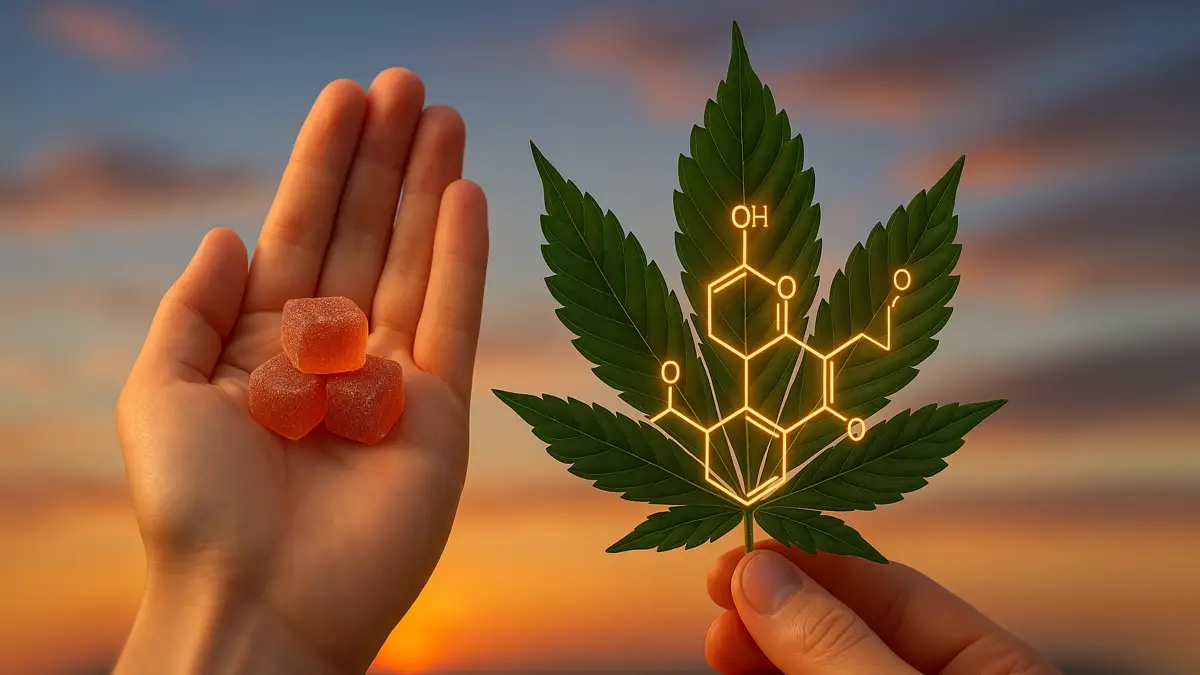
Before discussing absorption, it helps to understand what these compounds actually are.
Delta-9 THC
Delta-9 tetrahydrocannabinol (Delta-9 THC) is the primary psychoactive compound found in cannabis. It’s responsible for the classic cannabis “high,” producing effects such as euphoria, relaxation, increased appetite, and altered perception.
Delta-9 is commonly found in:
- Cannabis flower
- THC edibles
- Vape cartridges
- Oils and tinctures
Delta-8 THC
Delta-8 THC is a naturally occurring cannabinoid found in smaller amounts in cannabis plants. It has a chemical structure very similar to Delta-9 but with a slight difference in the placement of a double bond.
Because of this structural difference, Delta-8 typically produces:
- Milder psychoactive effects
- Less anxiety or paranoia for some users
- A smoother, more relaxed experience
Most Delta-8 products are made from hemp-derived cannabinoids.
Also Read : Is Delta-8 Legal in South Carolina? (2026 Guide)
Why Gummies and Edibles Work Differently Than Smoking
When people smoke or vape cannabis, cannabinoids enter the bloodstream through the lungs and reach the brain quickly. Effects can begin within minutes.
Edibles work very differently.
When you eat Delta-8 gummies or Delta-9 edibles, the cannabinoids must pass through the digestive system first. This process changes how the body absorbs THC and how strong the effects feel.
The Digestive Pathway
When you eat an edible, the process usually follows these steps:
- Digestion in the stomach
- Absorption in the small intestine
- Metabolism in the liver
- Distribution through the bloodstream
This journey can take anywhere from 30 minutes to 2 hours, depending on several factors.
But one step in particular changes the experience significantly: liver metabolism.
The Role of the Liver in THC Absorption
When THC passes through the liver, it converts into a compound called 11-hydroxy-THC.
This metabolite is important because it is:
- More potent
- Able to cross the blood-brain barrier easily
- Longer lasting
This is why edibles often feel stronger and more intense than smoking, even if the dosage seems similar.
Both Delta-8 and Delta-9 go through this process, but the resulting experience can still vary.
Delta-8 Gummies vs Delta-9 Edibles: Key Differences in Absorption
 Although Delta-8 and Delta-9 follow similar digestive pathways, their chemical differences affect how the body interacts with them.
Here are some of the main ways absorption changes the experience.
1. Potency After Digestion
One of the biggest differences between Delta-8 and Delta-9 edibles is overall strength.
Delta-9 Edibles
When Delta-9 THC is metabolized into 11-hydroxy-THC, the effects can feel significantly stronger than inhaled cannabis.
Many users report:
- Stronger psychoactive effects
- More intense euphoria
- Greater sensory changes
Because of this potency, beginners often find Delta-9 edibles overwhelming if they take too much.
Delta-8 Gummies
Delta-8 also converts into a metabolized form during digestion, but its interaction with cannabinoid receptors is less powerful than Delta-9.
This often results in:
- A milder high
- Reduced intensity
- More functional and relaxing effects
For many people, Delta-8 gummies provide a gentler edible experience.
2. Onset Time
Both Delta-8 gummies and Delta-9 edibles usually take 30–120 minutes to start working.
However, onset time can vary based on:
- Body metabolism
- Stomach contents
- Dosage
- Individual tolerance
Because Delta-8 is often consumed in slightly higher doses, some users feel its effects a bit faster or smoother, though the difference is usually minimal.
3. Duration of Effects
Edibles typically last longer than smoking or vaping.
Delta-9 Edibles Duration
Effects commonly last: 6 to 8 hours
Some people may experience lingering effects even longer, especially with high doses.
Delta-8 Gummies Duration
Delta-8 effects usually last: 4 to 6 hours
Because Delta-8 is slightly less potent, the duration may feel shorter or more manageable for some users.
4. Body vs Mental Effects
Absorption influences not just intensity but also how the effects feel.
Delta-9 Edibles
Many users describe Delta-9 edible experiences as:
- Strong cerebral high
- Heightened senses
- Intense relaxation
- Possible anxiety in high doses
Delta-8 Gummies
Delta-8 edibles often feel:
- Calmer and smoother
- More body relaxation
- Less mental overstimulation
Because of these differences, people sometimes choose Delta-8 gummies for relaxation without overwhelming psychoactive effects.
5. Consistency of Effects
Another factor affected by absorption is predictability.
Edibles can sometimes produce inconsistent experiences because digestion varies from person to person.
Factors that affect absorption include:
- Eating on an empty stomach
- Body fat percentage
- Metabolic rate
Previous cannabis use Since Delta-8 tends to be less potent, slight variations in absorption often feel less dramatic compared to Delta-9.
Why Fat Content Matters in Edibles
THC is fat-soluble, meaning it dissolves better in fats than in water.
This is why many edibles contain ingredients like:
- Coconut oil
- Butter
- MCT oil
- When THC is combined with fats, the body absorbs it more efficiently.
Gummies and other edibles are designed to improve bioavailability, ensuring cannabinoids enter the bloodstream effectively.
Both Delta-8 gummies and Delta-9 edibles rely on this principle.
Dosage Considerations
Because absorption makes edibles stronger, dosage is extremely important.
Typical Delta-9 Edible Dosage
Beginner: 2.5–5 mg
Moderate: 5–10 mg
Experienced: 10–20 mg+
Typical Delta-8 Gummies Dosage
Beginner: 10–15 mg
Moderate: 20–30 mg
Experienced: 40 mg+
Delta-8 often requires higher milligram doses because it’s less potent than Delta-9.
However, everyone’s tolerance is different.
Why Some People Prefer Delta-8 Gummies
There are several reasons people choose Delta-8 over Delta-9 edibles.
Milder Effects
Delta-8 produces a more subtle high, which appeals to users who want relaxation without heavy intoxication.
Lower Anxiety Risk
Some people report less paranoia or anxiety compared to Delta-9.
Functional Experience
Many users say Delta-8 allows them to remain more productive and clear-headed.
Why Others Choose Delta-9 Edibles
Despite Delta-8’s popularity, Delta-9 remains the traditional edible option.
Reasons include:
- Stronger psychoactive effects
- More intense euphoria
- Long history of use
- Widely researched compared to Delta-8
For experienced users seeking a powerful edible experience, Delta-9 is often the preferred choice.
Safety Tips for Edibles
Because absorption can make edibles stronger than expected, it’s important to consume responsibly.
Start Low
Always begin with a small dose, especially if you’re new.
Wait Before Taking More
Give edibles at least 2 hours before increasing your dose.
Avoid Mixing With Alcohol
Combining THC with alcohol can intensify effects and increase discomfort.
Store Safely
Keep edibles away from children and pets, as they often resemble candy.
The Future of Delta-8 and Delta-9 Edibles
The cannabis market continues to evolve rapidly. New formulations are being developed to improve absorption, onset time, and consistency.
Innovations include:
- Nano-emulsified cannabinoids
- Fast-acting edibles
- Controlled-release formulas
- These technologies may help reduce the unpredictability of traditional edibles and create more reliable experiences for consumers.
People also ask about : Why Laws Around Delta-8 and THCA Keep Changing
Final Thoughts
Delta-8 gummies and Delta-9 edibles may look similar on the surface, but the way the body absorbs and metabolizes cannabinoids can lead to very different experiences.
Because edibles pass through the digestive system and liver, they produce stronger and longer-lasting effects than inhaled cannabis. However, the chemical differences between Delta-8 and Delta-9 THC influence how potent those effects feel.
In general:
- Delta-9 edibles provide stronger, more intense psychoactive effects.
- Delta-8 gummies offer a milder, smoother experience with less intensity.
Understanding how absorption works can help consumers choose the right product, control dosage, and enjoy edibles more safely.
As cannabis science continues to grow, we’ll likely see even more advanced edible products designed to deliver predictable, controlled, and personalized experiences.
About the Author