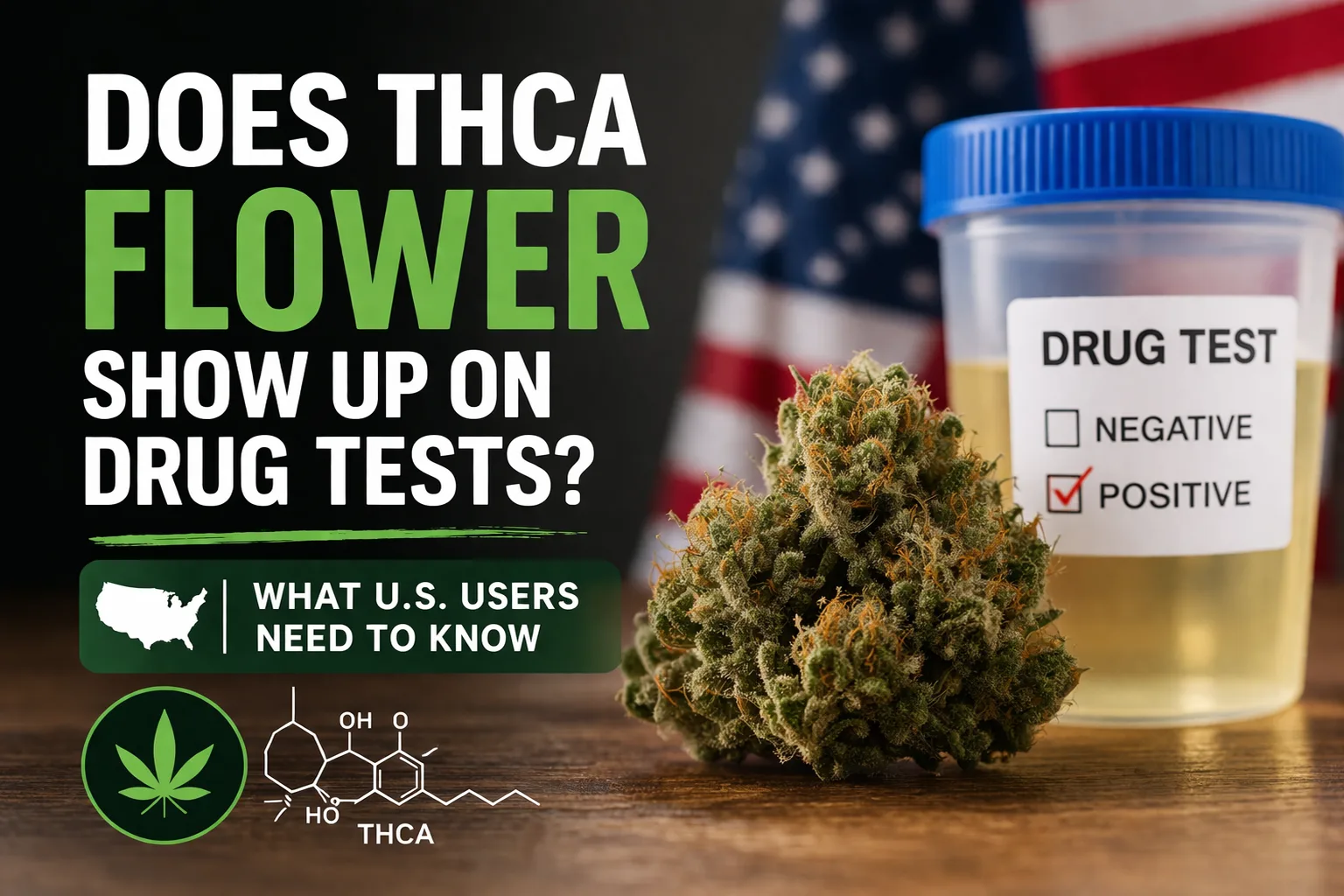
As THCA flower continues to gain popularity across the U.S., one question keeps coming up: Will it make you fail a drug test? The short answer is yes under most real-world conditions, it can. But the full explanation is more nuanced, and understanding it can save you from unexpected consequences.
In this detailed guide, we’ll break down how THCA works, how drug tests detect cannabis, and what American users need to know before using THCA products.
What Is THCA Flower?
THCA (tetrahydrocannabinolic acid) is the raw, non-psychoactive precursor to THC found in cannabis and hemp plants. Unlike THC, THCA won’t get you high in its natural state because it doesn’t bind effectively to brain receptors.
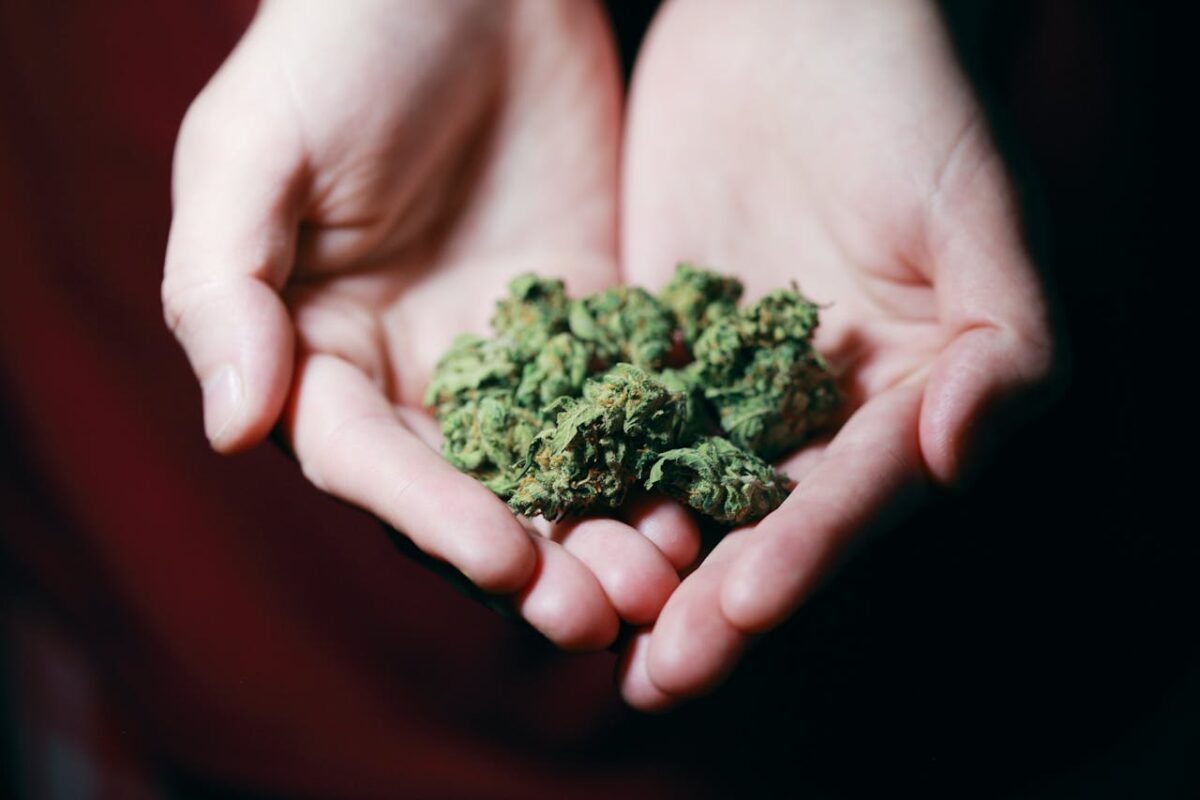
THCA flower is essentially cannabis flower that is high in THCA but compliant with federal hemp laws (containing less than 0.3% Delta-9 THC before heating).
However, there’s a critical catch.
Curious about which THCA products are trending right now? This detailed roundup of the most popular THCA flower picks in 2026 can help you make a more informed choice.
The Key Factor: Decarboxylation
When THCA is exposed to heat—through smoking, vaping, or cooking it undergoes a process called decarboxylation, converting into THC.
This means:
- Smoking THCA flower = consuming THC
- Vaping THCA concentrates = consuming THC
- Baking THCA into edibles = consuming THC
Once converted, your body treats it exactly like traditional cannabis.
What Do Drug Tests Actually Look For?
Most standard U.S. drug tests do not test for THCA directly. Instead, they look for THC metabolites specifically:
-
THC-COOH (11-nor-9-carboxy-THC)
This metabolite is produced when your body processes THC, and it can remain in your system long after the effects wear off.
Common Drug Testing Methods
-
Urine tests (most common)
- Detect THC-COOH
- Detection window: 1–30+ days depending on usage
-
Blood tests
- Detect recent THC use
- Shorter detection window (hours to days)
-
Saliva tests
Detect recent consumption (1–3 days) -
Hair tests
Can detect use for up to 90 days
So… Does THCA Flower Show Up on a Drug Test?
1. Raw THCA (Unheated): Low Risk, But Not Zero
If THCA is consumed raw (e.g., juicing raw cannabis), it is less likely to trigger a positive result because it hasn’t converted into THC.
However:
- Small amounts may still convert naturally over time
- Lab conditions or storage can cause partial conversion
- Some testing processes may indirectly detect related compounds
Bottom line: Low risk, but not foolproof.
2. Smoked or Vaped THCA Flower: High Risk
This is where most users get caught off guard.
When you smoke or vape THCA flower:
- It instantly converts to THC
- Your body produces THC metabolites
- Drug tests detect those metabolites
Result: You will likely fail a drug test
Multiple sources confirm that THCA used in typical ways behaves just like marijuana in drug testing scenarios.
3. Edibles and Dabs: Same Outcome
Cooking or dabbing THCA products also involves heat, meaning:
- THCA → THC
- THC → THC-COOH
Again, this leads to a positive drug test result
Why Legal THCA Can Still Get You Fired
This is one of the biggest misconceptions in the U.S.
THCA flower may be federally legal under the 2018 Farm Bill, but:
- Drug tests don’t care about legality
- They only detect THC metabolites
- They cannot distinguish between:
- Hemp-derived THC
- Marijuana-derived THC
So even if your product is legal, your test result may not be.
If drug testing is a concern, many users are now shifting toward THC-free alternatives that don’t carry the same risks. For example, CBD-based products have gained popularity for their potential to support pain relief without the psychoactive effects linked to THC. You can explore how these alternatives work and whether they fit your needs in this detailed guide on CBD gummies for pain relief.
Detection Windows: How Long Does THCA Stay in Your System?
Once converted to THC, detection depends on usage:
| Usage Type | Detection Window |
|---|---|
| Occasional use | 1–3 days |
| Moderate use | 7–10 days |
| Frequent use | 2–4 weeks |
| Heavy users | 30+ days |
These ranges vary based on:
- Body fat percentage
- Metabolism
- Frequency of use
- Hydration levels
THC metabolites are fat-soluble, meaning they linger in the body longer than many other substances.
You may also like: A comprehensive guide to the most popular THCA flower strains in 2026 and how they compare.
Can You Pass a Drug Test Using THCA?
Let’s be realistic.
You might pass if:
- You only consume raw, unheated THCA
- Usage is extremely infrequent
- The test is not highly sensitive
You will likely fail if:
- You smoke or vape THCA flower
- You use THCA regularly
- You are tested within days or weeks of use
The safest assumption: If you’re being tested, avoid THCA entirely.
Common Myths About THCA and Drug Testing
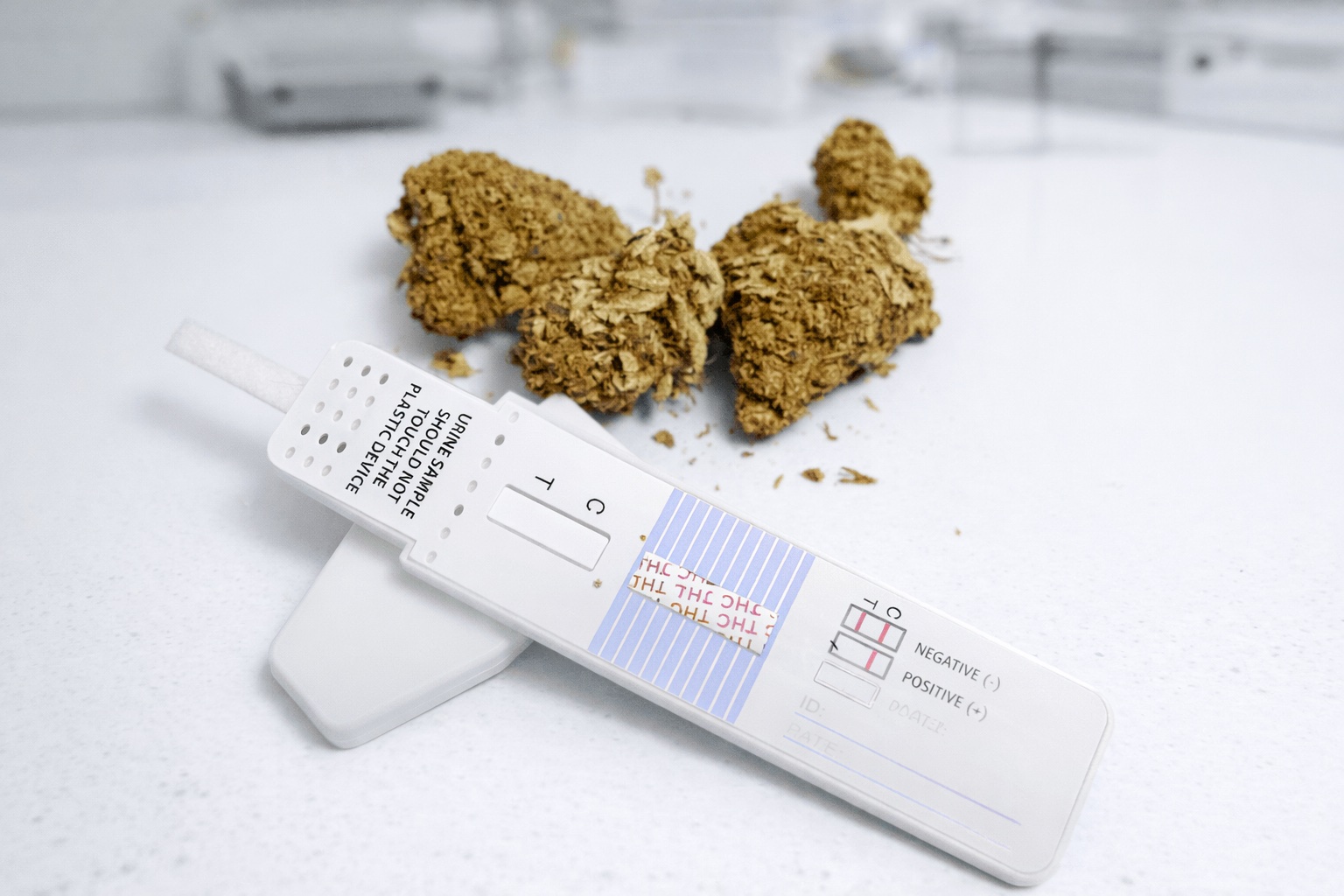
Myth 1: “THCA isn’t THC, so I’m safe”
False. Once heated, it becomes THC.
Myth 2: “Legal hemp won’t show up”
False. Tests detect metabolites, not legality.
Myth 3: “Detox drinks can fix it”
Mostly false. These may dilute urine temporarily, but labs often detect dilution.
Myth 4: “I’ll only fail if I use a lot”
Not always. Even occasional use can trigger a positive result.
U.S. Workplace Reality: What to Expect
In the United States:
- Many employers use 5-panel drug tests
- THC is still commonly screened
- Policies often have zero tolerance
Even in states where cannabis is legal:
- Employers can still enforce drug-free policies
- A positive THC test can impact hiring or employment
Tips If You’re Subject to Drug Testing
If your job, probation, or athletic program involves drug testing:
1. Avoid THCA products entirely
Especially smoked or vaped forms
2. Read product labels carefully
Some “THCA” products may already contain THC
3. Allow enough time before testing
Abstinence is the only reliable method
4. Don’t rely on myths
Quick fixes and detox hacks rarely work
Final Verdict: Is THCA Safe for Drug Tests?
Here’s the clear takeaway:
- Raw THCA: Low detection risk (but not guaranteed)
- Heated THCA (flower, vapes, edibles): High risk of failure
- Drug tests: Detect THC metabolites, not THCA itself
If you’re facing a drug test, THCA flower is not a safe option.
Conclusion
THCA flower sits in a gray area—legally accessible yet chemically similar to THC when used. That’s where most confusion comes from.
While it may be marketed as a legal alternative, the science tells a different story. Once heat is involved, THCA behaves just like traditional cannabis in your body—and on a drug test.
If your career, legal status, or responsibilities depend on passing a drug test, it’s best to approach THCA with caution—or avoid it altogether.
About the Author