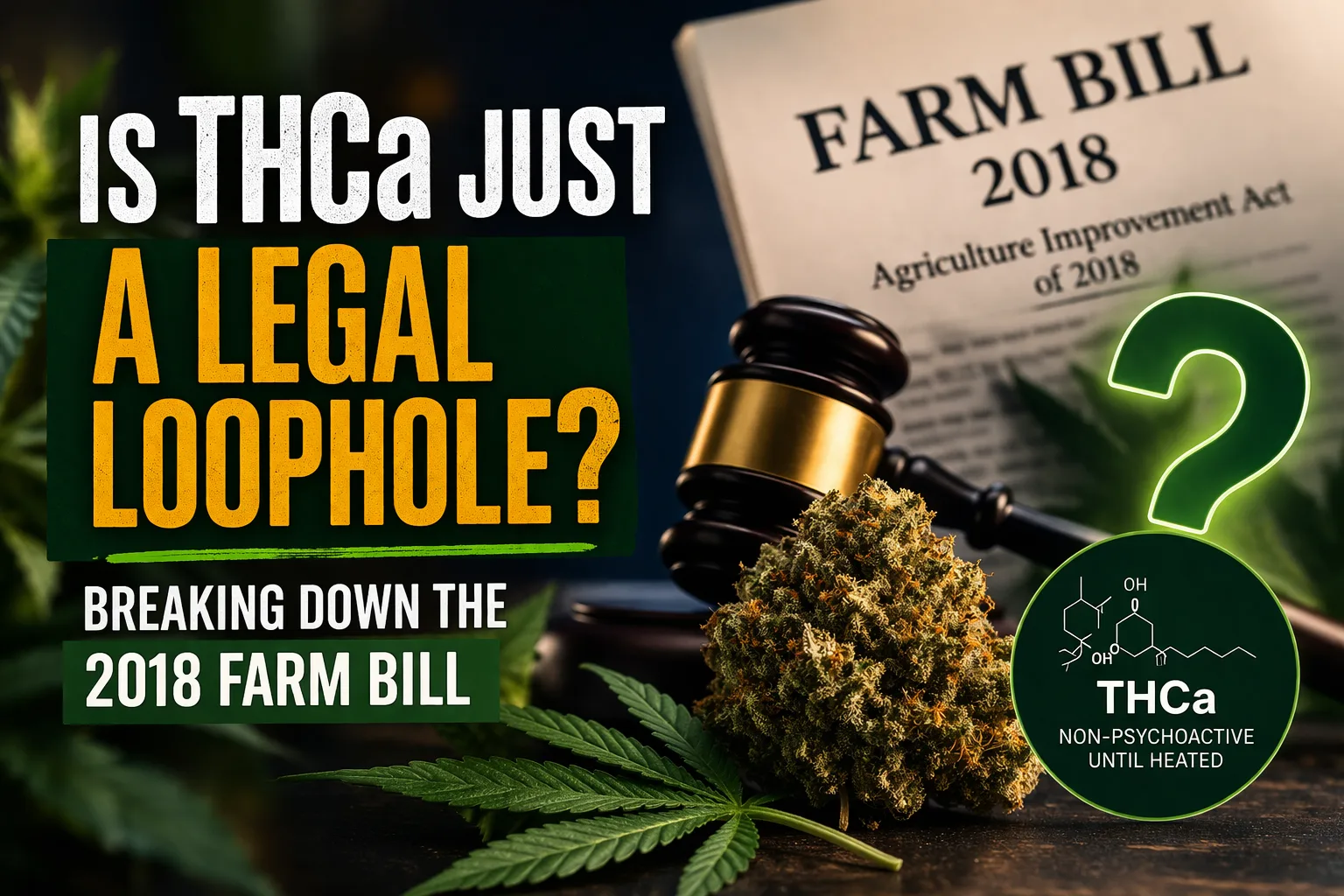
The rise of THCa products has sparked one of the most debated questions in the cannabis space: Is THCa actually legal—or is it just exploiting a loophole?
If you’ve seen THCa flower being sold online or in stores (especially in the U.S.), you’re not alone in wondering how something so similar to cannabis is being marketed as “federally legal.” The answer lies in a mix of science, legal definitions, and a very specific detail in the 2018 Farm Bill.
Let’s break it down in a simple, human way—no legal jargon overload.
What Is THCa (And Why It Matters)?
THCa (tetrahydrocannabinolic acid) is the raw, unheated form of THC found naturally in cannabis plants.
- In its natural state → THCa is non-psychoactive
- When heated (smoking, vaping, cooking) → it converts into THC
This conversion process is called decarboxylation, and it’s the reason why cannabis gets you high.
So technically:
- THCa itself doesn’t get you high
- But once you use it like cannabis… it absolutely can
That distinction is where the legal confusion begins.
If you’re wondering what high-quality THCa products actually look like in today’s market, check out this guide on best THCa flower of 2026 for top-rated strains and picks.
What Did the 2018 Farm Bill Actually Say?
The 2018 Farm Bill (officially the Agriculture Improvement Act of 2018) legalized hemp at the federal level in the United States.
Here’s the key part:
-
Hemp = cannabis with less than 0.3% delta-9 THC (by dry weight)
That’s it.
Notice what’s missing?
The law only mentions delta-9 THC
It does not mention THCa
The “THCa Loophole” Explained
Because the law only focused on delta-9 THC levels, something interesting happened:
- Cannabis flower can contain high THCa
- But still test below 0.3% delta-9 THC
That means:
It qualifies as “hemp” legally
Even if it becomes psychoactive when used
This is what’s often called the “hemp loophole”
In simple terms:
If it doesn’t have too much delta-9 THC before you use it, it can legally be sold—even if it turns into THC afterward.
Why THCa Flower Feels Like Regular Weed
Here’s the part that surprises most beginners:
THCa flower is basically identical to cannabis flower in many cases.
- Same plant species (Cannabis sativa)
- Same look, smell, and potency potential
- Same effects once heated
The only difference?
Lab testing before sale shows low delta-9 THC
That’s why many people say:
“THCa is just regular weed with paperwork.”
Did Lawmakers Intend This?
Short answer: Probably not.
The Farm Bill was originally designed to:
- Legalize industrial hemp
- Support farmers
- Allow CBD production
But because of how it was written, it unintentionally opened the door for:
- THCa flower
- Delta-8 THC
- Other hemp-derived cannabinoids
This led to a multi-billion-dollar “intoxicating hemp” industry
So yes—many regulators and lawmakers now openly call it a loophole.
Is THCa Actually Legal Right Now?
Federally (U.S.)
Generally legal if derived from hemp
Must contain less than 0.3% delta-9 THC
At the state level
It’s complicated
- Some states allow it
- Others have restricted or banned it
- Many are actively changing laws
States have the power to regulate hemp products more strictly, even if federal law allows them
Laws around hemp products can vary widely by state—especially when comparing THCa with other cannabinoids like are delta-8 gummies legal in Florida, which highlights how regional rules can differ.
Why the Government Is Trying to Close the Loophole
As THCa products exploded in popularity, regulators noticed a problem:
Products were legally hemp
But functionally psychoactive cannabis
This created:
- Safety concerns (unregulated products)
- Market imbalance vs licensed cannabis dispensaries
- Confusion for consumers
So lawmakers are now pushing to:
Switch from “delta-9 THC” → “total THC” testing
Include THCa in the calculation
If that happens:
Most THCa products would become illegal federally
In fact, upcoming regulatory changes are already aiming to do exactly this
The Industry Perspective: Loophole or Innovation?
Not everyone agrees on the “loophole” label.
Critics say:
- It bypasses cannabis laws
- Avoids taxes and regulation
- Puts untested products on the market
Supporters say:
- It follows the law exactly as written
- Expands access to cannabis
- Supports hemp farmers and small businesses
So depending on who you ask:
It’s either a legal workaround
Or a smart use of legal definitions
THCa vs THC: The Legal Paradox
Here’s the irony:
| Factor | THCa (before use) | THC (after heating) |
|---|---|---|
| Legal status | Often legal (hemp) | Often restricted |
| Psychoactive | No | Yes |
| Source | Same plant | Same plant |
Same plant. Same compound (after heating).
Completely different legal treatment.
That’s the core of the confusion.
What This Means for Consumers
If you’re buying or using THCa products, here’s what you should understand:
1. Legal ≠ Risk-Free
Just because it’s sold legally doesn’t mean:
- It’s allowed in your state
- It won’t change legally soon
2. Effects Are Real
THCa converts to THC when heated
Expect similar effects to cannabis
3. Laws Are Changing Fast
The industry is in a transition phase
What’s legal today might not be tomorrow
The Future of THCa (2026 and Beyond)
The direction is pretty clear:
- Governments are moving toward stricter definitions
- “Total THC” testing is likely to become standard
- Many THCa products may disappear or move into regulated cannabis markets
This isn’t the end of THCa—but it may mean:
More regulation
Less “legal gray area”
Higher compliance standards
As the hemp market evolves, products like THCa flower and delta-8 gummies are often discussed side by side—especially when it comes to legality and user experience.
Final Verdict: Is THCa Just a Legal Loophole?
Yes and no.
- It does exploit a gap in how the law was written
- But it’s not illegal under current federal rules (in many cases)
A more accurate way to say it:
THCa exists because the law focused on one specific form of THC—and the market adapted around that.
Bottom Line
The 2018 Farm Bill didn’t legalize cannabis—but it accidentally created a pathway for THCa products to thrive.
- The law defined hemp by delta-9 THC only
- THCa wasn’t included
- Businesses used that gap to build an entire industry
Now, regulators are catching up.
So if you’re exploring THCa, remember:
You’re not just buying a product
You’re stepping into one of the most fascinating legal gray areas in modern cannabis history
About the Author