If you’ve ever shopped for CBD in the U.S., you’ve probably seen terms like full-spectrum, broad-spectrum, and CBD isolate—and wondered what they actually mean. The truth is, these labels aren’t just marketing buzzwords. They directly affect how CBD works, how strong it feels, and whether it’s right for your lifestyle.
In this complete guide, we’ll break down the differences in simple terms, explain how U.S. laws impact your choice, and help you decide which type of CBD you should actually buy.

What Is CBD and Why Spectrum Matters
CBD (cannabidiol) is a compound derived from the cannabis plant. Unlike THC, it doesn’t produce a “high” and is widely used for wellness purposes like stress, sleep, and pain relief.
But CBD doesn’t exist alone in the plant. It comes alongside:
- Other cannabinoids (like CBG, CBN)
- Terpenes (aromatic compounds)
- Flavonoids (plant nutrients)
The “spectrum” refers to how many of these compounds are kept or removed during extraction.
There are three main types:
- Full-Spectrum CBD
- Broad-Spectrum CBD
- CBD Isolate
Let’s break each one down.
Many users turn to CBD specifically for nerve-related discomfort, and products like CBD gummies are often preferred for their long-lasting effects—this guide on CBD gummies for neuropathy explains how they may support nerve pain relief in real-world use.
Full-Spectrum CBD: The “Whole Plant” Experience
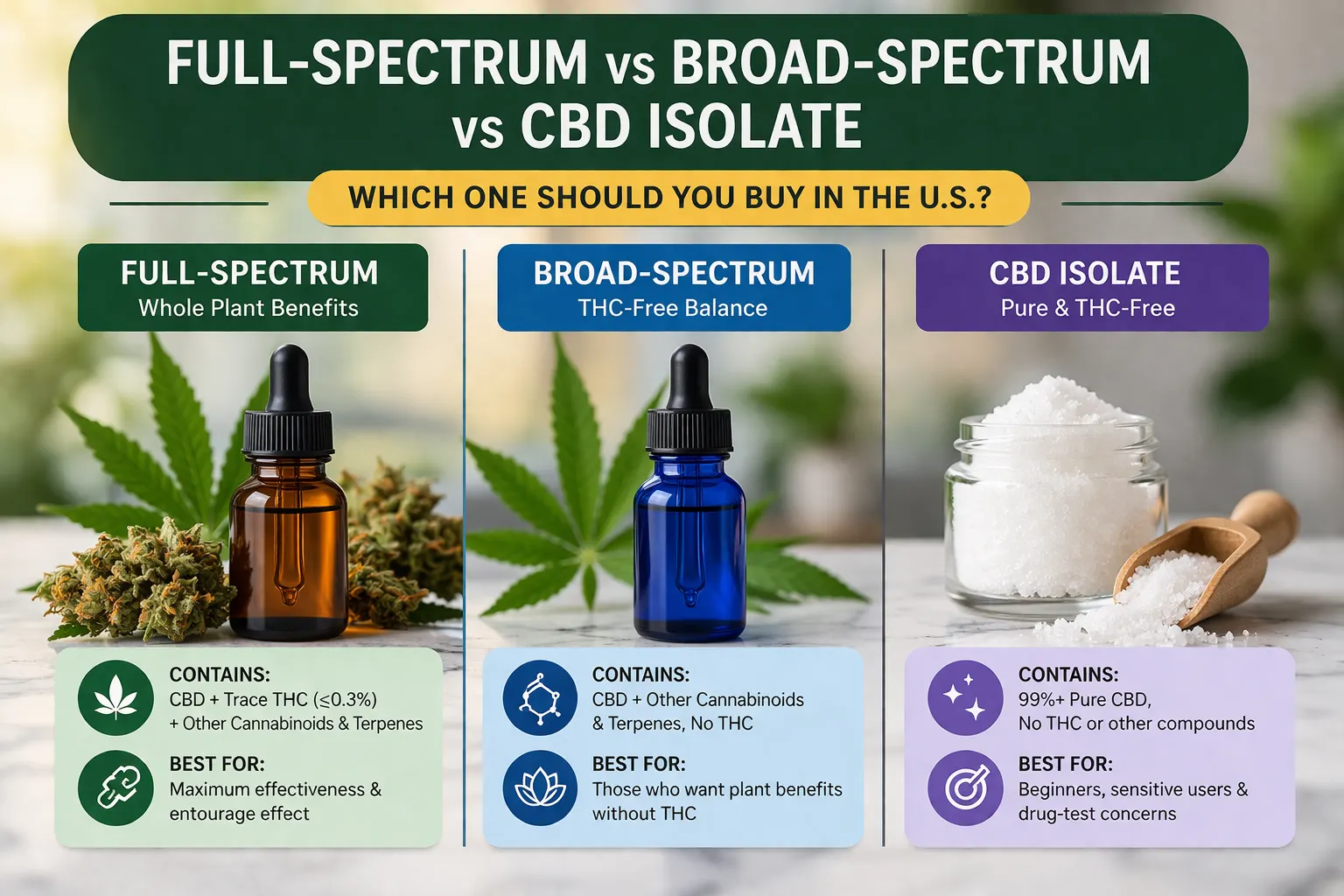
Full-spectrum CBD contains everything naturally found in the cannabis plant, including a small amount of THC (up to 0.3% in the U.S.).
What’s Inside:
- CBD
- Trace THC (≤ 0.3%)
- Minor cannabinoids (CBG, CBN, etc.)
- Terpenes and flavonoids
Why People Choose It
The biggest reason is something called the “entourage effect.” This means all compounds work together, potentially enhancing the overall benefits.
Pros:
- Stronger overall effects
- Better for pain, sleep, and anxiety (according to user reports)
- Requires lower doses
Cons:
- Contains THC (even if minimal)
- May show up on drug tests
- Not ideal if you’re sensitive to THC
Best for: People who want maximum effectiveness and don’t mind trace THC.
To better understand how cannabinoids and terpenes work together in real products, this breakdown of the best THCA flowers in 2026 highlights how premium cultivation and terpene preservation enhance overall effects.
Broad-Spectrum CBD: THC-Free Balance
Broad-spectrum CBD is similar to full-spectrum—but with THC removed (or nearly zero).
What’s Inside:
- CBD
- Other cannabinoids
- Terpenes
- Little to no THC
Why People Choose It
It gives you some benefits of the entourage effect without THC exposure.
Pros:
- THC-free or nearly undetectable
- Still includes helpful plant compounds
- Good middle-ground option
Cons:
- Slightly less potent than full-spectrum
- Still a small risk of trace THC
- Effects may feel milder
Best for: People who want benefits beyond pure CBD but must avoid THC.

CBD Isolate: Pure and Simple
CBD isolate is exactly what it sounds like pure CBD with everything else removed.
What’s Inside:
- 99%+ pure CBD
- No THC
- No terpenes or other cannabinoids
Why People Choose It
It’s the cleanest and most controlled form of CBD.
Pros:
- Zero THC
- No risk for drug testing
- No taste or smell
- Precise dosing
Cons:
- No entourage effect
- May be less effective overall
- Higher doses often needed
Best for: Beginners, sensitive users, or anyone facing strict drug testing.
Key Differences at a Glance
| Feature | Full-Spectrum | Broad-Spectrum | CBD Isolate |
|---|---|---|---|
| THC Content | ≤ 0.3% | None or trace | 0% |
| Other Cannabinoids | Yes | Yes | No |
| Entourage Effect | Strong | Moderate | None |
| Potency | High | Medium | Lower |
| Drug Test Risk | Yes | Possible | No |
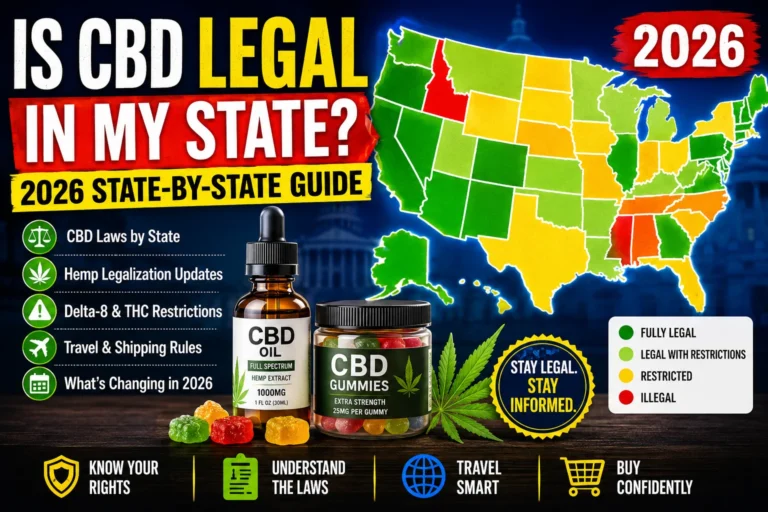
Is CBD Legal in the U.S.?
Yes but with conditions.
Thanks to the 2018 Farm Bill, hemp-derived CBD is federally legal as long as it contains less than 0.3% THC.
However:
- State laws may vary
- The FDA does not fully regulate CBD products
- Labeling can sometimes be inaccurate
Always buy from brands that provide third-party lab testing (COA reports).
Which CBD Type Should You Buy?
Here’s a simple way to decide:
Choose Full-Spectrum if:
- You want the strongest effects
- You’re okay with trace THC
- You’re not worried about drug tests
Choose Broad-Spectrum if:
- You want THC-free CBD
- You still want some entourage benefits
- You prefer a balanced effect
Choose CBD Isolate if:
- You must avoid THC completely
- You’re new to CBD
- You want precise control over dosage
For users leaning toward full-spectrum products for stronger effects, it’s also worth checking out guides on the best THCA flower in 2026, where potency, terpene profiles, and real user experience are explored in detail.
Real-World Insight (From Users)
Many CBD users report noticeable differences between the types.
From discussions on Reddit:
“Full-spectrum feels deeper for sleep or pain… broad-spectrum feels lighter and clearer.”
Another user explains:
“Full-spectrum gives maximum entourage effect… isolate needs higher doses.”
While anecdotal, these insights reflect common real-world experiences.
How to Choose a Quality CBD Product
No matter which type you pick, quality matters more than the label.
Look for:
- Third-party lab testing (COA)
- THC levels clearly listed
- Organic hemp sourcing
- No heavy metals or pesticides
Avoid:
- Unrealistic health claims
- No lab reports
- Extremely cheap products
Final Verdict: What’s Best for You?
There’s no “one-size-fits-all” answer.
- Want maximum benefits? → Go full-spectrum
- Want no THC but still effective? → Choose broad-spectrum
- Want pure, safe, and predictable? → Pick isolate
If you’re just starting out, broad-spectrum is often the safest middle ground. But if you’re chasing stronger results and don’t mind THC, full-spectrum usually delivers the most noticeable effects.
Bottom Line
Understanding the difference between full-spectrum, broad-spectrum, and CBD isolate can completely change your CBD experience.
Instead of guessing, you now know exactly what you’re buying—and why it matters.
If you want help picking the best CBD product (oils, gummies, vapes), I can recommend options based on your goals .
About the Author