Introduction
“That smooth hit felt clean… but was it actually safe?”
That’s the question most people don’t ask until something feels off.
THC vape carts have exploded in popularity across the U.S. They’re discreet, convenient, fast-acting, and let’s be honest marketed to look sleek and premium. But behind the glossy packaging and fruity flavors, there’s a reality many users overlook:

Not all THC carts are created equal.
Some are carefully crafted, rigorously tested, and safe. Others? They can contain harmful chemicals, pesticides, heavy metals, or even fake THC.
That’s where lab-tested THC carts come in and why they matter more than most people realize.
Let’s break it down in a way that actually makes sense (no boring jargon), so you can make smarter choices and maybe even rethink what you’re currently using.
What Are Lab-Tested THC Carts?
A lab-tested THC cart is a vape cartridge that has been analyzed by a third-party laboratory to verify what’s inside it.
This isn’t the brand testing its own product (which would be biased). Instead, an independent lab checks for:
- THC potency (how strong it actually is)
- Presence of contaminants (pesticides, solvents, metals)
- Terpene profile (flavor + effects)
- Cutting agents or additives
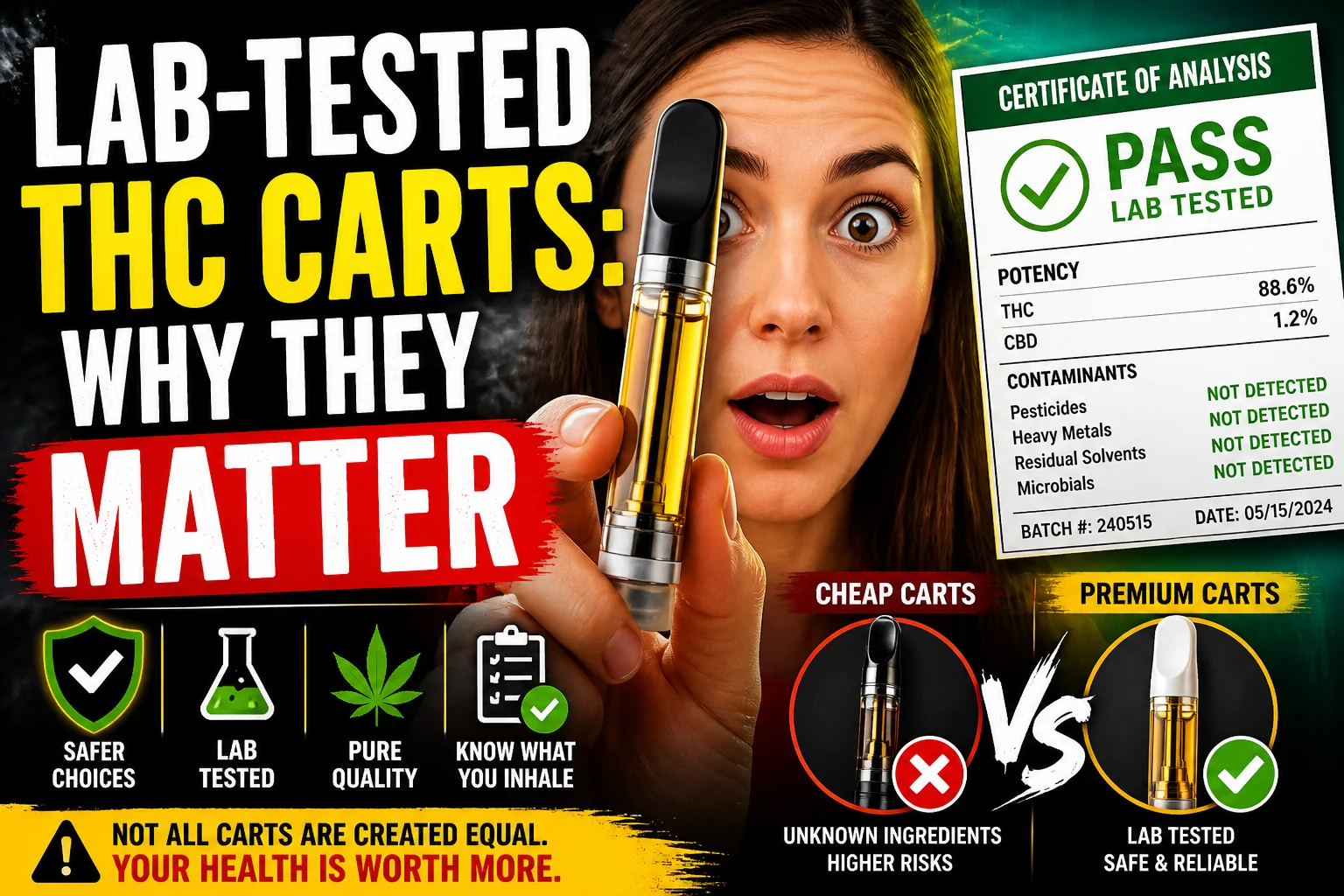
The result? A document called a Certificate of Analysis (COA) basically a report card for your cart.
If a product doesn’t have one, that’s your first red flag.
Why This Matters More Than You Think
Here’s the uncomfortable truth:
You can’t see, taste, or smell most contaminants in a vape cart.
A cart might look premium, hit smoothly, and still contain harmful substances.
And because vaping delivers compounds directly into your lungs, the risks are amplified.
Imagine this:
You’re inhaling something daily…
- Would you want to know what’s inside it?
- Would you trust a product that refuses to prove its safety?
That’s exactly why lab testing exists.
If your cart suddenly stops working, don’t throw it away just yet most people don’t realize how easy it is to fix. Here’s exactly how to unclog a disposable cart in minutes.
The Hidden Risks of Untested THC Carts
Let’s talk about what can actually go wrong when carts aren’t tested.
1. Pesticides
Cannabis plants are often treated with pesticides to prevent pests and mold. If not properly regulated, residues can remain in the final product.
When heated and inhaled, these can become toxic.
2. Heavy Metals
Cheap or poorly manufactured cartridges can leach metals like:
- Lead
- Cadmium
- Mercury
These don’t belong anywhere near your lungs.
3. Residual Solvents
During extraction, chemicals like butane or propane are used. If not purged properly, traces can remain.
That “clean hit”? It might not be so clean.
4. Vitamin E Acetate (and Other Cutting Agents)
This was a major cause of vaping-related lung injuries in past years.
Some black-market carts used it to thicken oil—without disclosing it.
5. Fake or Synthetic THC
Some unregulated carts don’t even contain real THC.
Instead, they use synthetic cannabinoids, which can have unpredictable and dangerous effects.
What Lab Testing Actually Checks
Let’s simplify what labs look for so you know exactly what you’re paying for.
Potency Testing
Confirms:
- THC percentage
- CBD levels
- Other cannabinoids
This helps you avoid:
- Overdosing unintentionally
- Getting weaker product than advertised
Contaminant Screening
Checks for:
- Pesticides
- Heavy metals
- Microbial contaminants (mold, bacteria)
- Residual solvents
Terpene Profile
Terpenes affect:
- Flavor
- Aroma
- Effects (relaxing vs energizing)
A tested cart gives you transparency not guesswork.
Whether it’s vape carts or infused beverages, lab testing remains one of the only reliable ways to verify what you’re consuming and how effective it might be, which is why many people are now exploring how CBD drinks are tested and if they actually live up to the hype.
How to Read a COA (Without Feeling Confused)
A Certificate of Analysis might look technical, but here’s a simple way to decode it:
Look for:
- Matching batch number → Should match your product
- THC % → Is it what the brand claims?
- “ND” (Not Detected) → For harmful substances
- Date of testing → Recent is better
Red Flags:
- No COA available
- COA from the brand itself (not third-party)
- Outdated reports
- Missing contaminant data
If a company hides this info, ask yourself:
What are they trying to avoid showing you?
Lab-Tested vs Black Market Carts
This is where things get real.
Lab-Tested Carts:
- Transparent
- Regulated (in legal states)
- Consistent quality
- Safer consumption
Black Market Carts:
- Often cheaper
- No testing
- Unknown ingredients
- Higher risk of contamination
Sure, the cheaper option might feel tempting.
But are you saving money or risking your health?
The Psychology Behind “Cheap” THC Carts
Let’s be honest price influences decisions.
But here’s the catch:
Low price often means corners were cut somewhere.
Maybe:
- Lower-quality cannabis was used
- Testing was skipped
- Harmful additives were included
In other words, you’re not just buying a product…
You’re buying the process behind it.
Why U.S. Consumers Are Paying More Attention
In recent years, awareness around cannabis safety has grown rapidly.
Search trends show people are asking:
- “Are THC carts safe?”
- “What’s inside my vape?”
- “How to spot fake carts?”
This shift is pushing brands to be more transparent.
And honestly? That’s a good thing.
Because an informed consumer is a safer consumer.
How to Spot a Legit Lab-Tested THC Cart
Before you buy, run through this quick checklist:
QR Code on Packaging
Most legit brands include a scannable code linking to lab results.
Third-Party Lab Name
Look for independent labs not in-house testing.
Clear Labeling
- THC content
- Ingredients
- Batch number
Legal Dispensary Purchase
Buying from licensed retailers reduces risk significantly.
Common Myths About Lab-Tested THC Carts
Let’s clear up some misconceptions.
“If it tastes good, it’s safe”
Not true. Flavor doesn’t indicate purity.
“All carts in dispensaries are safe”
Most are tested but standards can vary by state.
“Testing is just marketing”
Actually, it’s one of the few ways to verify product safety.
The Experience Difference: Tested vs Untested
Here’s something users don’t talk about enough:
Lab-tested carts often feel better.
Why?
Because they’re:
- Free from harsh contaminants
- More consistent in potency
- Rich in natural terpenes
That means:
- Smoother hits
- Predictable effects
- Less irritation
So it’s not just about safety it’s about quality of experience.
But cheap products are rarely cheap without a reason. Whether it’s skipping lab testing, using lower-grade cannabis, or cutting costs in manufacturing, there’s usually a trade-off happening behind the scenes, and if you’ve ever questioned whether premium products are truly worth it, looking deeper into cheap vs premium THCA disposables can shift that perspective quickly.
Why Brands That Test Their Products Stand Out
Think about it:

Testing costs money.
So when a brand invests in it, they’re signaling:
- Confidence in their product
- Commitment to safety
- Long-term brand trust
Brands that skip testing? Usually focused on short-term profit.
Which one would you trust?
The Future of THC Carts: Transparency Wins
The cannabis industry is evolving fast.
And the trend is clear:
Transparency is becoming non-negotiable.
Consumers are:
- Asking smarter questions
- Demanding proof
- Avoiding sketchy products
In the near future, lab testing won’t be a bonus it’ll be the baseline.
So… Do Lab-Tested THC Carts Really Matter?
Short answer?
Yes. More than most people realize.
Because this isn’t just about getting high.
It’s about:
- What you’re putting into your body
- How safe that experience is
- Whether you trust the product you’re using
Final Thoughts (And A Few Questions For You)
Next time you pick up a THC cart, pause for a second.
Ask yourself:
- Do I actually know what’s inside this?
- Can this brand prove it’s safe?
- Am I choosing based on price or quality?
- Would I still buy this if I saw the full lab report?
Because at the end of the day…
The real question isn’t “Does it work?”
It’s:
“Is it worth the risk if it’s not tested?”
About the Author