Introduction
If you’ve ever searched for natural wellness products online, chances are you’ve seen CBD oil and hemp oil used almost interchangeably. Some brands market them like they’re identical, while others claim one is “better” than the other. That leaves many shoppers confused before they even buy their first bottle.
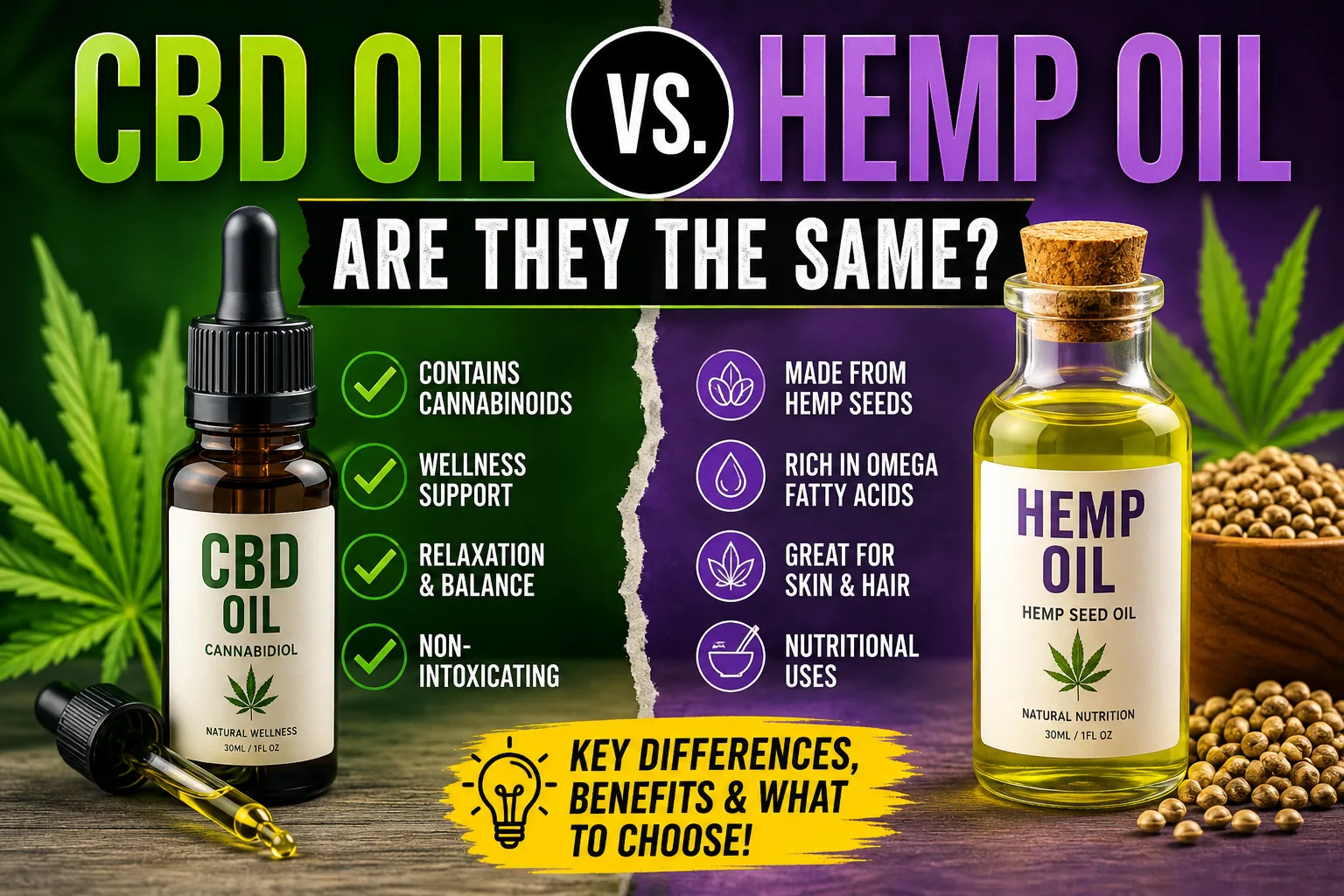
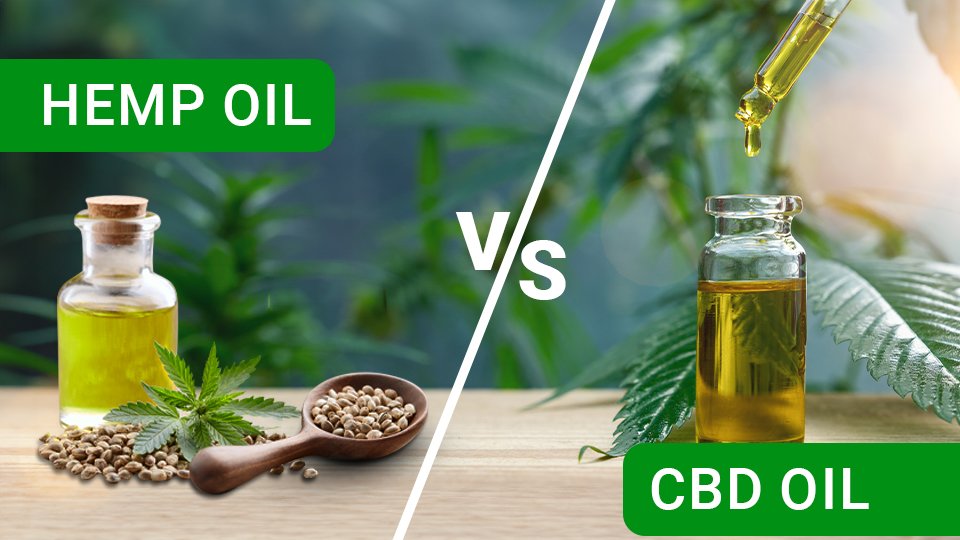
So, are CBD oil and hemp oil the same thing?
The short answer: No they are completely different products with different uses, ingredients, and effects.
One may help support relaxation, stress relief, sleep, and recovery, while the other is mostly used as a nutritious cooking or skincare ingredient. Understanding the difference can save you money, prevent disappointment, and help you choose the right product for your needs.
In this guide, we’ll break down:
- What CBD oil actually is
- What hemp oil really means
- The biggest differences between them
- Which one contains cannabinoids
- Which one may help with wellness goals
- How to avoid misleading labels
- What to look for before buying
By the end, you’ll know exactly what you’re purchasing and why so many people confuse these two products in the first place.
What Is CBD Oil?
CBD oil is a wellness product made by extracting cannabidiol (CBD) from the hemp plant and combining it with a carrier oil such as MCT oil, coconut oil, or hemp seed oil.
CBD is one of the many naturally occurring compounds called cannabinoids found in cannabis and hemp plants. Unlike THC, CBD does not produce an intoxicating “high.”
Most people use CBD oil for purposes like:
- Stress support
- Relaxation
- Better sleep
- Muscle recovery
- Daily wellness routines
- Calm focus
CBD interacts with the body’s endocannabinoid system (ECS), which plays a role in maintaining balance in areas like mood, sleep, appetite, and immune function.
Many users prefer CBD because it may provide calming effects without the strong psychoactive experience associated with THC products.
If you’re wondering why some users experience stronger effects than others, CBD Dosage: Why It Matters More Than You Think explains the science behind personalized CBD routines.
What Is Hemp Oil?
“Hemp oil” usually refers to hemp seed oil, which is made by cold-pressing hemp seeds.
This oil contains:
- Healthy fats
- Omega-3 fatty acids
- Omega-6 fatty acids
- Vitamin E
- Nutrients and antioxidants
However, hemp seed oil typically contains little to no CBD.
That’s the key difference many consumers miss.
Hemp seed oil is commonly used in:
- Cooking
- Salad dressings
- Protein products
- Haircare
- Moisturizers
- Skincare formulas
It’s considered a nutritious ingredient, but it generally does not provide the same cannabinoid-related effects associated with CBD oil.
Why People Confuse CBD Oil and Hemp Oil
The confusion mainly comes from marketing and labeling.
Both products come from the hemp plant, and many companies use phrases like:
- Hemp extract
- Hemp-derived oil
- Cannabis sativa oil
- Full-spectrum hemp oil
These labels can make it difficult to tell whether a product actually contains meaningful amounts of CBD.
Some products advertise “hemp oil” prominently on the front label while hiding the fact that there’s almost no CBD inside.
That’s why checking the ingredient list and lab testing is so important.
After understanding the difference between hemp oil and CBD oil, the next step is choosing the right CBD format for your lifestyle. Some users prefer tinctures for faster absorption, while others like capsules for convenience and precise serving sizes. In CBD Oil vs Capsules: Which Is Better for Daily Use? (2026 Guide), we compare both options to help beginners choose the best fit for their routine.
CBD Oil vs. Hemp Oil: The Main Differences
Here’s the easiest way to understand it.
| Feature | CBD Oil | Hemp Oil (Hemp Seed Oil) |
|---|---|---|
| Source | Hemp flowers, leaves, stalks | Hemp seeds |
| Contains CBD? | Yes | Usually no |
| Cannabinoids | High | Minimal or none |
| Psychoactive? | No (unless THC-heavy) | No |
| Common Uses | Wellness support | Nutrition & skincare |
| Extraction Method | CO2 or ethanol extraction | Cold-pressed |
| Flavor | Earthy | Nutty |
| Price | Usually more expensive | Usually cheaper |
Which One Has Cannabinoids?
CBD oil contains cannabinoids.
Hemp seed oil generally does not.
Cannabinoids are the active compounds many users seek for wellness support. These compounds are concentrated mainly in the flowers and leaves of the hemp plant — not the seeds.
That means:
- CBD oil = cannabinoid-rich
- Hemp seed oil = nutrient-rich
This distinction matters because many shoppers buy hemp oil expecting CBD-like effects and end up disappointed.
Can Hemp Oil Make You Feel Relaxed?
Hemp seed oil may support overall wellness due to its healthy fat content, but it usually won’t create the calming effects people associate with CBD.
If someone says:
“I tried hemp oil and felt nothing.”
There’s a good chance they purchased hemp seed oil instead of actual CBD oil.
CBD oil is specifically formulated to deliver cannabinoids, while hemp seed oil is primarily nutritional.
Types of CBD Oil Explained
Not all CBD oil products are identical.
There are three major categories:

1. Full-Spectrum CBD Oil
Contains:
- CBD
- Minor cannabinoids
- Terpenes
- Trace THC (within legal limits in many regions)
Many users believe full-spectrum products create an “entourage effect,” where compounds work together synergistically.
2. Broad-Spectrum CBD Oil
Contains:
- CBD
- Multiple cannabinoids
- Terpenes
- No detectable THC (ideally)
Popular among users who want cannabinoids without THC exposure.
3. CBD Isolate
Contains:
-
Pure CBD only
No additional cannabinoids or terpenes.
Some users prefer isolate for simplicity, while others feel full-spectrum products provide stronger overall effects.
If you’re still unsure which type of CBD product fits your needs, our guide on Full-Spectrum vs Broad-Spectrum vs CBD Isolate explains the major differences and what U.S. buyers should know before purchasing.
How CBD Oil Is Made
CBD oil is typically produced through extraction methods like:
- CO2 extraction
- Ethanol extraction
These methods pull cannabinoids and beneficial compounds from hemp plant material.
The extract is then mixed with a carrier oil.
High-quality CBD products often include:
- Third-party lab testing
- Cannabinoid profiles
- THC verification
- Contaminant screening
How Hemp Seed Oil Is Made
Hemp seed oil is much simpler to produce.
Manufacturers cold-press hemp seeds similarly to olive oil extraction.
The result is a nutrient-dense oil used for:
- Cooking
- Smoothies
- Beauty products
- Skin hydration
Because seeds contain almost no cannabinoids, the finished oil lacks meaningful CBD content.
Is CBD Oil Legal?
CBD legality depends on:
- Your country
- Local regulations
- THC concentration
- Product source
In many areas, hemp-derived CBD products containing low THC levels are legal or partially legal.
However, laws change frequently, so consumers should always verify local regulations before purchasing.
Is Hemp Seed Oil Legal?
Hemp seed oil is widely legal in many countries because it contains negligible cannabinoids and no intoxicating compounds.
You’ll often find it in:
- Grocery stores
- Health food shops
- Cosmetic products
- Supermarkets
Which Is Better for Anxiety and Stress?
Many people specifically seek CBD oil for relaxation support.
Research into CBD’s interaction with the endocannabinoid system is ongoing, and some early studies suggest CBD may help support calmness and stress management in certain individuals.
Hemp seed oil, on the other hand, is not generally associated with those cannabinoid-related effects.
If your goal is:
- Calmness
- Relaxation
- Sleep support
- Mood balance
CBD oil is likely what you’re looking for not standard hemp seed oil.
If you’re exploring hemp wellness products beyond CBD oils, many users are also comparing the effects of the Best Delta-8 Gummies of 2026 for relaxation and evening use.
Which One Is Better for Skin?
Interestingly, both products may be useful for skincare but in different ways.
CBD Oil in Skincare
CBD may help support:
- Skin balance
- Redness reduction
- Oil regulation
- Recovery support
Many skincare brands now include CBD in creams, serums, and balms.
Hemp Seed Oil in Skincare
Hemp seed oil is rich in:
- Essential fatty acids
- Antioxidants
- Vitamin E
This makes it popular for:
- Moisturizing dry skin
- Supporting skin barrier function
- Softening hair
So while CBD oil and hemp oil are different, both can play valuable roles in beauty products.
Why Some CBD Products Say “Hemp Extract”
This is where labeling gets tricky.
A product labeled:
“Hemp extract”
could contain CBD but not always.
Some brands intentionally avoid using the term “CBD” because of advertising restrictions or regulations.
That’s why consumers should always check:
- Total CBD content (mg)
- Third-party lab reports
- Cannabinoid breakdown
If the label doesn’t clearly show CBD milligrams, that’s a red flag.
How to Tell If a Product Is Real CBD Oil
Before buying, look for these signs:
1. CBD Content Listed Clearly
A trustworthy product should display something like:
- 500mg CBD
- 1000mg CBD
- 25mg CBD per serving
If there’s no cannabinoid amount listed, be cautious.
2. Third-Party Lab Testing
Reliable brands provide Certificates of Analysis (COAs).
These lab reports verify:
- CBD potency
- THC levels
- Purity
- Safety screening
3. Ingredient Transparency
Avoid products with vague descriptions like:
- Proprietary hemp blend
- Hemp wellness complex
Transparency matters.
4. Real Customer Reviews
Look for authentic feedback discussing:
- Product effectiveness
- Flavor
- Sleep support
- Stress relief
- Recovery benefits
Common Marketing Tricks Consumers Should Know
Some low-quality brands use hemp-related terminology to make products appear more valuable than they are.
Examples include:
- Tiny CBD amounts hidden in large bottles
- “Hemp oil” marketed like CBD oil
- No lab tests available
- Unrealistic medical claims
If a product sounds too good to be true, it probably is.
One of the smartest ways to verify whether a product contains actual cannabinoids is by checking third-party testing results. That’s exactly why guides like How to Read a CBD Lab Test Report Like a Pro? NexGen Extracts Edition are becoming increasingly popular among first-time buyers.
Does CBD Oil Get You High?
Most hemp-derived CBD oil products do not create a traditional cannabis “high.”
However:
- Full-spectrum CBD may contain trace THC
- High doses could affect sensitive users differently
Broad-spectrum and isolate options are often preferred by people avoiding THC entirely.
Can You Cook With CBD Oil?
You can, but it’s not always ideal.
High heat may degrade cannabinoids.
Many people instead use CBD oil:
- Under the tongue
- In smoothies
- In coffee
- In low-heat recipes
Hemp seed oil, meanwhile, is more commonly used as a food ingredient because of its nutritional profile.
Which One Is More Expensive?
CBD oil is usually much more expensive because:
- Cannabinoid extraction is complex
- Hemp flower cultivation is costly
- Testing and compliance add expenses
Hemp seed oil is cheaper because production is simpler and more scalable.
What Does Science Say About CBD?
Research on CBD is still developing, but studies are exploring its potential role in areas like:
- Stress support
- Sleep quality
- Recovery
- Inflammation response
- General wellness
However, CBD products are not intended to diagnose, treat, cure, or prevent diseases unless specifically approved by regulators.
Consumers should avoid brands making exaggerated health promises.
Can You Take CBD Oil and Hemp Oil Together?
Yes.
Some products actually combine them.
For example:
- CBD extract for cannabinoids
- Hemp seed oil as the carrier oil
This allows users to benefit from both:
- Nutritional fatty acids
- Cannabinoid support
Best Uses for CBD Oil
People commonly use CBD oil for:
- Evening relaxation
- Sleep routines
- Workout recovery
- Stress-heavy days
- Calm focus
- General wellness support
Effects vary from person to person depending on body chemistry, dosage, and product quality.
Best Uses for Hemp Seed Oil
Hemp seed oil works well for:
- Cooking
- Nutrition
- Moisturizing skin
- Haircare
- Vegan diets
- Salad dressings
It’s especially valued for its omega fatty acid profile.
How to Choose the Right Product
Here’s a simple rule:
Choose CBD Oil If You Want:
- Cannabinoids
- Relaxation support
- Wellness effects
- CBD-specific benefits
Choose Hemp Seed Oil If You Want:
- Nutritional support
- Healthy fats
- Cooking oil
- Skincare hydration
The right choice depends entirely on your goals.
Final Verdict: CBD Oil vs. Hemp Oil
CBD oil and hemp oil are not the same even though many people think they are.
CBD oil contains cannabinoids extracted from hemp flowers and is commonly used for relaxation, wellness, and recovery support.
Hemp seed oil comes from pressed hemp seeds and is mainly valued for nutrition and skincare benefits.
The biggest takeaway?
Always read labels carefully.
If you want actual CBD effects, make sure the product clearly lists:
- CBD content in milligrams
- Third-party lab testing
- Cannabinoid details
Otherwise, you may accidentally buy hemp seed oil expecting CBD-like results.
As hemp wellness products continue growing in popularity, understanding this difference can help you make smarter, safer, and more effective buying decisions.
About the Author