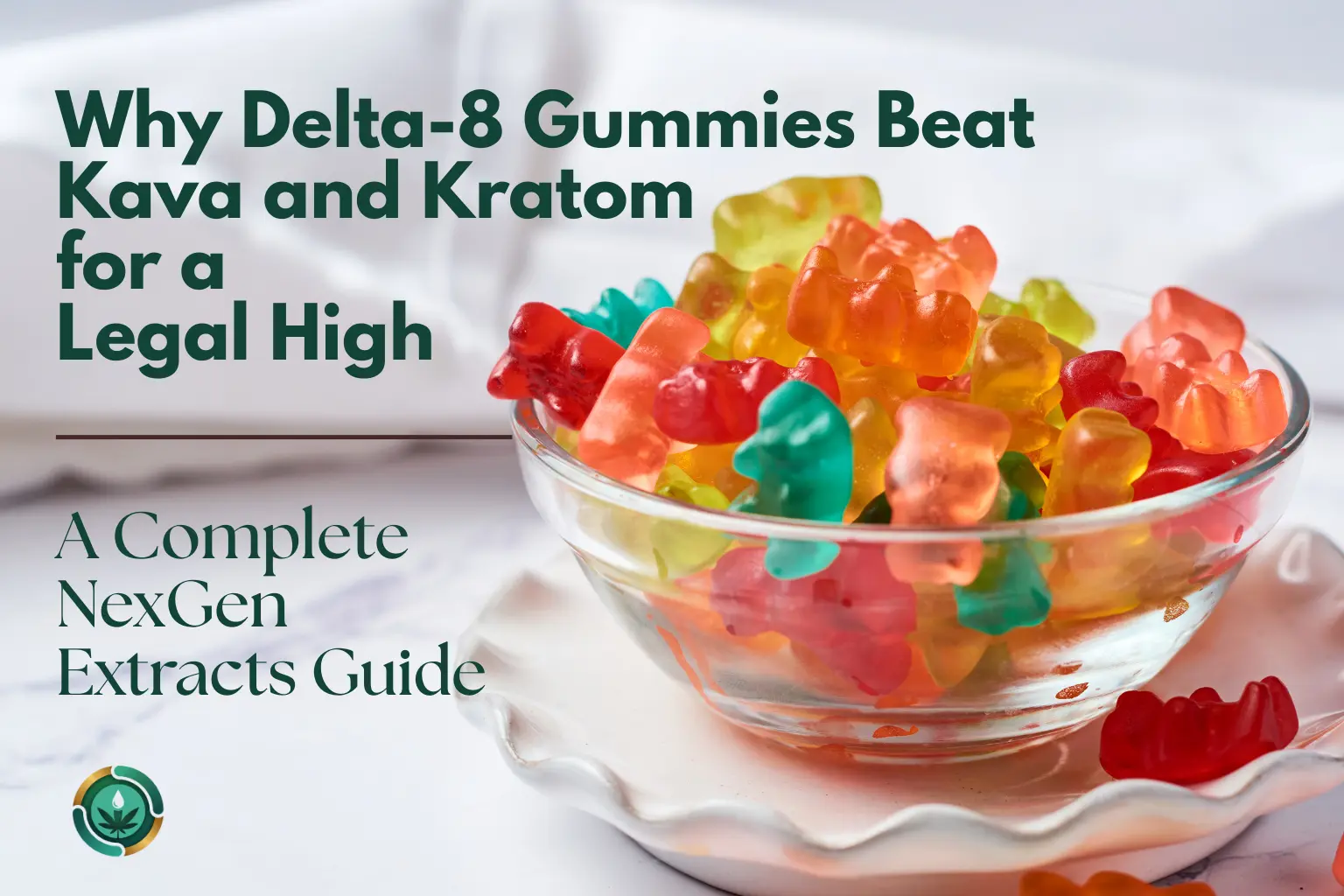
A Complete NexGen Extracts Guide
The search for a legal, reliable, and satisfying high has led many Americans toward natural alternatives. For years, kava and kratom dominated this space, mostly due to their plant-based appeal and mood-altering effects. But in the last few years, one product has taken over the U.S. market with incredible speed: Delta-8 gummies.
This shift didn’t happen by accident. Consumers today want consistency. They want safety. They want legality without loopholes. And they want an experience that actually feels good, without risking dependency or unpleasant side effects. Delta-8 gummies have risen above kava and kratom because they offer exactly that.
This guide explores everything you need to know about kava, kratom, and Delta-8 THC, compares their effects, legality, safety, and market demand, and reveals why Delta-8 gummies have become the preferred legal high across the country.
Understanding Kava: The Calming Root from the Pacific
Kava is one of the oldest traditional herbs used in the South Pacific. Extracted from the root of the Piper methysticum plant, kava is typically consumed as a drink with earthy, bitter notes. For centuries, island communities have used it in ceremonies, celebrations, and social gatherings to promote relaxation and connection.
In the United States, kava has gained popularity among people seeking natural stress relief. Wellness circles praise it for its calming effect, and kava bars have emerged across major cities, offering a social but alcohol-free way to unwind.
Effects of Kava
Kava’s primary effects come from compounds called kavalactones. These interact with receptors in the brain that influence stress and muscle tension.
Users often report:
- Deep relaxation
- Mild mood elevation
- Reduced anxiety
- A slight numbing or calming sensation
These effects are generally subtle, making kava appealing for individuals who want relaxation without feeling intoxicated.
Limitations of Kava
Despite its benefits, kava has notable drawbacks.
First, it requires preparation. The root must be strained, kneaded, or mixed, and the taste is far from pleasant. Second, kava’s potency varies dramatically depending on strain quality and preparation technique. Two servings from different batches may produce completely different results.
Finally, frequent high-dose use has been linked to liver concerns. While debates around this topic continue, the potential risk has pushed many people to seek alternatives with more controlled dosing.
Kava certainly holds cultural and wellness value, but for those seeking a legal high with predictable effects, its limitations become difficult to overlook.
Understanding Kratom: The Southeast Asian Energy Leaf
Kratom comes from the Mitragyna speciosa tree and is traditionally chewed or brewed into tea by workers in Southeast Asia. In the U.S., kratom skyrocketed in popularity over the last decade among people looking for mood elevation, stimulation, or natural relief.
Its effects vary widely depending on dosage:
- Low doses can feel stimulating and energizing
- Moderate doses may lift mood or increase sociability
- High doses can become sedating or heavy
This dual-nature effect has made kratom a controversial herbal remedy.
Effects of Kratom
Kratom contains alkaloids such as mitragynine and 7-hydroxymitragynine, which interact with the body’s opioid receptors. Unlike traditional opioids, kratom does not produce identical effects, but the interaction is strong enough to create intensity that some users find overwhelming.
Many U.S. consumers use kratom for:
- Enhanced focus
- Energy and motivation
- Mood elevation
- Relief or relaxation
However, because kratom’s potency varies dramatically between strains, vendors, and even batches, its effects are often unpredictable.
Limitations of Kratom
The biggest concern surrounding kratom is dependency. Long-term use at high doses can lead to habit-forming behavior, withdrawal symptoms, or tolerance buildup. Regulatory agencies have debated kratom’s safety for years, and several states and local governments have restricted or banned its sale.
Kratom also has a bitter, sharp taste that many users struggle to tolerate, pushing consumers toward capsules or extracts, which can be even more potent and unpredictable.
While kratom provides strong effects, the lack of consistency, dependency concerns, and mixed legality have caused many users to reconsider their options.
Understanding Delta-8 Gummies: The Nation’s New Legal High
Delta-8 THC is a naturally occurring cannabinoid extracted from hemp. It provides a psychoactive experience similar to Delta-9 THC (traditional cannabis), but with a smoother, gentler, and more clear-headed effect.
In the U.S., Delta-8 became legal under the 2018 Farm Bill as long as it is derived from hemp and contains less than 0.3% Delta-9 THC. This legal status, combined with its enjoyable effects, triggered an explosion in popularity.
Delta-8 gummies quickly became the most in-demand product in the hemp industry for several reasons:
- They are easy to use
- They taste good
- They provide consistent dosing
- Their effects are mild yet enjoyable
- They offer a legal, accessible way to unwind
Effects of Delta-8 Gummies
Delta-8 is psychoactive but smoother than Delta-9. Users often describe the experience as balanced and functional, offering relaxation without loss of control.
Common effects include:
- A gentle euphoric high
- Stress reduction
- Improved mood
- Relaxed body sensations
- Enhanced sociability
- Better sleep
Unlike kratom and kava, Delta-8 offers a clear psychoactive experience, which is exactly what many users seek when choosing a legal high.
Advantages of Delta-8 Gummies
Delta-8 gummies provide unmatched consistency. Each gummy contains a measured dose, minimizing surprises. The flavors mask any plant bitterness, making them more pleasant than kratom powders or kava drinks.
Because Delta-8 interacts with cannabinoid receptors rather than opioid receptors, it generally carries a lower dependency risk when used responsibly. Its effects are also more predictable than herbal preparations, which depend heavily on growing conditions and plant strains.
Delta-8 Gummies vs. Kava vs. Kratom: A Direct Comparison
Now that we understand each substance individually, it’s time to compare them across the categories that matter most to consumers: effects, safety, legality, consistency, and market presence.
Effects
Kava offers calm. Kratom offers stimulation or sedation depending on dosage. Delta-8 offers a clean, enjoyable high that remains controllable and smooth.
For people actively seeking a legal high rather than mere relaxation or stimulation, Delta-8 clearly leads.
Safety
Each substance carries considerations:
- Kava may affect the liver when used excessively
- Kratom can become habit-forming and is constantly debated for safety
- Delta-8’s safety profile is generally favorable when sourced from reputable, lab-tested brands
Delta-8 stands out because it offers controlled dosing, COA-verified purity, and a cleaner experience for new or casual users.
Legality
Legality is a major deciding factor for U.S. consumers.
- Kava is legal, but not widely regulated
- Kratom is banned or restricted in several states and counties
- Delta-8 is legal in most U.S. states thanks to federal hemp law
The legal clarity of Delta-8 makes it far more accessible and appealing than kratom, whose legality can change unexpectedly.
Consistency
This is where Delta-8 gummies win by a large margin.
- Kava potency varies by root quality and preparation
- Kratom strength varies by strain, region, and vendor
- Delta-8 gummies come in standardized milligram doses
Consumers today prefer precise, controlled experiences instead of rolling the dice with herbal variability.
Market Demand
Delta-8 has dominated the legal high market since 2021. Smoke shops, gas stations, online stores, wellness retailers, and hemp boutiques all carry Delta-8 gummies. Their demand is higher than ever because they offer exactly what modern consumers want.
Kava remains a niche wellness product. Kratom has a dedicated but controversial user base. Delta-8, however, is firmly mainstream.
Why Delta-8 Gummies Are the New Standard for a Legal High
Delta-8 gummies represent a modern solution for adults seeking a legal, enjoyable, controlled way to unwind. They reflect today’s priorities: safety, legality, consistency, and taste.
Kava and kratom appeal to certain groups, but they do not approach the broader market demand or the ease of use that Delta-8 delivers. For someone who wants a smooth high without complexity or legal confusion, Delta-8 gummies are the clear choice.
Consumers appreciate that they can take one gummy, wait for the effects, and enjoy predictable, relaxing, and uplifting sensations. No brewing roots. No bitter powders. No guessing the potency. No worrying about legality in most states.
Delta-8 gummies are everything modern hemp consumers look for, and that is why they continue to rise above kava and kratom as the top legal high in the United States.
About the Author