A NexGen Extracts Guide to THCA Science, Experience, and Safety
THCA flower has become one of the most talked-about products in the modern cannabinoid market. To many consumers, it looks identical to traditional cannabis flower, smells just as potent, and—once heated—can feel very similar. Yet on paper, THCA flower is often sold under hemp regulations and described as “non-psychoactive.”
This contrast between what THCA flower is chemically and how it feels in real use is the source of both its popularity and its confusion.
Understanding THCA flower requires understanding what happens before and after heating. This article breaks down the science behind THCA, explains how its effects change with heat, compares it to Delta-9, Delta-8, and other cannabinoids, explores its place in the wider market, and clearly explains who should not use THCA flower due to elevated risk.
What Is THCA Flower, Really?
THCA stands for tetrahydrocannabinolic acid. It is the naturally occurring precursor to THC found in raw cannabis plants. Freshly grown cannabis does not produce large amounts of Delta-9 THC. Instead, it produces THCA.
THCA flower is cannabis flower that:
- contains high levels of THCA
- contains very low Delta-9 THC by dry weight
- meets hemp-based legal thresholds on paper
From a botanical standpoint, THCA flower and marijuana flower are the same plant species. The difference lies in how cannabinoids are measured and classified, not how the plant grows.
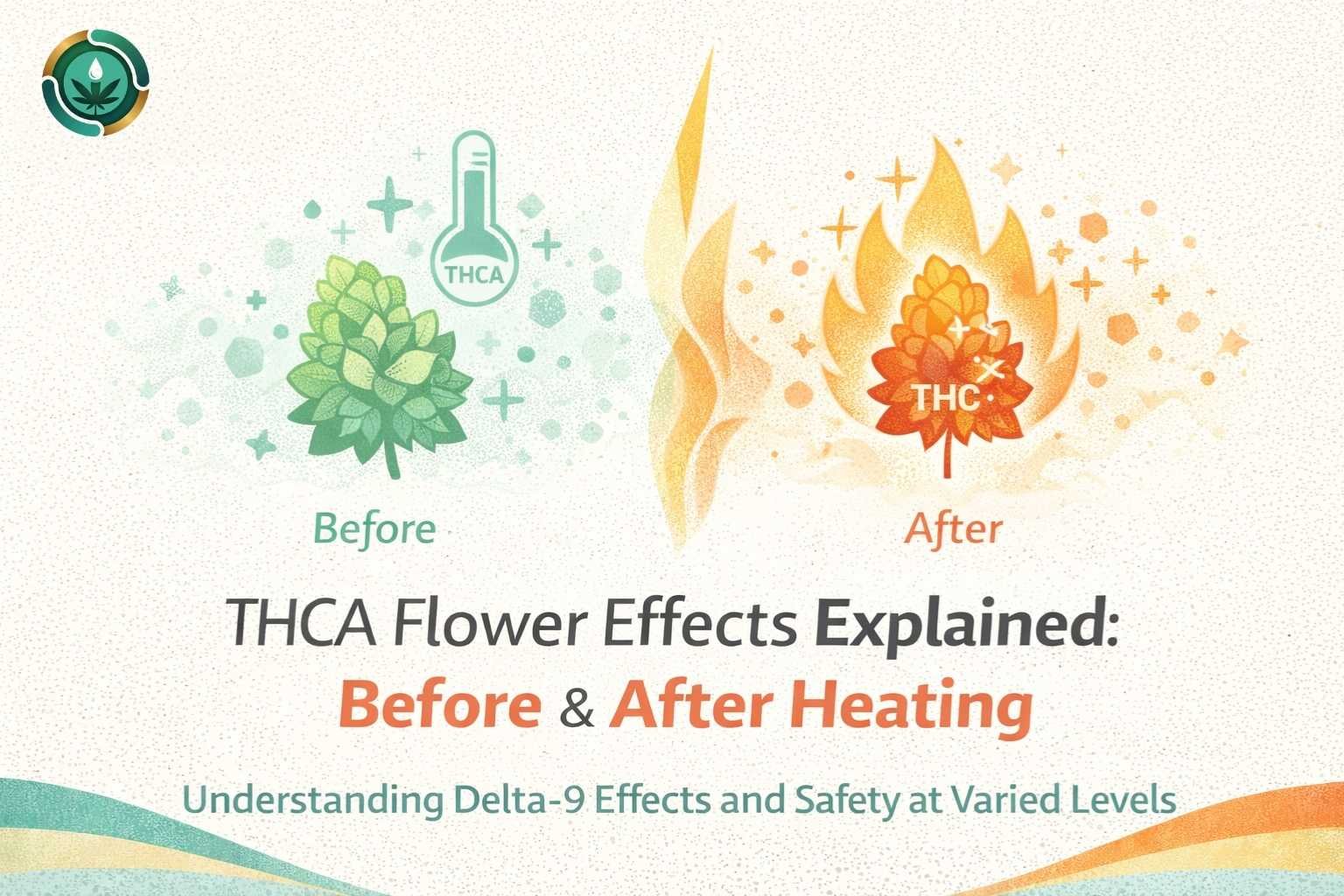
THCA Before Heating: What Does It Actually Do?
In its raw form, THCA is non-intoxicating. This is a crucial point.
Effects of unheated THCA
- no traditional “high”
- no euphoria
- no strong mental alteration
- minimal noticeable psychoactive effects
Some users report subtle experiences such as:
- mild body awareness
- general calm
- no impairment
However, these effects are not comparable to THC. Without heat, THCA does not strongly bind to CB1 receptors in the brain—the receptors responsible for intoxication.
This is why raw cannabis or unheated THCA flower does not produce the classic cannabis high.
Why Heating Changes Everything
The defining moment for THCA flower is heat.
When THCA is exposed to heat through:
- smoking
- vaping
- baking
- combustion
…it undergoes a chemical process called decarboxylation.
What decarboxylation does
- removes a carboxyl group from THCA
- converts THCA into Delta-9 THC
- activates psychoactive potential
Once this happens, THCA flower is no longer behaving as a non-intoxicating compound. It becomes functionally similar to traditional THC-rich cannabis.
THCA After Heating: What Users Actually Feel
After heating, THCA flower produces effects that many users recognize immediately.
Common effects after heating
- euphoria
- altered perception
- mental relaxation or stimulation
- enhanced sensory experience
- body relaxation or heaviness
- appetite increase
In practice, heated THCA flower often feels closer to Delta-9 THC than to Delta-8 or CBD, especially when the flower has a high THCA percentage and rich terpene profile.
The experience is influenced by:
- how much THCA converts to THC
- how hot the flower is heated
- terpene composition
- individual tolerance
Why THCA Flower Can Feel Stronger Than Expected
Many consumers underestimate THCA flower because:
- it is described as “non-psychoactive”
- it is sold under hemp regulations
- Delta-9 THC content looks low on lab reports
However, THCA percentage represents potential THC, not current THC.
A flower with:
- 25% THCA
- 0.2% Delta-9 THC
can still produce a powerful experience once heated.
This gap between legal classification and lived experience is where confusion—and risk—often arises.
THCA Flower vs Delta-9 THC
Delta-9 THC
- psychoactive immediately
- effects are direct and predictable
- regulated in licensed cannabis markets
THCA Flower
- non-intoxicating before heating
- becomes psychoactive after heating
- legal status depends on lab-verified Delta-9 levels
In real-world use, heated THCA flower and Delta-9 flower can feel remarkably similar, especially for experienced users.
THCA Flower vs Delta-8 THC
Delta-8
- mildly psychoactive
- smoother, more body-focused
- less mental intensity
THCA (after heating)
- stronger mental effects
- more immersive experience
- closer to traditional cannabis
Users who find Delta-8 too mild often gravitate toward THCA flower for a fuller experience.
THCA Flower vs CBD
CBD and THCA serve very different purposes.
- CBD is non-intoxicating and calming
- THCA becomes intoxicating after heating
CBD is often preferred by people seeking relief without mental alteration, while THCA flower appeals to those wanting a traditional cannabis-like experience.
The Role of Terpenes in THCA Flower Effects
Terpenes play a major role in how THCA flower feels after heating.
Terpenes influence:
- relaxation vs stimulation
- anxiety potential
- body vs mental dominance
- overall mood
Two THCA flowers with identical THCA percentages can feel very different due to terpene profiles alone.
This is why lab reports and strain transparency matter.
THCA Flower in the Wider Cannabinoid Market
THCA flower exists because:
- consumers want flower-based experiences
- cannabis legality varies by state
- hemp definitions focus on Delta-9 THC
It acts as a bridge product, offering access to traditional-style flower experiences in markets without recreational cannabis.
However, this position also creates:
- consumer misunderstanding
- inconsistent regulation
- increased responsibility on the user
Who Should Avoid THCA Flower (High-Risk Groups)
Because THCA converts into Delta-9 THC when heated, it carries many of the same risks as traditional cannabis.
People who should avoid THCA flower entirely
- individuals with a history of psychosis or schizophrenia
- people with severe anxiety or panic disorders
- pregnant or breastfeeding individuals
- people with serious cardiovascular conditions
- adolescents and young adults with developing brains
People who should use extreme caution
- individuals taking prescription medications
- people highly sensitive to THC
- first-time cannabinoid users
- those with mood instability
THCA flower’s legal status does not make it safer for these groups.
Common Misconceptions About THCA Flower
“THCA flower is non-psychoactive”
True only before heating.
“It’s safer because it’s legal”
Legal status does not equal lower risk.
“It’s basically CBD”
THCA and CBD behave very differently after heating.
“Delta-9 content tells the whole story”
THCA percentage matters just as much for experience.
Why Education Matters With THCA Flower
Most negative experiences happen when:
- users underestimate potency
- expectations don’t match reality
- heating effects aren’t understood
- personal risk factors are ignored
Education transforms THCA flower from confusing to intentional.
How to Approach THCA Flower Responsibly
- understand lab reports
- respect THCA percentage
- consider terpene profiles
- start low if inexperienced
- avoid use if in a high-risk group
THCA flower demands the same respect as traditional cannabis once heat is involved.
Final Thoughts
THCA flower is not mysterious—it is misunderstood.
Before heating, THCA is non-intoxicating and subtle. After heating, it becomes Delta-9 THC, producing effects that can rival traditional cannabis flower. This transformation explains both its popularity and its risks.
Understanding what happens before and after heating is the key to safe, informed use. THCA flower is not for everyone, and its legal classification should never replace personal risk awareness.
At NexGen Extracts, clarity matters. When consumers understand the science behind THCA flower, they can make choices that align with their experience level, health considerations, and expectations—without surprises.
About the Author