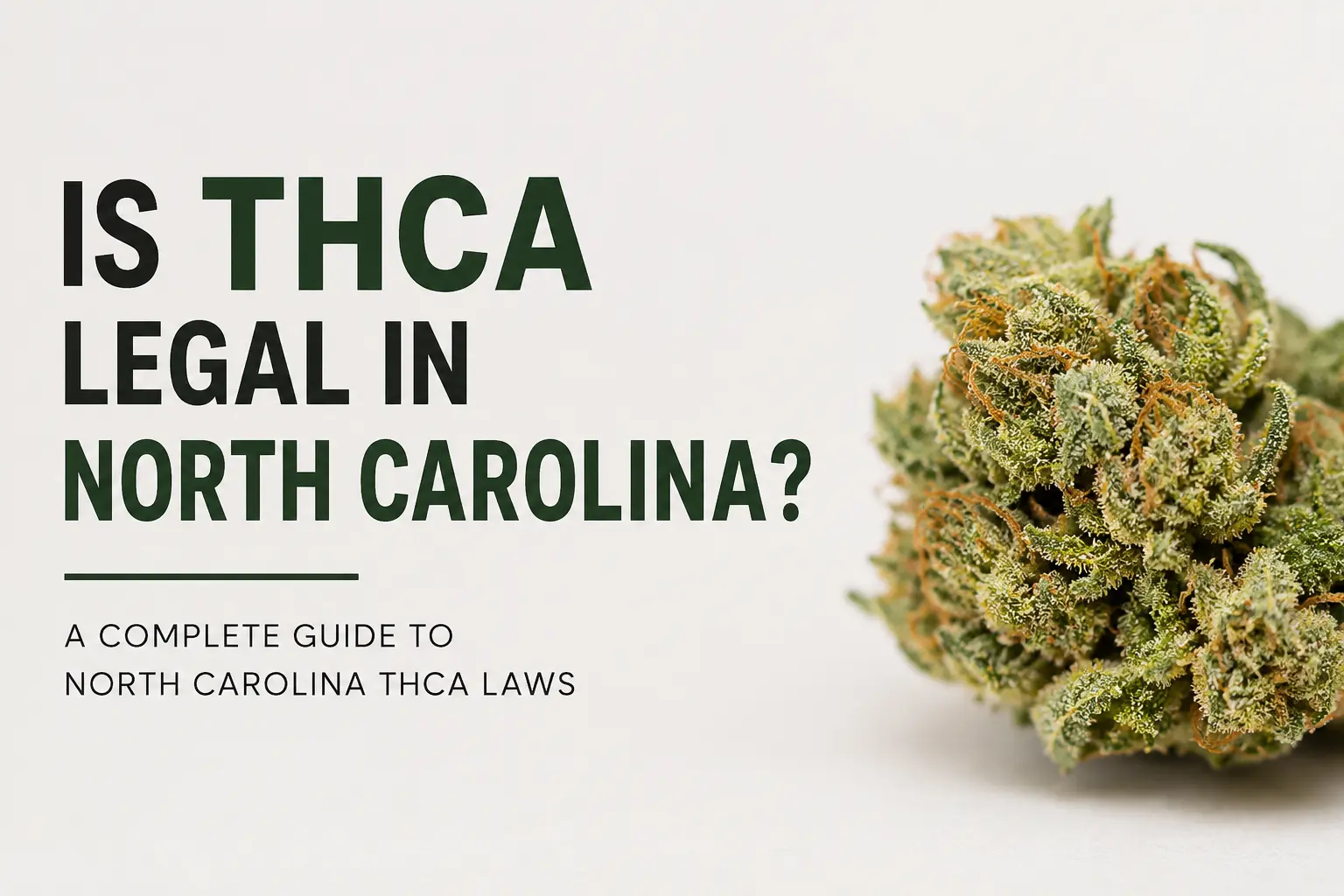
As cannabis laws continue to evolve across the United States, many consumers are asking: Is THCA legal in North Carolina? Whether you’re interested in hemp-derived products, curious about local regulations, or wondering how THCA compares to traditional THC, understanding North Carolina THCA laws is essential before making a purchase.
In this guide, we’ll break down the legal status of THCA, explain how it differs from THC, and answer common questions about cannabis and hemp products in the state.
What Is THCA?
THCA (Tetrahydrocannabinolic Acid) is a naturally occurring cannabinoid found in raw cannabis and hemp plants. Unlike THC, THCA is non-intoxicating in its natural state. However, when heated through smoking, vaping, or cooking, THCA converts into THC through a process called decarboxylation.
This unique characteristic has made THCA North Carolina products increasingly popular among consumers looking for hemp-derived alternatives.
Is THCA Legal in North Carolina?
The short answer is yes, THCA is currently legal in North Carolina under specific conditions.
The legality stems from the 2018 Farm Bill, which federally legalized hemp and hemp-derived products containing less than 0.3% Delta-9 THC on a dry-weight basis. North Carolina adopted similar hemp regulations, allowing the sale of qualifying hemp products.
As a result, many retailers offer North Carolina THCA flower, concentrates, and other hemp-derived products, provided they comply with federal and state hemp regulations.
However, consumers should understand that legal interpretations can change, and lawmakers continue to evaluate cannabinoid regulations.
Legal Framework: Farm Bill, Delta-9 THC, and Controlled Substance Status
To understand whether THCA is legal in North Carolina, it’s important to first examine the legal framework that governs hemp-derived cannabinoids.
The foundation of current hemp laws comes from the 2018 Farm Bill, which federally legalized hemp and hemp-derived products containing no more than 0.3% Delta-9 THC by dry weight. This legislation removed compliant hemp from the federal list of controlled substances, opening the door for cannabinoids such as CBD, Delta-8, and THCA to enter the market.
Under both federal law and current North Carolina THCA laws, the legality of a hemp product is generally determined by its Delta-9 THC concentration rather than its THCA content. As a result, many THCA products sold in North Carolina are marketed as federally compliant hemp products because they remain below the legal Delta-9 THC threshold.
However, THCA occupies a legal gray area. Although it is non-intoxicating in its raw form, THCA converts into THC when exposed to heat through smoking, vaping, or cooking. This conversion has led regulators and lawmakers to closely examine how THCA products should be classified under existing cannabis laws.
From a controlled substance perspective, marijuana and high-THC cannabis products remain illegal under North Carolina law, while hemp-derived products that comply with federal standards continue to be permitted. This distinction is crucial for consumers who want to purchase or possess THCA North Carolina products without violating state or federal regulations.
As hemp regulations continue to evolve, businesses and consumers should stay informed about potential legislative updates that may impact the future legal status of THCA and other hemp-derived cannabinoids.
Understanding North Carolina THCA Laws
When discussing North Carolina THCA laws, it’s important to distinguish between hemp and marijuana.
Under current law:
- Hemp products must contain less than 0.3% Delta-9 THC.
- Hemp-derived cannabinoids, including THCA, may be sold if they meet legal hemp requirements.
- Marijuana remains illegal for recreational use in North Carolina.
- Law enforcement may sometimes struggle to distinguish hemp flower from marijuana due to their similar appearance and aroma.
Because THCA can convert into THC when heated, legal discussions surrounding THCA continue to evolve at both state and federal levels.
THC Legal in North Carolina: What You Need to Know
Many people searching for THC legal in North Carolina are surprised to learn that recreational marijuana remains illegal.
Currently:
- Recreational cannabis use is prohibited.
- Medical marijuana access remains limited compared to many other states.
- Hemp-derived cannabinoids may be legally sold if compliant with hemp regulations.
Therefore, while certain hemp products are legal, traditional high-THC marijuana products are not generally permitted under North Carolina law.
Is Pot Legal in North Carolina?
A common question is: Is pot legal in North Carolina?
At this time, recreational marijuana is not legal in North Carolina. Possession and use of marijuana may still result in criminal penalties depending on the amount and circumstances involved.
This means the answer to is north carolina legal for weed remains largely no for recreational users.
Did North Carolina Legalize Weed?
Many residents continue to ask: Did North Carolina legalize weed?
The state has not legalized recreational marijuana. However, hemp-derived cannabinoids such as CBD, Delta-8, and THCA have become widely available due to hemp legislation.
As public opinion shifts and legislative discussions continue, future cannabis reforms remain possible, but recreational cannabis legalization has not yet occurred statewide.
Is CBD Legal in North Carolina?
Yes, CBD is legal in North Carolina when derived from federally compliant hemp.
Consumers can purchase CBD products throughout the state, including:
- CBD oils
- CBD gummies
- CBD capsules
- Topicals
- Hemp-derived wellness products
When shopping, consumers should look for third-party laboratory testing and certificates of analysis to verify product compliance and quality.
Delta 8 in North Carolina
Interest in Delta 8 in North Carolina has grown rapidly over the past few years.
Delta-8 THC is a hemp-derived cannabinoid that produces mild psychoactive effects compared to traditional Delta-9 THC. Because it can be derived from legal hemp, Delta-8 products are commonly available in many retail stores throughout North Carolina.
However, regulations surrounding Delta-8 continue to evolve, making it important for consumers to stay informed about potential legislative changes.
Can You Smoke THCA in Public North Carolina?
One of the most frequently asked questions is: Can you smoke THCA in public North Carolina?
Even if a THCA product is legally purchased, smoking or consuming hemp products in public areas can create complications. Since THCA flower closely resembles marijuana, law enforcement officers may not be able to immediately distinguish between legal hemp and illegal cannabis.
For this reason, consumers should exercise caution and familiarize themselves with local ordinances and property rules before consuming hemp-derived products in public spaces.
Hemp Businesses in North Carolina
The state’s hemp market continues to expand, with consumers frequently searching for businesses such as Hemp Pharmacy Wilmington North Carolina and Hemp Haven North Carolina when looking for compliant hemp-derived products.
These retailers often carry:
- THCA flower
- CBD products
- Delta-8 products
- Hemp-derived wellness supplements
- Vape products
Consumers should always verify that products include laboratory testing and meet current legal standards.
How to Verify Compliance: COAs and Lab Testing
When purchasing THCA products, one of the most important steps is verifying that they comply with federal and state hemp regulations. The best way to do this is by reviewing a product’s Certificate of Analysis (COA) and third-party laboratory test results.
A COA is an independent lab report that provides detailed information about a product’s cannabinoid profile, potency, and safety. Reputable manufacturers and retailers make these reports readily available, often through QR codes on product packaging or directly on their websites.
When reviewing a COA, consumers should pay close attention to:
- Delta-9 THC levels
- THCA content
- Total cannabinoid profile
- Heavy metal testing
- Pesticide screening
- Residual solvent analysis
- Microbial contamination results
For consumers purchasing THCA North Carolina products, verifying Delta-9 THC content is especially important. Hemp-derived products must remain within the legal limit of 0.3% Delta-9 THC on a dry-weight basis to qualify as federally compliant hemp.
Lab testing also helps ensure product quality and transparency. Since the hemp industry continues to evolve, independent testing provides an additional layer of confidence that a product contains the ingredients listed on its label and meets applicable safety standards.
Whether you’re buying flower, concentrates, vapes, or edibles, always choose products from companies that provide recent, third-party lab reports. Reliable testing is one of the most effective ways to confirm compliance with current North Carolina THCA laws and make informed purchasing decisions.
THC in North Carolina: The Future Outlook
The conversation surrounding THC in North Carolina continues to evolve. While recreational cannabis remains illegal, hemp-derived cannabinoids have created a growing marketplace for alternative products.
As lawmakers debate future cannabis reforms, North Carolina residents can expect ongoing discussions regarding:
- Medical cannabis expansion
- Hemp regulations
- THCA legality
- Delta-8 regulations
- Consumer safety standards
Final Thoughts: Is THCA Legal in North Carolina?
So, is THCA legal in North Carolina? Under current hemp regulations, THCA products derived from compliant hemp are generally legal to buy and possess. However, consumers should remain aware of changing regulations and understand that THCA’s ability to convert into THC creates ongoing legal debate.
Whether you’re researching North Carolina THCA laws, wondering if CBD is legal in North Carolina, exploring Delta 8 in North Carolina, or asking did North Carolina legalize weed, staying informed is the best way to ensure compliance with state and federal regulations.
As cannabis policy continues to evolve, North Carolina remains a state worth watching for future developments in hemp and cannabis legislation.
About the Author