Introduction
The Question Everyone Is Asking in 2026
Walk into a hemp shop, browse an online cannabinoid store, or scroll through cannabis forums in 2026, and you’ll notice one product dominating the conversation: THCA.
For many consumers, the first reaction is confusion.
“If THCA turns into THC, how is it still legal?”
It’s a reasonable question. After all, THC is the cannabinoid most commonly associated with cannabis intoxication. Yet THCA flower, THCA pre-rolls, concentrates, and other products continue to be sold across large parts of the United States.
Some people call it a loophole.
Others call it a legal hemp product.
Many lawmakers are still debating where THCA fits within modern cannabis regulations.
The reality is more complicated than most headlines suggest.
THCA exists at the intersection of science, agriculture, law, and consumer demand. Its legality is tied to how hemp is defined under federal law, how cannabinoids are measured in laboratory testing, and how individual states choose to regulate hemp-derived products.
In this guide, we’ll break down exactly how THCA remains legal in 2026, explore the laws behind it, explain why some states allow it while others restrict it, and discuss what the future may hold for one of the fastest-growing segments of the hemp industry.
If you’ve ever wondered why THCA products are still available despite ongoing legal debates, this article will give you a complete understanding of the issue.
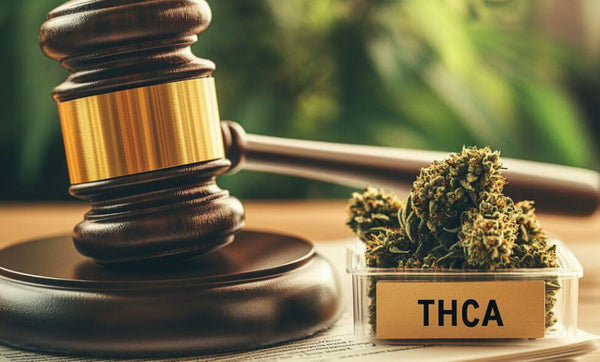
What Is THCA?
Before discussing legality, it’s important to understand what THCA actually is.
THCA stands for tetrahydrocannabinolic acid.
It is one of the primary cannabinoids naturally produced by cannabis plants.
In fact, when cannabis plants are harvested fresh, most of the cannabinoid content exists as THCA rather than THC.
This surprises many consumers because they assume cannabis naturally contains large amounts of THC.
In reality, THC usually begins as THCA.
The two compounds are closely related, but they are not identical.
THCA contains an additional molecular component called a carboxyl group. This extra structure changes how the cannabinoid interacts with the human body.
Because of this difference, THCA is generally considered non-intoxicating in its raw form.
However, when exposed to heat through smoking, vaping, or cooking, THCA undergoes a process called decarboxylation.
This process removes the acid group and converts THCA into Delta-9 THC.
That conversion is the foundation of both THCA’s popularity and its legal controversy.
Why THCA Has Become So Popular
The rise of THCA didn’t happen overnight.
Over the last several years, consumers have increasingly sought hemp products that provide experiences similar to traditional cannabis.
THCA products quickly became attractive because they offer several advantages:
- High cannabinoid content
- Availability in many hemp markets
- Familiar flower appearance
- Strong aroma profiles
- Wide variety of strains
- Expanding product selection
For many consumers, THCA flower looks nearly identical to cannabis sold in regulated marijuana dispensaries.
The buds can be dense, aromatic, and covered in trichomes.
As product quality improved, consumer demand surged.
By 2026, THCA has become one of the most talked-about categories in the hemp industry.
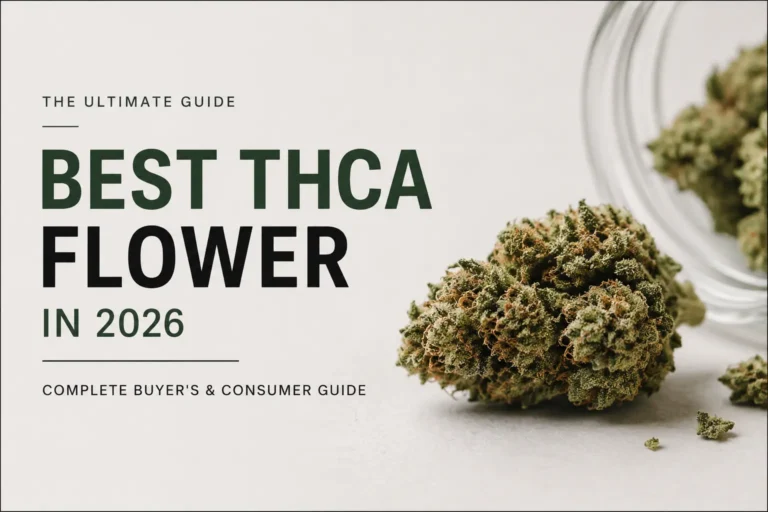
As demand continues rising, consumers are becoming more selective about quality. Potency alone is no longer enough. Buyers now pay closer attention to terpene profiles, cultivation methods, freshness, and third-party lab testing. If you’re exploring premium strains, this guide on the best THCA flower of 2026 breaks down what separates top-shelf flower from average products and highlights some of the most talked-about strains in today’s market. best THCA flower of 2026
Understanding the 2018 Farm Bill
To understand why THCA remains legal in 2026, we need to go back to one of the most important pieces of hemp legislation in American history.
The Agricultural Improvement Act of 2018, commonly known as the Farm Bill, fundamentally changed the hemp industry.
Before this law, hemp and marijuana were often treated similarly under federal regulations.
The Farm Bill created a legal distinction.
It defined hemp as cannabis containing no more than 0.3% Delta-9 THC on a dry-weight basis.
This definition became the cornerstone of modern hemp regulation.
The key phrase here is “Delta-9 THC.”
The law specifically focused on Delta-9 THC concentration rather than total cannabinoid content.
This distinction would later become incredibly important for THCA products.
Because THCA is chemically distinct from Delta-9 THC, many hemp businesses argued that products containing THCA could still qualify as hemp if Delta-9 THC remained below the legal threshold.
That interpretation helped create the foundation for today’s THCA market.
Curious about what goes into producing high-quality THCA flower? From selecting the right genetics to managing harvest timing and cannabinoid levels, cultivation plays a major role in the final product. If you’re interested in the growing process, check out our guide on Expert Tips on How to Grow Potent THCA Flower at Home, where we break down the techniques growers use to maximize potency and quality.
The Difference Between THCA and THC
One of the biggest reasons THCA remains legal involves understanding the difference between THCA and THC.
Many people use the terms interchangeably, but legally and scientifically they are different compounds.
THCA:
- Exists naturally in raw cannabis
- Contains an acid group
- Is generally non-intoxicating before heating
- Is the precursor to THC
Delta-9 THC:
- Forms after decarboxylation
- Produces intoxicating effects
- Is specifically referenced in federal hemp definitions
- Has historically been the primary target of cannabis regulations
This distinction may seem technical, but it has enormous legal implications.
Federal hemp law was originally written around Delta-9 THC concentration.
Because THCA and Delta-9 THC are different compounds, regulators and courts have spent years debating how they should be treated under existing laws.
What Is Decarboxylation?
Decarboxylation is one of the most important concepts in understanding THCA legality.
Simply put, decarboxylation is the process of converting THCA into THC through heat.
This conversion happens when cannabis is:
- Smoked
- Vaped
- Dabbed
- Cooked
- Heated during extraction
Without heat, THCA remains in its acidic form.
Once heat is introduced, the cannabinoid changes structure and becomes Delta-9 THC.
This scientific reality is why THCA generates so much legal attention.
Critics argue that because THCA easily converts into THC, it should be regulated similarly.
Supporters argue that federal law specifically addresses Delta-9 THC, not THCA itself.
This disagreement remains central to ongoing regulatory debates.
The Role of Total THC
One term you’ll frequently hear in THCA discussions is Total THC.
Total THC attempts to measure the amount of THC a product could potentially contain after all THCA converts through decarboxylation.
Rather than looking only at Delta-9 THC levels, Total THC calculations estimate future THC potential.
Regulators who support Total THC testing argue that it provides a more realistic picture of a product’s actual potency.
From their perspective, focusing solely on current Delta-9 THC levels ignores what consumers ultimately experience after heating the product.
This issue has become one of the biggest battlegrounds in hemp regulation.
Why THCA Remains Legal in Many Areas
Despite ongoing debates, THCA remains available in numerous markets across the United States.
Several factors contribute to this situation.
Federal Hemp Definitions
The Farm Bill’s focus on Delta-9 THC created legal space for hemp-derived THCA products.
Many businesses argue that products meeting federal hemp definitions should remain lawful.
Regulatory Ambiguity
Cannabis laws remain complex and subject to interpretation.
Different agencies sometimes take different approaches to THCA.
This uncertainty has allowed the market to continue growing.
State-Level Differences
Not all states regulate cannabinoids the same way.
Some states explicitly permit THCA hemp products.
Others have adopted stricter standards.
The result is a patchwork of regulations across the country.
Ongoing Litigation
Legal challenges continue shaping cannabinoid policy.
Courts are frequently asked to interpret hemp laws and clarify regulatory authority.
These legal proceedings contribute to continued uncertainty surrounding THCA.
How Hemp Farmers Produce THCA Flower
Many consumers mistakenly believe THCA flower is synthetic.
In reality, most THCA flower is produced through traditional cultivation methods.
Growers use specialized genetics bred to produce:
- High THCA levels
- Low Delta-9 THC levels
- Strong terpene profiles
- Dense flower structures
Cultivation requires careful monitoring because THC levels can change as plants mature.
Farmers often conduct multiple laboratory tests during the growing cycle to ensure compliance.
This process involves:
- Seed selection
- Environmental management
- Nutrient optimization
- Harvest timing
- Laboratory verification
Producing compliant THCA flower requires significant expertise and attention to detail.
Curious about what happens after cultivation begins? From selecting hemp genetics to harvesting, curing, and laboratory testing, understanding the production journey can help consumers appreciate the quality behind premium THCA products. Read our guide on How Is THCa Flower Made? The Step-by-Step Process Explained to see exactly how THCA flower goes from seed to shelf.
Why Some States Restrict THCA
Although THCA remains available in many markets, not every state welcomes it.
Several states have introduced restrictions based on concerns about cannabinoid conversion and public policy.
Common reasons include:
Concerns About Intoxication
Regulators argue that products converting into THC should be regulated accordingly.
Consumer Protection
Some lawmakers believe stricter oversight improves safety and transparency.
Enforcement Challenges
Distinguishing between hemp and marijuana can be difficult for law enforcement agencies.
Regulatory Consistency
Some states prefer aligning hemp regulations with broader cannabis policies.
As a result, legality often depends on where a consumer lives.
The Economic Impact of THCA
THCA has become a major economic driver within the hemp industry.
Its growth has created opportunities throughout the supply chain.
Benefits for Farmers
Many hemp growers struggled after declines in CBD demand.
THCA provided a new market opportunity.
Higher-value flower products helped some farms remain profitable.
Benefits for Retailers
Retailers gained access to a rapidly growing product category with strong consumer demand.
Benefits for Manufacturers
Processors and extraction companies expanded operations to meet growing demand.
Job Creation
The THCA market supports jobs in:
- Agriculture
- Manufacturing
- Testing laboratories
- Logistics
- Marketing
- Retail
As the industry expands, these economic contributions continue growing.
Common Misconceptions About THCA
The popularity of THCA has also created numerous myths.
Let’s address some of the most common.
Myth 1: THCA Is Fake Cannabis
False.
THCA naturally occurs in cannabis plants.
It is one of the primary cannabinoids produced during cultivation.
Myth 2: THCA Is Synthetic
False.
Most THCA products originate directly from hemp plants.
Myth 3: THCA Is Illegal Everywhere
False.
Legality varies significantly depending on jurisdiction.
Myth 4: THCA and THC Are Exactly the Same
False.
They are closely related but distinct compounds.
Myth 5: THCA Exists Only Because of a Loophole
The situation is more complicated.
The debate involves legal definitions, scientific distinctions, and regulatory interpretation.
What Consumers Should Look for When Buying THCA
As the market grows, quality becomes increasingly important.
Consumers should evaluate products carefully.
Third-Party Lab Testing
Independent laboratory testing helps verify cannabinoid content and product safety.
Clear Labeling
Trustworthy brands provide detailed information about ingredients and cannabinoid levels.
Transparent Sourcing
Consumers should understand where products originate.
Brand Reputation
Established companies often invest more heavily in compliance and quality control.
Freshness
Proper storage and handling contribute significantly to product quality.
Aroma is another important indicator of quality. Fresh THCA flower often has a rich terpene profile that contributes to its scent, flavor, and overall appeal. To learn why THCA can sometimes smell exactly like traditional cannabis and what those aromas reveal about product quality, read Does THCA Smell Like Weed?A Complete 2026 Guide to THCA Aroma, Terpenes, and Cannabis Odor.
Why Lawmakers Continue Debating THCA
The THCA debate is unlikely to disappear anytime soon.
Several competing interests influence policy discussions.
Public Health Considerations
Officials want to ensure products are accurately labeled and responsibly marketed.
Consumer Access
Many consumers support continued access to hemp-derived cannabinoids.
Industry Growth
Businesses advocate for regulatory frameworks that allow innovation.
Scientific Complexity
Cannabinoid chemistry does not always fit neatly into legal categories.
Balancing these interests remains a challenge.
Potential Changes to THCA Laws
The future of THCA depends largely on future legislation and regulatory decisions.
Several possibilities exist.
Scenario 1: Continued Market Growth
If current hemp definitions remain largely unchanged, THCA could continue expanding.
Scenario 2: Expanded Total THC Standards
More jurisdictions may adopt Total THC testing requirements.
Scenario 3: Comprehensive Cannabis Reform
Federal cannabis reform could dramatically reshape the marketplace.
Scenario 4: State-by-State Evolution
States may continue developing their own independent approaches.
Each scenario could significantly impact consumers and businesses.
Frequently Asked Questions About THCA Legality
Is THCA federally legal in 2026?
Federal hemp regulations focus heavily on Delta-9 THC concentrations, but legal interpretations continue evolving. State laws also play a major role.
Can THCA become THC?
Yes. When heated, THCA converts into Delta-9 THC through decarboxylation.
Why do some states ban THCA?
Some states regulate based on Total THC potential rather than current Delta-9 THC levels.
Is THCA naturally occurring?
Yes. THCA is one of the primary cannabinoids naturally produced by cannabis plants.
Will THCA stay legal in the future?
Future legality depends on legislative decisions, court rulings, and regulatory developments.
The Future of THCA Beyond 2026

Looking ahead, THCA is likely to remain one of the most influential cannabinoids in the hemp sector.
Consumer demand continues rising.
Product innovation continues expanding.
Businesses continue investing in cultivation and manufacturing.
At the same time, lawmakers continue evaluating regulatory frameworks.
This combination of growth and uncertainty makes THCA one of the most fascinating areas of the modern hemp industry.
Whether regulations become stricter or more permissive, THCA has already reshaped the cannabinoid marketplace.
Its influence can be seen in cultivation practices, retail strategies, consumer behavior, and public policy discussions nationwide.
Conclusion: How THCA Remains Legal in 2026
So, how does THCA remain legal in 2026?
The answer lies in a combination of science, legislation, and regulatory interpretation.
The 2018 Farm Bill established hemp as cannabis containing no more than 0.3% Delta-9 THC on a dry-weight basis. Because THCA is a separate cannabinoid and the precursor to THC, many hemp products have operated within that legal framework while containing substantial amounts of THCA.
At the same time, debates surrounding Total THC testing, cannabinoid conversion, and state regulations continue influencing the market.
For consumers, the key takeaway is simple: THCA occupies a unique legal position that depends on federal definitions, state laws, laboratory testing standards, and ongoing policy developments.
As lawmakers, businesses, and consumers continue navigating this evolving landscape, one thing is clear:
THCA has become one of the most important cannabinoids in the hemp industry, and its legal status will remain a major topic of discussion for years to come.
About the Author