Introduction
If you’re wondering whether THCA is still legal in Arkansas, the answer has changed significantly over the last few years.
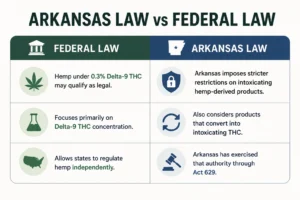
Although the 2018 Farm Bill legalized hemp containing less than 0.3% Delta-9 THC on a dry-weight basis, Arkansas has adopted stricter state laws governing intoxicating hemp-derived cannabinoids. As a result, products like THCA flower, THCA vape cartridges, concentrates, and pre-rolls now fall under much tighter regulation than many consumers realize.
In this guide, we’ll explain:
- Is THCA legal in Arkansas in 2026?
- Is THCA flower legal in Arkansas?
- Are THCA vape products legal?
- How Arkansas law differs from federal law
- What Act 629 means for consumers
- Frequently asked questions
Whether you’re a first-time buyer or simply trying to stay compliant with Arkansas cannabis laws, here’s everything you need to know.
This article is for educational purposes only and should not be considered legal advice.
What Is THCA?
THCA (tetrahydrocannabinolic acid) is the naturally occurring acidic precursor to Delta-9 THC.
Unlike THC, raw THCA does not produce intoxicating effects.
However, once exposed to heat through:
- Smoking
- Vaping
- Dabbing
- Cooking
THCA undergoes decarboxylation and converts into Delta-9 THC—the cannabinoid responsible for the traditional cannabis “high.”
Because of this conversion, many states—including Arkansas—regulate THCA differently than non-intoxicating cannabinoids such as CBD.
Understanding Federal Law
The 2018 Farm Bill legalized hemp provided it contains no more than:
0.3% Delta-9 THC (dry weight).
This created a legal gray area.
Since THCA itself isn’t Delta-9 THC until heated, many hemp companies began selling:
- THCA flower
- THCA concentrates
- THCA vape carts
- THCA diamonds
While some products technically complied with the federal Delta-9 threshold before use, states retained the authority to impose stricter rules. Arkansas chose to do exactly that.
Arkansas Hemp Laws Explained
Arkansas significantly tightened hemp regulations through Act 629 (2023).
The law targets intoxicating hemp-derived cannabinoids, including products that can convert into Delta-9 THC after consumption.
Although THCA is not always named explicitly, regulators treat THCA-rich products as falling within the law because heating converts THCA into psychoactive THC.
Following a 2025 decision by the U.S. Court of Appeals for the Eighth Circuit, Arkansas officials were allowed to enforce Act 629 after an earlier injunction was lifted. As a result, enforcement against many intoxicating hemp-derived products, including THCA flower and THCA vapes, resumed.
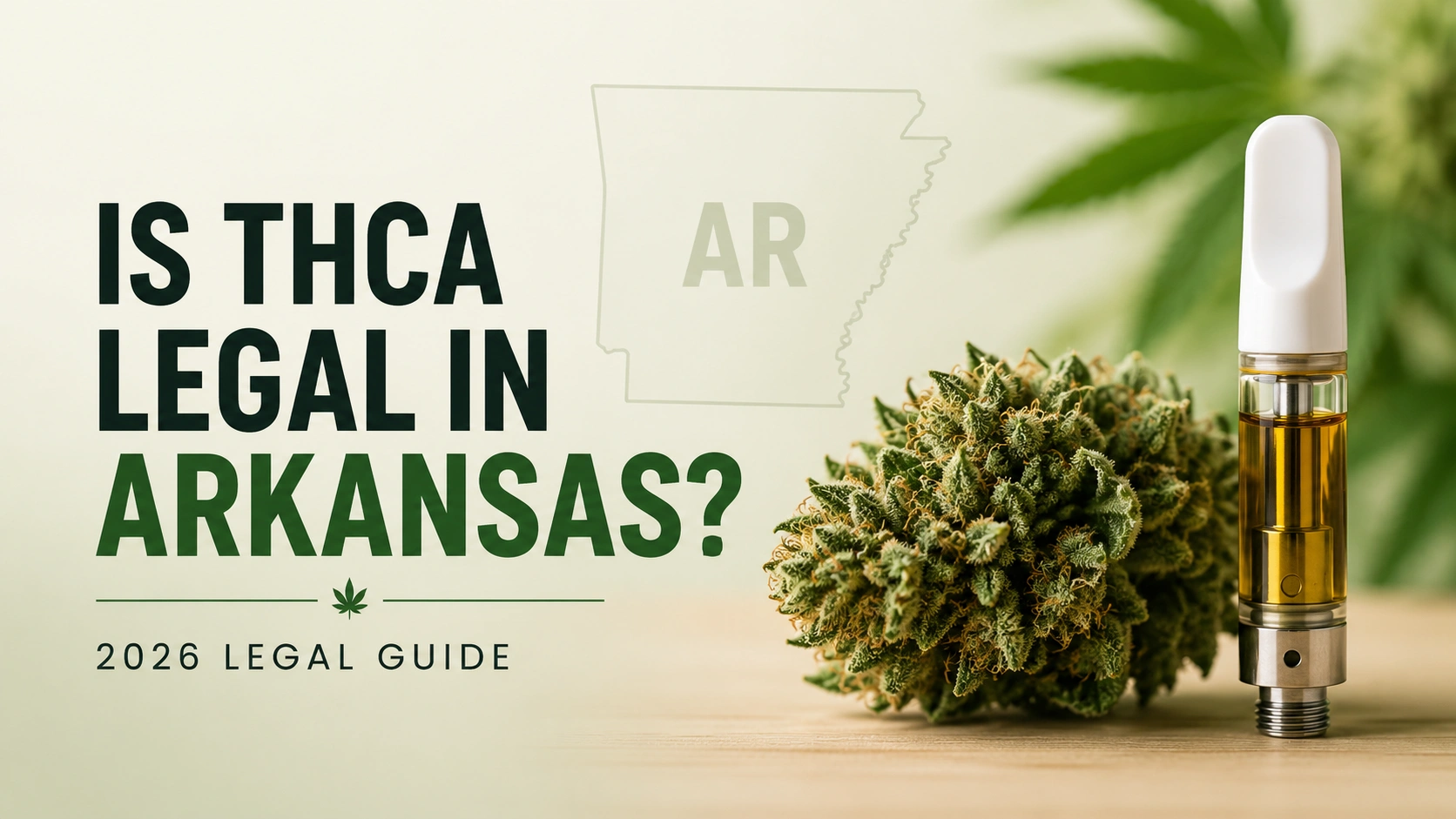
Is THCA Legal in Arkansas in 2026?
For most consumers, no.
Arkansas now treats many THCA products as prohibited under state law.
This includes:
- THCA flower
- THCA pre-rolls
- THCA vape products
- THCA concentrates
- THCA diamonds
While federal hemp rules still exist, Arkansas law is more restrictive and governs products sold or possessed within the state.
Is THCA Flower Legal in Arkansas?
In most situations, no.
THCA flower is specifically affected because it becomes Delta-9 THC when smoked or vaporized.
Lawmakers view this as creating an intoxicating product that falls outside the type of hemp Arkansas permits.
Consumers should not assume that federally compliant hemp flower is automatically legal within Arkansas.
Are THCA Vape Products Legal?
Most THCA vape products are also prohibited in Arkansas.
Vaping rapidly converts THCA into Delta-9 THC, which is one reason these products fall under the state’s restrictions.
Retailers offering THCA vape cartridges in Arkansas may face enforcement actions, and consumers should verify current state regulations before purchasing or possessing these products.
Medical Marijuana vs THCA
Arkansas has a medical marijuana program for qualified patients.
However, medical cannabis laws are separate from hemp-derived THCA products.
Being eligible for medical marijuana does not automatically make THCA flower or hemp-derived THCA vape products legal under Arkansas hemp regulations.
Can You Order THCA Online?
Many online retailers continue to ship hemp-derived products nationwide, but shipping availability does not necessarily mean possession is lawful in every state.
Before ordering THCA products online, Arkansas residents should carefully review current state laws and retailer shipping policies, as many companies restrict shipments to states with active bans or enforcement actions.
What Happens If You’re Caught With THCA?
Potential consequences depend on several factors, including:
- Product type
- Quantity
- Intended use
- Applicable Arkansas statutes
- Law enforcement and prosecutorial discretion
Penalties can vary, so anyone facing a legal issue should consult a qualified Arkansas attorney rather than relying solely on online resources.
Frequently Asked Questions
Is THCA legal in Arkansas?
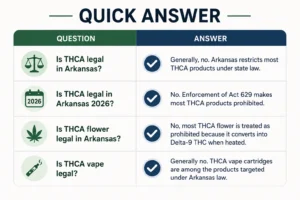
Generally, no. Arkansas restricts most THCA products under current state law.
Is THCA legal in Arkansas in 2026?
No. Enforcement of Act 629 means most THCA products are treated as prohibited in Arkansas.
Is THCA flower legal in Arkansas?
Most THCA flower is not considered legal because it converts into Delta-9 THC when heated.
Is THCA vape legal?
Generally, no. THCA vape cartridges are among the hemp-derived products affected by Arkansas restrictions.
Does the Farm Bill override Arkansas law?
No. The 2018 Farm Bill allows states to adopt stricter hemp regulations, and Arkansas has done so.
Is CBD still legal?
Many non-intoxicating CBD products that comply with Arkansas and federal requirements remain lawful, but consumers should verify that products meet current state standards.
Final Thoughts
The legal landscape surrounding THCA continues to evolve, but Arkansas currently maintains one of the stricter approaches to intoxicating hemp-derived cannabinoids. Although federal hemp laws created opportunities for THCA products, Arkansas law now places significant restrictions on THCA flower, THCA vape cartridges, concentrates, and similar products.
If you’re considering purchasing or possessing THCA in Arkansas, it’s important to stay informed about both state and federal regulations, as enforcement policies and legislation may continue to change.
About the Author