Last Updated: June 2026
Quick Answer
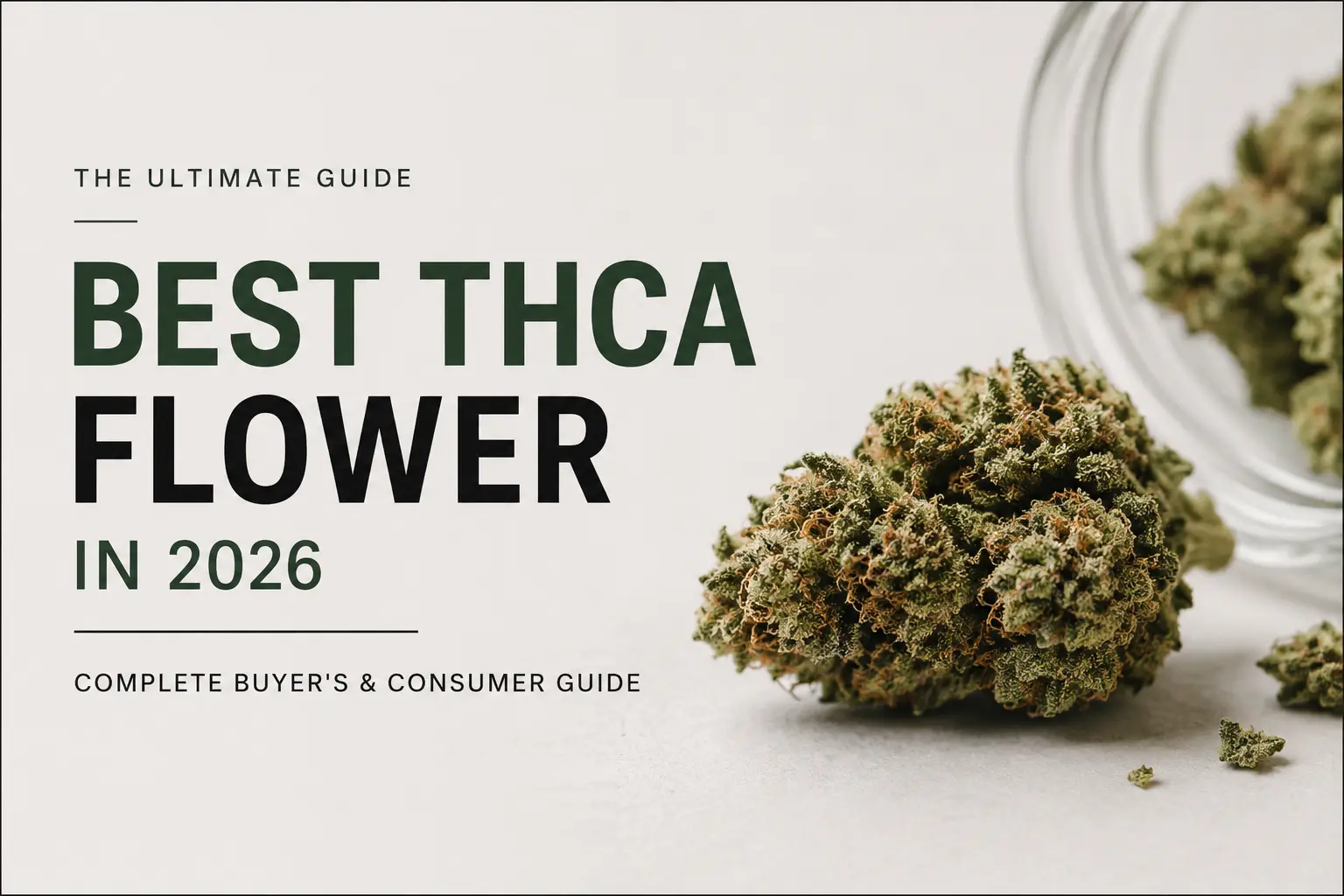
The best THCA flower is not necessarily the flower with the highest THCA percentage. High-quality THCA flower combines strong cannabinoid content, rich terpene profiles, dense trichome coverage, proper curing, third-party lab testing, and clean cultivation practices. Consumers should prioritize verified Certificates of Analysis (COAs), aroma, freshness, and overall flower quality rather than focusing solely on potency.
Introduction
As THCA flower continues to grow in popularity across the United States, consumers are faced with an overwhelming number of strains, brands, and potency claims. Many products advertise THCA levels above 30%, but percentages alone don’t tell the whole story.
In reality, the best THCA flower is determined by a combination of factors, including cannabinoid content, terpene composition, cultivation methods, curing quality, and laboratory testing. A flower with slightly lower THCA but superior terpene preservation may deliver a more enjoyable experience than one with a higher cannabinoid percentage.
This guide explains everything you need to know about identifying premium THCA flower in 2026. You’ll learn how THCA works, what separates average flower from exceptional flower, how to evaluate lab reports, and what factors matter most before making a purchase.
Important: Research on THCA is still evolving. While early studies suggest potential therapeutic applications, many claims surrounding THCA have not yet been confirmed through large-scale human clinical trials. Consumers should approach health-related claims with caution and consult healthcare professionals when appropriate.
Table of Contents
- What Is THCA Flower?
- What Makes THCA Flower Different from Traditional Cannabis?
- What Makes the Best THCA Flower?
- Why THCA Percentage Isn’t Everything
- Understanding Terpenes and the Entourage Effect
- Indoor vs Greenhouse vs Outdoor THCA Flower
- How to Evaluate THCA Flower Like an Expert
- How to Read a Certificate of Analysis (COA)
- Popular THCA Flower Strains in 2026
- Frequently Asked Questions
What Is THCA Flower?
THCA flower refers to hemp flower that contains high concentrations of tetrahydrocannabinolic acid (THCA), a naturally occurring cannabinoid found in cannabis plants.
THCA is the precursor to THC. In its raw form, THCA does not produce the intoxicating effects commonly associated with THC. However, when exposed to heat through smoking, vaping, or cooking, THCA undergoes a chemical process known as decarboxylation, converting into Delta-9 THC.
Definition Box
THCA (Tetrahydrocannabinolic Acid):
A naturally occurring cannabinoid found in raw cannabis and hemp plants that converts into THC when heated.
How THCA Converts to THC
| Stage | Cannabinoid Form |
|---|---|
| Fresh Plant | THCA |
| Heat Applied | Decarboxylation |
| After Heating | Delta-9 THC |
This conversion explains why THCA flower can produce effects similar to traditional cannabis when smoked or vaporized.
What Makes THCA Flower Different from Traditional Cannabis?
From a chemical perspective, THCA flower and traditional cannabis flower can be remarkably similar.
The primary distinction often involves legal classification. Under federal hemp regulations, hemp products must contain no more than 0.3% Delta-9 THC on a dry-weight basis before sale. Many THCA products are marketed under hemp frameworks because their primary cannabinoid is THCA rather than active Delta-9 THC.
However, laws vary significantly by state and continue to evolve. Consumers should always verify local regulations before purchasing or possessing THCA flower.
Beginner-Friendly Explanation
Think of THCA as an “inactive” version of THC.
When heat is introduced:
- THCA loses a carboxyl group.
- It transforms into THC.
- THC interacts with cannabinoid receptors throughout the body.
This is why a THCA-rich flower can behave similarly to traditional cannabis once smoked.
What Makes the Best THCA Flower?
Many consumers assume the strongest flower automatically equals the best flower.
That assumption is often wrong.
Premium THCA flower is the result of multiple quality factors working together.
Key Quality Indicators
1. Cannabinoid Profile
Cannabinoids contribute significantly to a flower’s effects.
Look for balanced cannabinoid profiles rather than chasing only high THCA numbers.
Important cannabinoids may include:
- THCA
- CBD
- CBG
- CBC
- Minor cannabinoids
A more diverse cannabinoid profile may contribute to a broader overall experience.
2. Terpene Content
Terpenes are aromatic compounds naturally produced by cannabis and many other plants.
They influence:
- Aroma
- Flavor
- Overall experience
Common cannabis terpenes include:
| Terpene | Common Aroma |
|---|---|
| Myrcene | Earthy, herbal |
| Limonene | Citrus |
| Caryophyllene | Peppery |
| Pinene | Pine |
| Linalool | Floral |
Many experienced consumers prioritize terpene quality over raw THCA percentages.
3. Trichome Coverage
Trichomes are tiny crystal-like structures that cover cannabis flowers.
These structures contain:
- Cannabinoids
- Terpenes
- Flavonoids
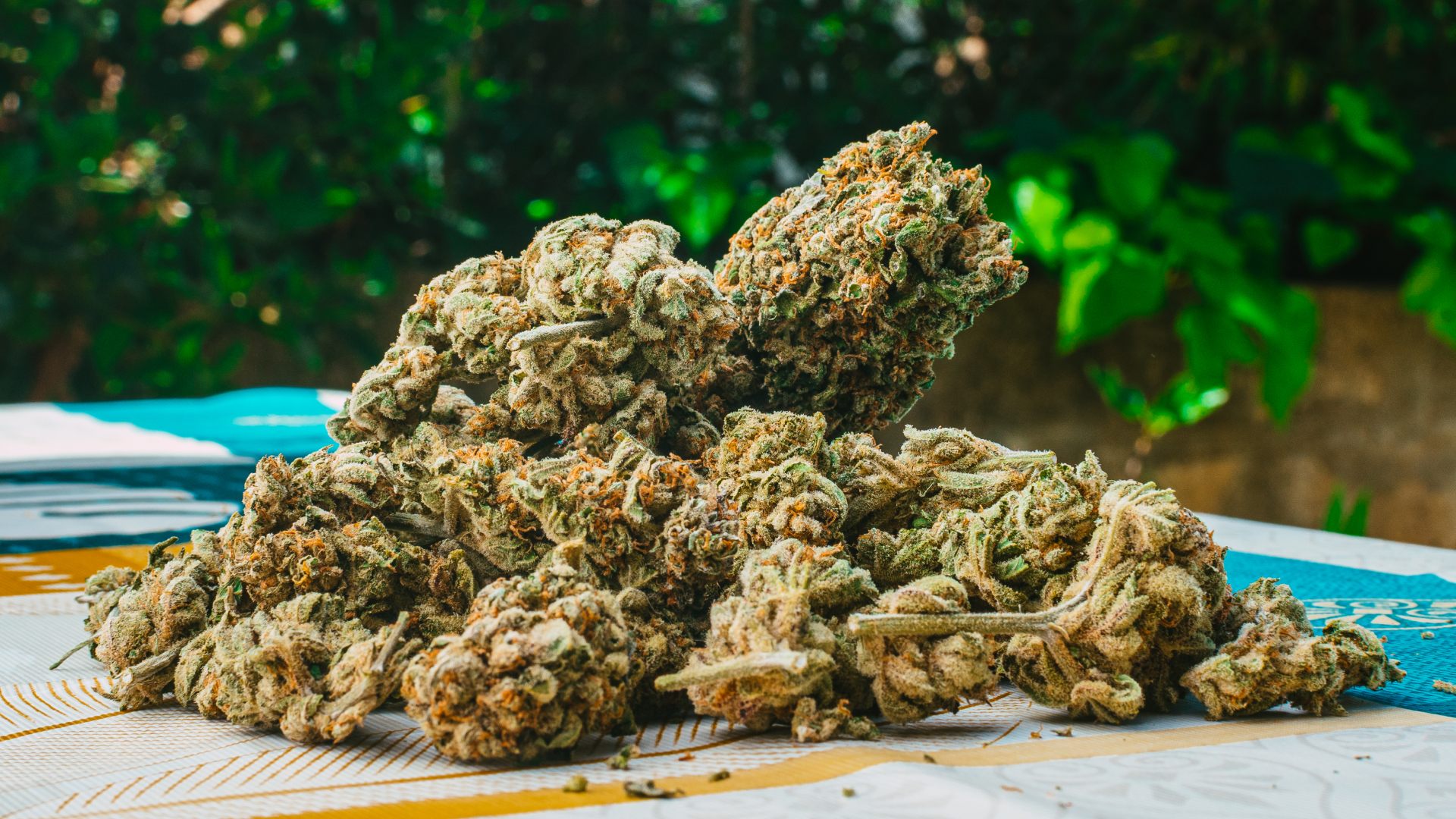
High-quality THCA flower typically displays abundant visible trichomes.
Signs of healthy trichomes include:
✓ Frosty appearance
✓ Intact crystal heads
✓ Sticky texture
✓ Strong aroma
4. Proper Curing
Curing is one of the most overlooked quality indicators.
A properly cured flower should:
- Maintain moisture balance
- Preserve terpenes
- Produce a smooth smoking experience
- Reduce harshness
Poor curing can negatively impact even genetically exceptional flower.
5. Third-Party Laboratory Testing
Independent testing remains one of the most important consumer protections.
Always verify that a product includes a recent Certificate of Analysis (COA).
A quality COA should include:
- Cannabinoid analysis
- Terpene profile
- Heavy metal screening
- Pesticide testing
- Microbial testing
- Residual solvent testing (when applicable)
Why THCA Percentage Isn’t Everything
One of the biggest misconceptions in the hemp industry is that higher THCA percentages automatically indicate superior flower.
Consider these examples:
| Flower A | Flower B |
|---|---|
| 34% THCA | 26% THCA |
| Weak terpene profile | Rich terpene profile |
| Poor cure | Proper cure |
| Dry texture | Fresh texture |
Many consumers would prefer Flower B despite its lower THCA percentage.
The overall quality of the experience often depends on multiple interacting compounds rather than a single cannabinoid measurement.
This concept is commonly referred to as the entourage effect, although research remains ongoing and further human studies are needed.
Understanding Terpenes and the Entourage Effect
When people search for the best THCA flower, they often focus entirely on THCA percentages.
However, experienced consumers frequently pay closer attention to terpenes.
In many cases, terpenes have a greater impact on the flower’s aroma, flavor, and overall character than cannabinoid percentages alone.
What Are Terpenes?
Terpenes are naturally occurring aromatic compounds found throughout nature.
They are responsible for the scent of:
- Pine trees
- Citrus fruits
- Lavender
- Black pepper
- Cannabis plants
More than 150 terpenes have been identified in cannabis, although only a smaller group typically appears in significant concentrations.
Quick Answer
Terpenes are aromatic compounds that contribute to a cannabis flower’s smell, taste, and overall profile. They work alongside cannabinoids like THCA and THC, creating a more complex experience than cannabinoids alone.
Common Cannabis Terpenes and Their Characteristics
| Terpene | Typical Aroma | Commonly Found In |
|---|---|---|
| Myrcene | Earthy, herbal, musky | Mangoes, hops |
| Limonene | Citrus, lemon | Citrus fruits |
| Caryophyllene | Peppery, spicy | Black pepper |
| Pinene | Pine, fresh forest | Pine needles |
| Linalool | Floral, lavender | Lavender |
| Humulene | Woody, earthy | Hops |
| Ocimene | Sweet, fruity | Mint and orchids |
Why Terpenes Matter
Two THCA flower strains may contain similar cannabinoid percentages while producing dramatically different experiences due to terpene variation.
For example:
- A limonene-rich flower may have a bright citrus aroma.
- A myrcene-dominant flower may smell earthy and herbal.
- A pinene-rich cultivar often exhibits fresh pine characteristics.
This is one reason why cannabinoid percentages alone do not determine quality.

What Is the Entourage Effect?
The entourage effect is a theory suggesting that cannabinoids, terpenes, and other plant compounds may work together in ways that differ from isolated compounds alone.
Researchers continue to study this concept.
While preliminary evidence exists, large-scale human clinical studies remain limited.
Important Note
The entourage effect is widely discussed within the cannabis industry, but more research is needed to fully understand how cannabinoids and terpenes interact in humans.
For this reason, consumers should be cautious about exaggerated claims.
Indoor vs Greenhouse vs Outdoor THCA Flower
One of the most important factors influencing quality is cultivation method.
Understanding how flower is grown can help consumers make more informed purchasing decisions.
Indoor THCA Flower
Indoor flower is cultivated in highly controlled environments.
Growers can precisely manage:
- Temperature
- Humidity
- Lighting
- Airflow
- Nutrient delivery
Advantages
✓ Maximum environmental control
✓ Consistent quality
✓ Strong trichome production
✓ Better visual appeal
✓ Greater terpene preservation
Potential Drawbacks
✗ Higher production costs
✗ Usually more expensive
✗ Larger environmental footprint
Greenhouse THCA Flower
Greenhouse cultivation combines natural sunlight with environmental controls.
This approach attempts to balance quality and efficiency.
Advantages
✓ More affordable than indoor flower
✓ Utilizes sunlight
✓ Better sustainability
✓ Often strong cannabinoid profiles
Potential Drawbacks
✗ Greater environmental variability
✗ Quality may vary between harvests
Outdoor THCA Flower
Outdoor cultivation relies primarily on natural environmental conditions.
Some exceptional outdoor flower exists, especially in regions with ideal growing climates.
Advantages
✓ Lower production costs
✓ Natural sunlight exposure
✓ More sustainable cultivation
Potential Drawbacks
✗ Greater exposure to pests
✗ Weather-related challenges
✗ More variability
✗ Often less visual appeal
Indoor vs Greenhouse vs Outdoor Comparison
| Factor | Indoor | Greenhouse | Outdoor |
|---|---|---|---|
| Potency Potential | High | Moderate-High | Moderate |
| Terpene Preservation | Excellent | Good | Variable |
| Appearance | Excellent | Good | Variable |
| Consistency | Excellent | Good | Moderate |
| Cost | Highest | Moderate | Lowest |
| Sustainability | Lower | Moderate | Higher |
Expert Tip
If your goal is premium-quality THCA flower, indoor cultivation generally provides the most consistent results. However, greenhouse flower often delivers an excellent balance of quality and value.
How to Evaluate THCA Flower Like an Expert
Whether you’re purchasing online or in person, several indicators can reveal flower quality before you ever consume it.
Visual Inspection
High-quality THCA flower typically displays:
✓ Dense trichome coverage
✓ Vibrant coloration
✓ Intact structure
✓ Proper trimming
✓ Minimal stems
Avoid flower that appears:
✗ Excessively dry
✗ Brown or dull
✗ Poorly trimmed
✗ Compressed or damaged
Aroma Evaluation
A strong aroma often indicates terpene preservation.
Depending on the strain, premium flower may smell:
- Fruity
- Citrus-like
- Earthy
- Floral
- Piney
- Sweet
- Fuel-like
A weak aroma can sometimes indicate:
- Poor curing
- Age degradation
- Improper storage
Texture Assessment
Properly cured flower should feel:
✓ Slightly sticky
✓ Resilient
✓ Fresh
✓ Well-preserved
Flower that crumbles instantly may be overly dry.
Excess moisture can also be problematic and may increase the risk of microbial growth.
How to Read a THCA Flower Certificate of Analysis (COA)
One of the biggest mistakes consumers make is ignoring lab reports.
A COA is often the most important document associated with a hemp product.
What Is a COA?
A Certificate of Analysis is a laboratory report generated by an independent third-party testing facility.
It verifies:
- Cannabinoid content
- Terpene content
- Safety screening
- Regulatory compliance
Section 1: Cannabinoid Profile
This section typically includes:
| Cannabinoid | Purpose |
|---|---|
| THCA | Primary cannabinoid |
| Delta-9 THC | Compliance verification |
| CBD | Additional cannabinoid data |
| CBG | Minor cannabinoid |
| CBC | Minor cannabinoid |
Verify that reported potency aligns with product claims.
Section 2: Terpene Analysis
Some laboratories provide detailed terpene testing.
Look for:
- Total terpene percentage
- Dominant terpenes
- Aroma indicators
A terpene-rich flower often provides a more complex profile than flower selected solely for THCA percentage.
Section 3: Safety Testing
Premium THCA flower should be screened for:
Heavy Metals
Potential contaminants include:
- Lead
- Mercury
- Cadmium
- Arsenic
Pesticides
Third-party testing should confirm acceptable levels.
Microbial Contaminants
Testing often screens for:
- Mold
- Yeast
- Harmful bacteria
Residual Solvents
Particularly important for processed products.
Red Flags in Lab Reports
Be cautious if:
🚩 No COA is available
🚩 COA is outdated
🚩 QR code does not work
🚩 Laboratory information is missing
🚩 Safety testing is incomplete
🚩 Product claims exceed lab results
Popular THCA Flower Strains in 2026
No single strain can objectively be called the “best THCA flower” for every consumer.
Genetics, terpene profiles, cultivation practices, and personal preferences all influence the experience.
That said, several strains continue to attract attention due to their potency, aroma, trichome production, and popularity within the hemp and cannabis markets.
1. Gelato
Gelato remains one of the most recognized modern cannabis cultivars.
Typical Characteristics
- Sweet aroma
- Dessert-like flavor profile
- Dense buds
- Heavy trichome coverage
- Rich terpene content
Common terpenes often include:
- Caryophyllene
- Limonene
- Humulene
2. Runtz
Runtz has become one of the most sought-after strains in recent years.
Typical Characteristics
- Fruity aroma
- Dense flower structure
- Strong bag appeal
- High resin production
Many consumers appreciate Runtz for its complex terpene profile and distinctive flavor.
3. Han Solo
Han Solo is known for its unique aroma profile.
Typical Characteristics
- Garlic-like notes
- Earthy undertones
- Dense trichomes
- Strong cannabinoid content
Han Solo is frequently favored by experienced consumers who prioritize terpene intensity.
4. Blue Dream
Blue Dream remains popular due to its balanced characteristics.
Typical Characteristics
- Sweet berry aroma
- Broad appeal
- Attractive appearance
- Consistent cultivation performance
5. Wedding Cake
Wedding Cake continues to appear among premium THCA flower offerings.
Typical Characteristics
- Sweet vanilla notes
- Frosty appearance
- Rich terpene profile
- Strong visual appeal
Important Reminder
A strain name alone does not guarantee quality.
The same strain can vary significantly depending on:
- Cultivation methods
- Harvest timing
- Curing process
- Storage conditions
- Genetics
A properly cultivated Gelato may outperform a poorly grown high-THCA cultivar regardless of potency numbers.
Potential Benefits and Limitations of THCA Flower
Research surrounding THCA continues to evolve.
While many consumers report positive experiences, it is important to separate anecdotal reports from established scientific evidence.
Potential Benefits
Some preliminary laboratory and preclinical research suggests THCA may possess interesting biological properties.
Areas currently being studied include:
- Inflammation-related pathways
- Neuroprotective mechanisms
- Nausea-related applications
- Appetite-related effects
Important Note
Most available evidence remains preliminary.
Large-scale human clinical trials evaluating THCA specifically are still limited.
Consumers should avoid treating THCA as a proven medical treatment unless directed by a qualified healthcare professional.
Potential Limitations
THCA flower is not ideal for every consumer.
Limitations include:
- Research remains limited
- Effects vary significantly between individuals
- Legal status continues to evolve
- Product quality varies substantially
- Drug testing concerns exist
Pros and Cons of THCA Flower
| Pros | Cons |
|---|---|
| Widely available | Legal uncertainty in some states |
| Rich terpene profiles | Can trigger positive drug tests |
| Variety of strains available | Product quality varies |
| Third-party testing often available | Research remains limited |
| May offer alternatives for consumers seeking hemp-derived cannabinoids | Regulatory changes may occur |
Does THCA Flower Get You High?
Quick Answer
Yes.
When THCA flower is heated through smoking, vaping, or cooking, THCA converts into Delta-9 THC. This conversion can produce intoxicating effects similar to traditional cannabis flower.
Why This Happens
THCA itself is not strongly intoxicating.
However, when exposed to sufficient heat:
THCA → THC
This process is known as decarboxylation.
Because of this conversion, consumers should approach THCA flower responsibly and avoid driving or operating machinery after use.
Potential Risks and Side Effects
Like many cannabis-derived products, THCA flower may cause unwanted effects in some individuals.
Potential side effects may include:
- Dry mouth
- Dry eyes
- Dizziness
- Temporary impairment
- Anxiety in sensitive individuals
- Increased heart rate
- Sedation
Risk levels vary based on:
- Dose
- Individual tolerance
- Product potency
- Consumption method
Who Should Avoid THCA Flower?
THCA flower may not be appropriate for everyone.
Consider consulting a healthcare professional before use if you:
- Are pregnant or breastfeeding
- Have significant cardiovascular conditions
- Take medications that may interact with cannabinoids
- Have a history of adverse reactions to cannabis
- Are subject to workplace drug testing
Can THCA Flower Cause a Failed Drug Test?
Quick Answer
Yes.
Most standard drug tests screen for THC metabolites rather than distinguishing between THC and THCA.
Because THCA converts into THC during consumption, using THCA flower may result in a positive drug test.
Consumers subject to employment, legal, or athletic testing programs should exercise caution.
Legal Status of THCA Flower in 2026
The legality of THCA flower remains one of the most frequently searched topics.
Federal Considerations
The 2018 Farm Bill established federal hemp guidelines based primarily on Delta-9 THC concentration.
However, THCA-related regulations continue to evolve.
Federal and state interpretations may differ significantly.
State Laws Matter Most
Several states have:
- Restricted THCA products
- Modified hemp definitions
- Implemented new testing requirements
- Introduced hemp-derived cannabinoid regulations
Because regulations change frequently, consumers should always verify current state laws before purchasing or possessing THCA flower.
Internal Link Opportunity
Link to:
Is THCA Legal? State-by-State Guide (2026)
Common Mistakes When Buying THCA Flower
Many first-time consumers focus on the wrong factors.
Mistake #1: Chasing THCA Percentages
Potency is important, but it is only one quality indicator.
Terpenes, curing, and cultivation quality often matter just as much.
Mistake #2: Ignoring Lab Reports
Never purchase flower without reviewing a recent COA.
Mistake #3: Choosing Price Over Quality
Extremely low-priced flower may indicate:
- Poor curing
- Old inventory
- Weak terpene preservation
- Lower-grade cultivation
Mistake #4: Ignoring Storage Conditions
Even premium flower can degrade when stored improperly.
Mistake #5: Believing Marketing Claims
Always verify product claims through:
- COAs
- Laboratory testing
- Transparent sourcing
Expert Buying Checklist
Before purchasing THCA flower, ask yourself:
✅ Is a recent COA available?
✅ Was the flower tested by an independent laboratory?
✅ Is the terpene profile disclosed?
✅ Does the flower appear properly cured?
✅ Is the cultivation method transparent?
✅ Is the seller reputable?
✅ Is the product compliant with local regulations?
If you answer “no” to multiple questions, continue researching before purchasing.
How to Store THCA Flower Properly
Proper storage helps preserve:
- Cannabinoids
- Terpenes
- Aroma
- Freshness
Best Practices
Use Airtight Containers
Glass jars generally provide superior protection compared to plastic bags.
Avoid Direct Sunlight
UV exposure can degrade cannabinoids over time.
Control Temperature
Store flower in a cool environment.
Excessive heat accelerates degradation.
Limit Air Exposure
Frequent opening and closing may reduce terpene retention.
Monitor Humidity
Many consumers use humidity-control packs designed for cannabis storage.
Storage Do’s and Don’ts
| Do | Don’t |
|---|---|
| Use airtight containers | Store in direct sunlight |
| Keep in a cool place | Leave flower in a hot car |
| Monitor humidity | Expose to excessive moisture |
| Store in darkness | Keep near heat sources |
Myths vs Facts
| Myth | Fact |
|---|---|
| Highest THCA equals best flower | Quality depends on multiple factors |
| All THCA flower is identical | Genetics and cultivation matter greatly |
| Lab reports are optional | COAs are essential for transparency |
| Outdoor flower is always inferior | Some outdoor flower can be excellent |
| Terpenes don’t matter | Terpenes contribute significantly to aroma and flavor |
Key Takeaways
The best THCA flower in 2026 isn’t determined by potency alone.
Consumers should evaluate:
- Cannabinoid profiles
- Terpene content
- Trichome density
- Cultivation practices
- Curing quality
- Laboratory testing
A premium flower balances all of these elements rather than maximizing a single metric.
When in doubt, prioritize transparency, verified lab reports, and reputable sourcing over marketing claims.
The most informed consumers are often the ones who achieve the best results.
Frequently Asked Questions
What is considered high THCA flower?
Flower containing 20% or more THCA is generally considered potent, although quality depends on additional factors such as terpene content and curing.
What makes the best THCA flower?
The best THCA flower combines strong cannabinoid levels, rich terpene profiles, abundant trichomes, proper curing, and third-party lab testing.
Does THCA flower become THC?
Yes. When heated through smoking, vaping, or cooking, THCA converts into Delta-9 THC through decarboxylation.
Can THCA flower fail a drug test?
Yes. THCA flower can lead to THC metabolite production, which may trigger a positive drug test.
Is indoor THCA flower better?
Indoor cultivation generally provides greater consistency and environmental control, though exceptional greenhouse and outdoor flower also exist.
What terpenes should I look for?
Popular terpenes include myrcene, limonene, caryophyllene, pinene, and linalool. The ideal profile depends on personal preference.
How should THCA flower smell?
High-quality flower often exhibits a strong, distinct aroma that may be fruity, citrusy, earthy, floral, or fuel-like depending on the strain.
Why is a COA important?
A Certificate of Analysis verifies potency, safety testing, and product transparency through independent laboratory evaluation.
How long does THCA flower stay fresh?
When stored correctly in airtight containers away from heat and light, flower may maintain quality for several months.
Is THCA flower legal?
Legality depends on federal interpretations and state-specific regulations. Always verify current local laws before purchasing or possessing THCA flower.
About the Author