If you’ve ever wondered, can cats get high, you’re not alone. Whether your cat accidentally walked through marijuana smoke, sniffed a THC vape, or ate part of a cannabis edible, it’s natural to worry about what happens next. As cannabis products become more common in households, veterinarians are seeing more cases of accidental cannabis exposure in pets.
The short answer is yes—cats can become intoxicated by THC, the primary psychoactive compound in cannabis. However, a cat’s experience is very different from a human’s. Instead of feeling relaxed or euphoric, cats are more likely to develop neurological symptoms such as poor coordination, confusion, excessive sleepiness, drooling, or even tremors. Because cats are smaller and process cannabinoids differently, even relatively small amounts of THC may have significant effects.
Many pet owners also ask whether cats can get high off weed smoke, can cats get high from second hand smoke, or can cats get a contact high from weed. While inhaling cannabis smoke isn’t the most common cause of marijuana intoxication in cats, passive exposure can still be harmful—especially in enclosed spaces. Edibles, oils, concentrates, and vape cartridges generally pose an even greater risk because they often contain higher concentrations of THC.
This guide explains how cannabis affects cats, the symptoms of THC exposure, what to do if your pet has been exposed, and why catnip is completely different from marijuana. The goal is to help you make informed decisions while keeping your feline companion safe.
Can Cats Get High?
Yes. Cats can get high from THC-containing cannabis products, but the effects are neither enjoyable nor safe for them.
THC (tetrahydrocannabinol) interacts with the endocannabinoid system, a network of receptors found throughout the brain and body of mammals. Cats possess these receptors just as humans do, but their bodies appear to be more sensitive to THC’s effects. As a result, exposure that may seem minor to a person can cause noticeable intoxication in a cat.
Unlike humans, cats cannot understand what’s happening when their nervous system is affected by THC. Instead of appearing calm or happy, they often become disoriented, anxious, unsteady, or unusually quiet. Some may hide, while others become overly reactive to sounds or touch.
The severity of intoxication depends on several factors, including:
- The amount of THC consumed or inhaled
- The type of cannabis product (flower, edible, oil, concentrate, or vape)
- The cat’s age and body weight
- Existing health conditions
- Whether the exposure occurred through inhalation or ingestion
Edibles deserve special attention because they often contain concentrated THC alongside ingredients such as chocolate, xylitol, raisins, or excessive fats—all of which may be toxic to cats independently of cannabis.
Although most cats recover with prompt veterinary care, severe THC intoxication can become life-threatening if left untreated.
Why Are Cats More Sensitive to THC?
Researchers are still studying exactly why cannabis affects animals differently, but veterinary toxicologists believe several factors contribute.
Cats have:
- Smaller body mass than humans
- Different liver metabolism
- A highly sensitive nervous system
- Limited ability to eliminate certain compounds efficiently
Because of these differences, THC may remain active in their bodies for longer periods and produce stronger neurological effects.
Even if a person experiences only mild intoxication, the same exposure could significantly affect a cat.
Common Ways Cats Are Exposed to Cannabis
Accidental exposure usually occurs in one of these ways:
- Eating THC gummies or baked edibles
- Chewing cannabis flower
- Drinking cannabis-infused beverages
- Licking THC oils or concentrates
- Inhaling marijuana smoke
- Being exposed to THC vape aerosols
- Grooming THC residue from their fur after smoke exposure
Among these, ingestion is generally considered more dangerous than passive inhalation because it delivers a larger dose of THC into the body.
Can Cats Get High Off Weed Smoke?
Many pet owners wonder whether cats can get high off weed smoke simply by being in the same room as someone smoking cannabis.
The answer is yes, it’s possible, although the degree of exposure depends on several factors, including ventilation, the amount of smoke present, and how long the cat remains in the environment.
When marijuana is smoked, THC becomes part of the smoke released into the air. Cats living in enclosed spaces may inhale some of these airborne particles. Because cats have much smaller lungs and bodies than humans, they may be more susceptible to the effects of passive cannabis exposure.
Even if the amount of THC inhaled isn’t enough to cause obvious intoxication, marijuana smoke can still irritate a cat’s respiratory system.
Potential concerns include:
- Eye irritation
- Coughing
- Sneezing
- Airway irritation
- Stress caused by smoke-filled environments
Cats also groom themselves frequently. If smoke particles settle on their fur, they may ingest small amounts of THC during grooming, creating another possible route of exposure.
For these reasons, veterinarians generally recommend never intentionally exposing pets to marijuana smoke, even if the goal is relaxation or pain relief. There is no established safe level of recreational cannabis smoke exposure for cats.
Is Weed Smoke More Dangerous Than Tobacco Smoke?
Both marijuana smoke and tobacco smoke contain combustion byproducts that may irritate the respiratory tract. While their chemical compositions differ, neither should be considered safe for cats to inhale.
Unlike tobacco, cannabis smoke introduces THC, which has psychoactive effects. This means marijuana smoke carries an additional risk of intoxication beyond respiratory irritation.
Can Cats Get High from Second Hand Smoke?
Yes, cats can get high from second hand smoke, although the likelihood depends on the concentration of THC in the air and the duration of exposure.
Secondhand cannabis smoke contains:
- THC particles
- Fine particulate matter
- Combustion byproducts
- Irritating gases
A cat sitting beside someone smoking in a poorly ventilated room is more likely to inhale these substances than a cat briefly walking through an outdoor area where smoke quickly disperses.
Certain cats may face higher risks, including:
- Kittens
- Senior cats
- Cats with asthma
- Cats with chronic respiratory disease
- Cats with heart conditions
Because their respiratory systems are already more vulnerable, these pets may experience greater complications from smoke exposure.
Current research has not established an exact amount of secondhand cannabis smoke required to intoxicate a cat. However, veterinary experts generally agree that avoiding exposure altogether is the safest option.
Can Secondhand Weed Smoke Cause Serious Problems?
Most mild cases of secondhand exposure do not become medical emergencies, but repeated or heavy exposure can increase the risk of THC intoxication and respiratory irritation.
Watch for symptoms such as:
- Excessive sleepiness
- Difficulty walking
- Glassy or dilated eyes
- Drooling
- Confusion
- Tremors
- Unusual vocalization
If your cat develops any of these signs after being around cannabis smoke, contact your veterinarian as soon as possible. Prompt evaluation can help rule out more serious toxicity and ensure your pet receives appropriate care.
Can Cats Get Second Hand High?
The phrase “can cats get second hand high” is often used interchangeably with “can cats get high from second hand smoke,” but it’s worth understanding what it actually means.
A secondhand high, also called a contact high, refers to becoming affected by THC without directly consuming cannabis. In cats, this can happen when they inhale marijuana smoke in a poorly ventilated area or are exposed to enough airborne THC particles over time.
While researchers haven’t established a specific THC concentration that causes intoxication in cats, veterinary professionals agree that passive cannabis exposure is not considered safe. Cats have smaller bodies, sensitive respiratory systems, and metabolize THC differently than humans, making them more vulnerable to its effects.
It’s also important to remember that smoke isn’t the only concern. THC particles can settle on a cat’s fur, bedding, toys, or nearby surfaces. Since cats groom themselves frequently, they may inadvertently ingest THC residue after the initial smoke exposure.
Factors That Increase the Risk of a Contact High
Whether a cat experiences THC intoxication from secondhand exposure depends on several variables, including:
- The size of the room
- Air circulation and ventilation
- The amount of cannabis being smoked
- THC potency of the product
- Duration of exposure
- The cat’s age, weight, and overall health
A cat briefly walking through an outdoor area where someone is smoking is far less likely to be affected than one remaining in a smoke-filled room for an extended period.
Although severe intoxication from secondhand smoke alone appears to be less common than ingestion, veterinarians still recommend keeping cats away from cannabis smoke entirely.
Can Cats Get High from Vape Smoke?
Another common question is can cats get high from vape smoke or THC vapor.
The answer is yes—cats may be affected by cannabis vape aerosols, especially if the vape contains THC concentrates. Unlike traditional cannabis flower, many vape cartridges contain highly concentrated THC extracts, which can increase the potential for exposure.
Although vaping doesn’t produce smoke in the same way as combustion, it still releases an aerosol containing fine particles and chemical compounds into the air. Depending on the product, these aerosols may contain:
- THC
- CBD
- Terpenes
- Carrier liquids
- Flavoring agents
- Other additives
Many of these ingredients have not been extensively studied for long-term safety in pets.
Why THC Vapes May Be More Concerning
THC vape cartridges often contain cannabis concentrates with significantly higher THC levels than dried flower. As a result, even small amounts of accidental exposure may carry a greater risk.
Beyond inhalation, curious cats may also chew on discarded vape cartridges or leak-resistant pods. This can expose them directly to concentrated cannabis oil, which poses a much greater danger than inhaling trace amounts of vapor.
For this reason, always store cannabis vape products securely and dispose of used cartridges where pets cannot access them.
What About Nicotine Vapes?
If the vape contains nicotine instead of cannabis, the concern changes completely.
Nicotine is highly toxic to cats and can cause severe poisoning even in relatively small amounts. Symptoms may include:
- Vomiting
- Rapid heart rate
- Tremors
- Seizures
- Difficulty breathing
Any suspected nicotine exposure should be treated as a veterinary emergency.
Can Cats Get a Contact High from Weed?
Yes, cats can get a contact high from weed, but the circumstances matter.
A contact high generally occurs when a cat inhales enough airborne THC to experience intoxication without directly eating or licking cannabis products.
However, many reported cases of cannabis toxicity involve more than simple smoke inhalation. Cats often investigate unfamiliar objects by licking or chewing them. A pet that was believed to have experienced a “contact high” may have actually consumed cannabis residue, edibles, or concentrated oils without the owner’s knowledge.
Contact High vs. Cannabis Poisoning
Understanding the difference is helpful:
| Contact High | Cannabis Poisoning |
|---|---|
| Usually involves inhaling airborne THC | Usually involves eating or licking THC products |
| Often produces milder symptoms | Frequently causes more severe intoxication |
| Exposure depends on ventilation | Exposure depends on the amount consumed |
| Less common cause of veterinary emergencies | Most common reason cats require treatment |
Because it’s difficult to determine exactly how much THC a cat has absorbed, it’s safest to treat any suspected exposure seriously.
If your cat begins acting unusually after being around cannabis, don’t assume the symptoms will resolve on their own.
Signs Your Cat May Have Cannabis Exposure
Recognizing the symptoms of THC intoxication early can help your cat receive timely veterinary care.
Signs may appear within 30 minutes to several hours, depending on whether the cannabis was inhaled or ingested. Edibles often produce delayed symptoms because they must first be digested.
Mild Symptoms
Many cats initially develop subtle neurological changes, including:
- Excessive sleepiness
- Lethargy
- Glassy or dilated pupils
- Slower responses
- Reduced activity
- Mild disorientation
Some cats become unusually quiet and withdrawn, while others appear restless or anxious.
Moderate Symptoms
As intoxication progresses, additional symptoms may develop:
- Difficulty walking
- Staggering or stumbling
- Loss of coordination
- Drooling
- Vomiting
- Urinary incontinence
- Head bobbing
- Muscle twitching
- Increased sensitivity to sound or touch
- Unusual vocalization
Many owners describe their cat as appearing “drunk.”
Severe Symptoms
High-dose THC exposure or ingestion of potent cannabis products can cause more serious complications, including:
- Tremors
- Seizures
- Extreme weakness
- Very slow heart rate
- Low body temperature
- Respiratory depression
- Unresponsiveness
- Coma (rare)
These symptoms require immediate emergency veterinary care.
How Long Do the Effects Last?
The duration depends on several factors, including:
- The amount of THC consumed
- Whether exposure occurred through smoke or ingestion
- The cat’s size
- Overall health
- Speed of veterinary treatment
Mild cases may improve within 12 to 24 hours, while more significant intoxication can last 24 to 72 hours or longer. Cats that receive prompt supportive care generally have a good prognosis, but recovery times vary.
When Should You Call a Veterinarian?
You should contact a veterinarian immediately if your cat:
- Ate a cannabis edible
- Chewed a THC vape cartridge
- Is unable to stand or walk normally
- Has tremors or seizures
- Becomes difficult to wake
- Has trouble breathing
- Shows any sudden neurological changes after possible cannabis exposure
Even if you’re unsure how much THC your cat encountered, it’s always safer to seek professional advice. Early treatment can reduce the risk of complications and improve recovery outcomes.
What Should You Do If Your Cat Gets High?
If you suspect your cat has been exposed to cannabis, try not to panic. While THC intoxication can be frightening, most cats recover well with prompt veterinary care. The most important step is to prevent further exposure and seek professional advice as soon as possible.
1. Remove Your Cat from the Source of Exposure
Move your cat to a quiet, well-ventilated room away from marijuana smoke, vape aerosols, or cannabis products. If other pets are present, keep them separated until you know what happened.
If your cat’s fur has been exposed to heavy smoke, your veterinarian may recommend gently wiping the coat with a damp cloth to reduce residue. Avoid bathing your cat unless advised, as this can add unnecessary stress.
2. Check What They May Have Been Exposed To
Try to identify:
- Was it dried cannabis flower?
- A THC gummy or edible?
- A cannabis-infused brownie or cookie?
- THC oil or tincture?
- A vape cartridge?
- Marijuana smoke?
If possible, estimate:
- How much was consumed
- The THC concentration (if known)
- When the exposure occurred
Bring the product packaging with you to the veterinary clinic if available. It can help your veterinarian determine the best course of treatment.
3. Do Not Try Home Remedies
Avoid attempting treatments you may find online.
Do not:
- Force your cat to vomit
- Give activated charcoal unless instructed by a veterinarian
- Offer milk to “neutralize” THC
- Give human medications
- Wait to see if symptoms worsen before calling for advice
Some home remedies can increase the risk of aspiration or delay appropriate treatment.
4. Contact a Veterinarian Immediately
Even if your cat seems only mildly affected, it’s best to speak with a veterinarian.
Be honest about the possible cannabis exposure. Veterinary professionals are focused on treating your pet—not judging or reporting you. Accurate information helps them provide faster, more effective care.
If your regular veterinary clinic is closed, contact an emergency veterinary hospital or an animal poison hotline for guidance.
How Veterinarians Treat Cannabis Toxicity in Cats
There is no specific antidote for THC intoxication. Instead, veterinarians provide supportive care while the body gradually eliminates the drug.
Treatment depends on:
- The amount of THC involved
- The type of cannabis product
- The severity of symptoms
- How long ago the exposure occurred
- Whether other toxins (such as chocolate or xylitol) were also ingested
Common Veterinary Treatments
Your veterinarian may recommend:
Physical Examination
A complete examination helps assess neurological function, heart rate, breathing, body temperature, and hydration status.
Monitoring Vital Signs
Cats with THC intoxication are closely monitored for:
- Heart rate
- Respiratory rate
- Blood pressure
- Body temperature
- Neurological changes
Intravenous (IV) Fluids
IV fluids help maintain hydration and support overall recovery, particularly if the cat has been vomiting or is unable to drink normally.
Activated Charcoal
If the cannabis was ingested recently and your veterinarian determines it’s appropriate, activated charcoal may be used to reduce further absorption of THC from the digestive tract.
Temperature Support
Some cats develop low body temperature (hypothermia) during THC intoxication. Warming blankets or temperature-controlled environments may be used to help maintain a normal body temperature.
Oxygen Therapy
If breathing becomes compromised, supplemental oxygen may be necessary.
Hospitalization
Moderate to severe cases often require observation for several hours or overnight until neurological function returns to normal.
What’s the Prognosis?
The good news is that most cats recover fully with appropriate veterinary treatment.
Recovery time varies depending on the dose and type of exposure, but many cats improve within one to three days.
The prognosis may be less favorable if:
- A very large amount of THC was consumed.
- The edible also contained chocolate, xylitol, or other toxic ingredients.
- Treatment was significantly delayed.
- The cat has underlying medical conditions.
Seeking veterinary care early greatly improves the likelihood of a smooth recovery.
Can Cats Get High on Catnip?
One of the most common misconceptions is that catnip gets cats “high” in the same way marijuana affects humans.
The answer is no.
Although catnip can cause temporary behavioral changes, it does not contain THC or any psychoactive cannabinoids.
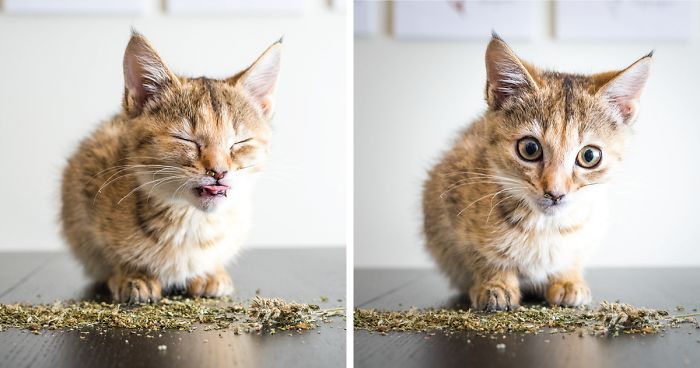
The active compound in catnip is nepetalactone, a naturally occurring chemical found in the catnip plant (Nepeta cataria). When cats smell it, nepetalactone stimulates sensory receptors in the nose, triggering a temporary behavioral response.
Common reactions include:
- Rolling on the floor
- Rubbing their face against objects
- Purring
- Playfulness
- Zoomies
- Chasing toys
- Increased affection
Some cats become calm and relaxed after the initial excitement.
These effects usually last 5 to 15 minutes, after which most cats become temporarily unresponsive to catnip for a short period.
Is Catnip Safe?
For most healthy adult cats, catnip is considered safe when used in moderation.
However:
- About 30–40% of cats show little or no response because the sensitivity is inherited genetically.
- Kittens younger than a few months often don’t react to catnip.
- Eating excessive amounts may occasionally cause mild digestive upset.
Unlike THC, catnip does not typically cause neurological impairment, loss of coordination, or cannabis poisoning.
How to Prevent Cannabis Exposure in Cats
Preventing accidental cannabis intoxication is much easier than treating it.
Here are some practical ways to keep your cat safe:
Store Cannabis Securely
Keep:
- Cannabis flower
- THC gummies
- Edibles
- Oils
- Tinctures
- Vape cartridges
locked away in secure cabinets that pets cannot access.
Avoid Smoking Around Pets
Whether it’s cannabis or tobacco, avoid smoking indoors around your cat.
Good ventilation helps reduce airborne irritants, but the safest option is to keep pets completely away from smoke and vapor.
Dispose of Cannabis Products Properly
Used joints, vape cartridges, edible wrappers, and cannabis packaging may still contain enough residue to attract curious pets.
Dispose of them in pet-proof trash containers.
Never Give THC to a Cat Intentionally
Some owners mistakenly believe cannabis helps with anxiety or pain in pets.
Unless specifically prescribed or recommended by a licensed veterinarian, cats should never be intentionally given THC-containing products.
If you’re considering cannabinoid-based therapies, discuss veterinary-approved options with your veterinarian first.
Frequently Asked Questions
Can cats get high?
Yes. Cats can become intoxicated by THC found in marijuana, cannabis edibles, oils, concentrates, and some vape products. Even relatively small amounts may cause neurological symptoms.
Can cats get high off weed smoke?
Yes, passive exposure to marijuana smoke may affect cats, particularly in enclosed spaces with poor ventilation. While ingestion generally poses a greater risk, secondhand smoke should still be avoided.
Can cats get high from second hand smoke?
Yes. Cats may inhale airborne THC particles from secondhand cannabis smoke, although the degree of exposure depends on factors such as ventilation, duration, and THC concentration.
Can cats get second hand high?
Yes, a contact or secondhand high is possible under certain conditions. However, many cases of cannabis intoxication actually involve accidental ingestion rather than inhalation alone.
Can cats get high from vape smoke?
Potentially, yes. THC vape aerosols may expose cats to cannabinoids and other chemicals. Direct exposure to vape cartridges or cannabis concentrates presents an even greater risk.
Can cats get a contact high from weed?
Yes. Contact highs can occur through passive inhalation of marijuana smoke, especially in poorly ventilated areas. However, accidental ingestion remains the more common cause of significant THC poisoning.
Can cats get high on weed?
Yes. THC-containing cannabis products can intoxicate cats and should never be intentionally administered to them.
Can cats get high on catnip?
No. Catnip does not contain THC. Its active ingredient, nepetalactone, causes temporary behavioral stimulation rather than cannabis intoxication.
Conclusion
So, can cats get high? The answer is yes—but it’s not a harmless or enjoyable experience for them.
Whether the exposure comes from marijuana smoke, THC vape aerosols, cannabis edibles, oils, or dried flower, cats are far more sensitive to THC than humans. What might seem like a minor exposure to a person can lead to disorientation, poor coordination, excessive sleepiness, vomiting, tremors, or other signs of cannabis intoxication in a feline.
If you’re wondering can cats get high off weed smoke, can cats get high from second hand smoke, or can cats get a contact high from weed, the safest approach is to avoid exposing your pet to cannabis in any form. Smoke, vapor, and THC-containing products all carry potential risks, while edibles often pose an even greater danger because they may contain other toxic ingredients.
Finally, remember that catnip is not cannabis. Although it can make some cats playful or excited for a few minutes, it does not contain THC and does not produce the same type of intoxication.
If you suspect your cat has been exposed to cannabis, don’t wait for symptoms to worsen. Contact your veterinarian promptly. Early evaluation and supportive care can make a significant difference, and in most cases, cats that receive timely treatment recover fully.
About the Author