Introduction
The Question Millions of Americans Are Asking.
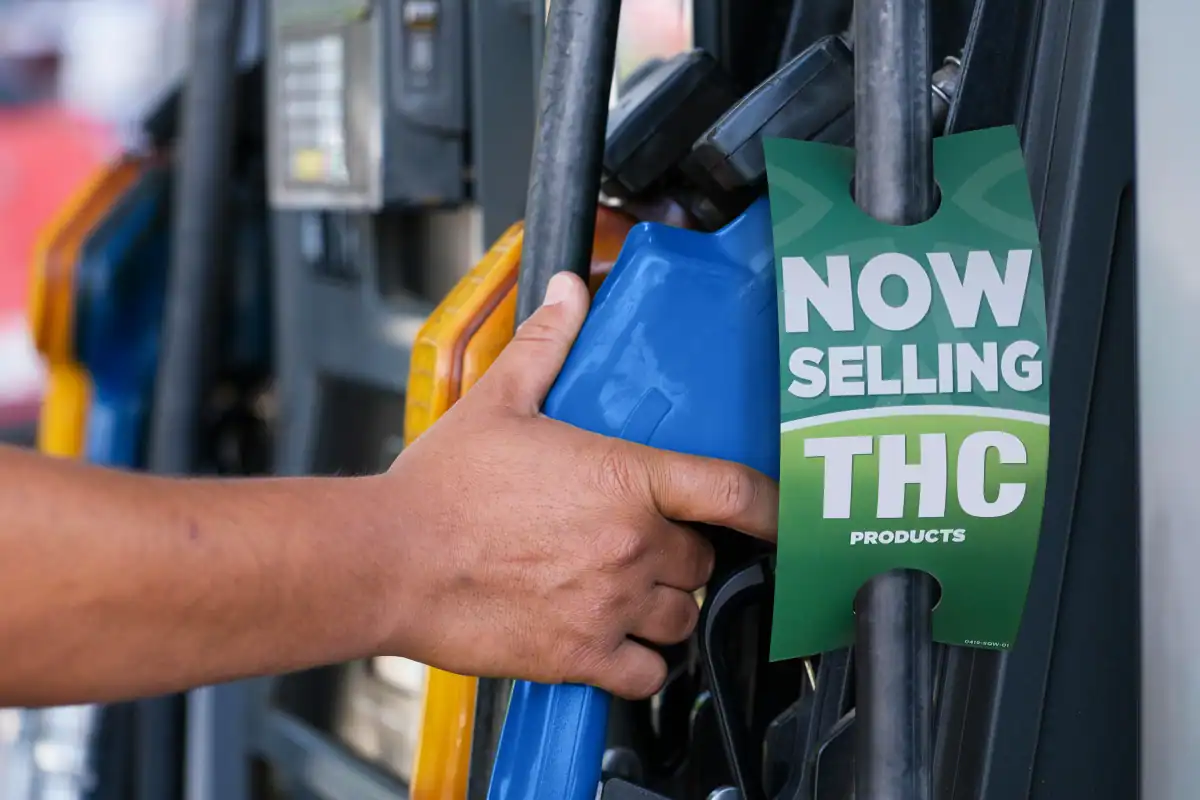
You walk into a gas station for snacks or fuel.
And next to the counter you see it again:
- Delta-8 gummies
- THC vape pens
- “Hemp-derived highs”
- Cheap cannabis edibles in colorful packaging
No dispensary. No budtender. No long explanations.
Just a product that promises relaxation in seconds.
And it makes you wonder:
Are gas station cannabis products actually safe… or are we normalizing something risky?
This question is becoming more important in 2026 as hemp-derived THC products spread rapidly across the U.S. convenience market.
Let’s break everything down in a simple, honest, and research-backed way.
What Exactly Are Gas Station Cannabis Products?
Gas station cannabis products are typically made from hemp-derived cannabinoids, not traditional marijuana from dispensaries.
Most common types include:
- Delta-8 THC
- Delta-10 THC
- HHC (Hexahydrocannabinol)
- THCa (sometimes mislabeled or heated conversion products)
- CBD oils and gummies
These compounds are often sold legally under the 2018 Farm Bill as long as they contain less than 0.3% Delta-9 THC.
But here’s where things get complicated:
The law allows hemp-derived cannabinoids, but does not strictly regulate how they are manufactured or sold in many cases.
That creates a massive quality gap between products.
If you’re looking for a more reliable experience, many users are now shifting toward lab-tested hemp products like premium THCa flower options in 2026, which offer more consistency and transparency compared to gas station alternatives.
Why Gas Station Cannabis Products Are So Controversial
The controversy is not about cannabis itself.
It’s about how unregulated the marketplace has become.
Let’s break down the key concerns.
1. Lack of Reliable Lab Testing
Many products claim:
“Lab Tested”
“Premium Quality”
“Safe & Legal”
But when researchers and consumers actually scan QR codes:
- Some certificates don’t match the product batch
- Some labs are not accredited
- Some reports are outdated or reused
- Some links don’t work at all
Without real verification, you don’t actually know:
- THC potency
- Purity
- Chemical residue levels
- Contaminants
This is one of the biggest safety red flags in the industry.
Many users avoid gas station THC products entirely and instead look for reviewed Delta-8 gummy brands with consistent
dosing and lab verification.
2. Synthetic Conversion Process Risks
Delta-8 THC does not naturally exist in large quantities in hemp.
So manufacturers typically create it through chemical conversion from CBD.
This process can involve:
- Acids
- Solvents
- Catalysts
- Heat processing
If done properly in a controlled lab, it can be safe.
But in low-quality production environments:
leftover chemicals may remain in the final product
That’s where health risks increase.
3. Inconsistent Potency Problems
One of the most reported issues by consumers is inconsistency.
A product labeled:
- “25mg Delta-8 per gummy”
may actually contain:
- 5mg (weak effect)
- 40–60mg (strong unexpected high)
This leads to:
- Overconsumption
- Anxiety reactions
- Dizziness or nausea
- Bad user experiences
Unlike dispensaries, dosing is often not standardized.
4. Poor Storage Conditions at Gas Stations
Gas stations are not designed for cannabinoid storage.
Products are often exposed to:
- Heat from sunlight
- Temperature fluctuations
- Long shelf exposure
- Improper sealing conditions
Over time, this can degrade:
- THC potency
- Flavor quality
- Chemical stability
So even a well-made product can lose quality before you buy it.
5. Legal Confusion Across States
Cannabis laws in the U.S. are extremely inconsistent.
Some states allow hemp-derived THC products.
Others have banned or restricted:
- Delta-8 THC
- Synthetic cannabinoids
- Intoxicating hemp products
This creates confusion like:
- A product legal in one state may be illegal in another
- Gas stations may still sell banned products unintentionally
- Consumers often don’t know local laws
This legal gray area is one of the biggest ongoing issues in 2026.
Why Gas Station Cannabis Products Became So Popular
Despite risks, these products exploded in popularity.
Why?
Easy access
No dispensary required
Lower price point
Often cheaper than licensed cannabis
Legal loophole marketing
“Hemp-derived THC” sounds safer and legal
No ID-heavy process in some stores
Faster purchase experience
Dispensary restrictions in many states
Limited access pushes demand to convenience stores
Convenience is the main driver not safety.
Gas Station vs Dispensary Cannabis
| Factor | Gas Station Products | Licensed Dispensary Products |
|---|---|---|
| Testing | Inconsistent | Mandatory & verified |
| Regulation | Weak | Strict state oversight |
| Ingredient clarity | Low | Fully disclosed |
| Potency control | Unreliable | Standardized |
| Safety assurance | Variable | High |
This doesn’t mean all gas station products are unsafe.
But it does mean quality control is unpredictable.
What Science Says About Hemp-Derived THC
Hemp-derived THC products interact with the same cannabinoid system in your body:
- CB1 receptors (brain effects)
- CB2 receptors (body relaxation effects)
Effects may include:
- Relaxation
- Euphoria
- Increased appetite
- Altered perception
But synthetic or poorly processed cannabinoids may also introduce:
- Stronger anxiety responses
- Headaches
- Fatigue
- Unknown long-term effects
Research is still evolving, especially for Delta-8 and similar compounds.
What Consumers Are Actually Experiencing
Real-world reports often highlight mixed experiences:
“It worked, but felt different than dispensary THC.”
“One gummy hit way harder than expected.”
“I didn’t feel anything at all.”
“Taste felt chemical-like.”
The biggest theme is inconsistency—not necessarily danger, but unpredictability.
Red Flags You Should NEVER Ignore
If you see these signs, be cautious:
- No batch-specific lab report
- Misspelled packaging labels
- Unrealistic claims (“100% safe everywhere”)
- Extremely cheap pricing
- No company website or traceability
- QR code that leads nowhere
These are common indicators of low-quality manufacturing.
Are Gas Station Cannabis Products Always Unsafe?
No, but here’s the honest answer:

They are risk-variable products, not standardized ones.
Some may be fine.
Some may be poorly made.
The problem is:
You usually cannot tell the difference just by looking.
That uncertainty is the core issue.
2026 Industry Trend: Why This Is Growing Fast
The hemp industry is expanding rapidly due to:
- Federal hemp legalization framework
- Demand for THC alternatives
- State-level cannabis restrictions
- Online cannabinoid marketplaces
But this growth also brings:
- More low-quality manufacturers
- Increased regulatory attention
- Potential bans on synthetic cannabinoids
The industry is in a transition phase fast growth, slow regulation.
Safer Ways to Buy Cannabis Products
If you want safer alternatives:
Licensed dispensaries
Best for quality, testing, and consistency
Established hemp brands
Look for transparent lab reports and reputation
Verified online retailers
With third-party testing and traceable sourcing
FAQ SECTION
Are gas station cannabis products legal?
They may be legal federally under hemp laws, but state laws vary widely.
Do gas station THC gummies get you high?
Yes, many contain Delta-8 or similar cannabinoids that produce psychoactive effects.
Are they as strong as dispensary products?
Not consistently. Some are weaker, some unexpectedly stronger.
Can gas station weed products be trusted?
Some brands are legitimate, but many lack strict quality control or testing.
What is the safest cannabis product to buy?
Licensed dispensary products are generally the safest due to strict regulation.
Is Delta-8 THC still legal everywhere in 2026?
Laws vary by state, so many users rely on updated breakdowns like this 2026 legality guide for Delta-8 THC and
safe purchase locations.
FINAL VERDICT
Gas station cannabis products are:
- Widely available
- Often cheaper
- But not always consistent or fully regulated
The real takeaway:
You’re not just buying cannabis you’re buying the quality control behind it.
And in gas stations, that quality control is often unclear.
Have you tried gas station cannabis products?
Did it feel similar to dispensary weed or completely different?
Share your experience below. Real user feedback helps others more than marketing ever will.
About the Author