The cannabis conversation in the United States continues to evolve, and nowhere is that more evident than in Georgia. Consumers frequently search terms like “is weed illegal in georgia”, “thca products”, or even the statement “the use of synthetic marijuana is legal in the state of georgia.”
However, legal realities are often more nuanced than online headlines suggest. This comprehensive guide breaks down Georgia cannabis laws, explains how THCA products and THC crystals fit into the legal landscape, and clarifies common misconceptions surrounding synthetic cannabinoids.
Is Weed Illegal in Georgia?
One of the most common searches is: “is weed illegal in georgia?”
The Short Answer:
Yes — recreational marijuana remains illegal in Georgia.
Under Georgia law, cannabis containing more than 0.3% delta-9 THC (on a dry weight basis) is classified as marijuana and remains prohibited for recreational use. Possession can lead to criminal penalties depending on quantity and circumstances.
What About Medical Use?
Georgia allows limited access to low-THC oil for registered patients with qualifying medical conditions. However, this program does not permit traditional smokable marijuana for recreational purposes.
So when people ask, “is weed illegal in georgia?” the legally accurate answer is that recreational marijuana is still prohibited, while certain low-THC medical formulations are allowed under strict regulation.
Understanding THCA Products in Georgia
The rapid growth of hemp-derived cannabinoids has introduced a new category into the market: THCA products.
What Is THCA?
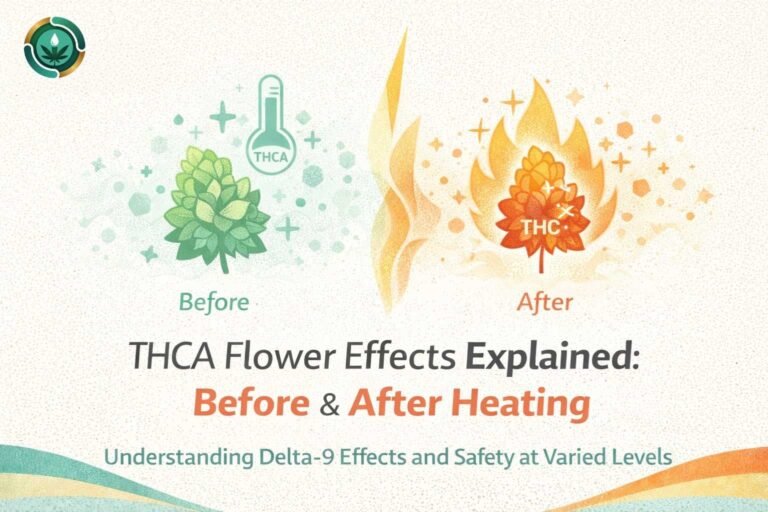
THCA (tetrahydrocannabinolic acid) is the non-psychoactive precursor to THC. In raw cannabis plants, THC primarily exists as THCA. When heated (through smoking, vaping, or cooking), THCA converts into delta-9 THC — the compound responsible for intoxicating effects.
Are THCA Products Legal in Georgia?
This is where things get complicated.
Georgia follows the federal hemp definition under the 2018 Farm Bill. Hemp is legal if it contains no more than 0.3% delta-9 THC by dry weight.
However:
- Many THCA flower products may technically contain less than 0.3% delta-9 THC before heating.
- Once heated, THCA converts into THC, potentially exceeding psychoactive thresholds.
Because regulators consider “total THC” in some contexts (including potential conversion), high-THCA flower can exist in a gray area. Retailers must rely on certified lab testing (COAs) to demonstrate compliance.
In practice, THCA products are sold in Georgia, but legality depends heavily on testing methodology and interpretation of “total THC.”
THC Crystals: What Are They?
Another trending search term is “THC crystals.”
THC crystals — often called THCA crystalline or THC isolate — are highly purified cannabinoid concentrates. They can reach 99% purity and appear as clear or white crystalline structures.
Key Characteristics:
- Extremely high cannabinoid concentration
- Usually odorless and flavorless
- Commonly used for dabbing or infusing other products
- Derived from hemp or marijuana plants depending on source
Are THC Crystals Legal in Georgia?
If derived from marijuana (above the 0.3% delta-9 THC threshold), THC crystals are illegal for recreational possession in Georgia.
If derived from hemp and compliant with delta-9 THC limits prior to sale, they may fall within legal hemp guidelines — but once again, enforcement interpretation can vary.
Because THC crystals are highly potent, they face more regulatory scrutiny than standard CBD products.
Synthetic Marijuana: Clearing Up a Dangerous Myth
You may have seen the statement:
“the use of synthetic marijuana is legal in the state of georgia.”
This statement is misleading and largely inaccurate.
What Is Synthetic Marijuana?
Synthetic marijuana refers to lab-created chemical compounds that mimic THC’s effects. These substances are often sold under names like:
- Spice
- K2
- Herbal incense
Unlike naturally derived cannabinoids, synthetic marijuana consists of man-made chemicals sprayed onto plant material.
Is Synthetic Marijuana Legal in Georgia?
No.
Georgia has specifically outlawed many synthetic cannabinoid compounds due to safety concerns. These substances have been linked to:
- Severe anxiety
- Psychosis
- Heart complications
- Seizures
- Hospitalization
Lawmakers have repeatedly amended controlled substance laws to include emerging synthetic cannabinoid variants.
So to be clear:
The claim “the use of synthetic marijuana is legal in the state of georgia.” is not legally accurate in most contexts. Synthetic cannabinoids are heavily restricted and often criminalized.
Georgia Cannabis vs. Other States
The broader Georgia cannabis framework is considered more conservative compared to states like:
- California
- Colorado
- Michigan
- Illinois
Where recreational marijuana is fully legalized and regulated.
In contrast, Georgia maintains:
- Recreational prohibition
- Limited medical low-THC program
- Hemp legality under federal standards
- Tight restrictions on synthetic cannabinoids
The state’s cannabis environment is better described as restricted but evolving.
Comparing THCA Products to Other Cannabinoids
| Cannabinoid | Psychoactive? | Legal in Georgia? | Risk Level |
|---|---|---|---|
| CBD | No | Legal (if hemp-derived) | Low |
| Delta-8 THC | Mildly | Restricted / debated | Moderate |
| THCA | Converts to THC | Gray area | Moderate–High |
| THC Crystals | Yes (if converted) | Generally illegal if marijuana-derived | High |
| Synthetic Marijuana | Yes | Largely illegal | Very High |
The main distinction lies in source and chemical structure. Hemp-derived cannabinoids that comply with delta-9 THC limits are typically permitted. Synthetic or high-THC marijuana products are not.
Who Should Avoid THCA, THC Crystals, and Other Cannabinoids?
Even in jurisdictions where certain cannabis products are permitted, not everyone should use them.
High-Risk Groups Include:
- Pregnant or breastfeeding individuals
THC crosses the placenta and may affect fetal development. - Adolescents and young adults
Brain development continues into the mid-20s. THC exposure may impact cognition. - People with heart conditions
THC can increase heart rate and blood pressure. - Individuals with psychiatric history
High-THC products may worsen anxiety, paranoia, or psychosis. - Those subject to workplace drug testing
Even hemp-derived THCA products can result in positive THC tests after conversion. - Individuals taking liver-metabolized medications
Cannabinoids may interact with certain prescriptions.
Also Read : Are Delta-8 Gummies Legal in Florida?
Market Trends: Why THCA Products Are Growing
Despite regulatory complexity, THCA products and THC crystals are gaining popularity due to:
- Demand for high-potency experiences
- Perceived legal loopholes
- Hemp industry expansion
- Online retail accessibility
However, regulatory agencies are increasingly examining intoxicating hemp derivatives. Future state or federal amendments may tighten definitions to close conversion-based loopholes.
Businesses operating in the Georgia cannabis market must stay alert to:
- Lab testing standards
- Total THC calculation methods
- Labeling compliance
- Age verification policies
- Shipping restrictions
Compliance Tips for Georgia Consumers
If purchasing cannabis-related products in Georgia:
- Request third-party lab results (COA).
- Verify delta-9 THC percentage.
- Confirm hemp source documentation.
- Avoid unverified synthetic cannabinoid products.
- Understand that legality can shift quickly.
The Bottom Line on Georgia Cannabis Laws
To summarize:
- Is weed illegal in georgia?
Yes, recreational marijuana remains illegal. - Are thca products legal?
Potentially — if hemp-derived and compliant with delta-9 THC limits, but they operate in a gray area. - Are THC crystals allowed?
Only if hemp-derived and compliant; marijuana-derived crystals are illegal. - Is synthetic marijuana legal?
No. The statement “the use of synthetic marijuana is legal in the state of georgia.” is misleading and largely incorrect.
Georgia cannabis law is structured around THC concentration thresholds rather than plant appearance alone. The distinction between hemp and marijuana hinges on precise chemical measurements, not marketing labels.
Final Thoughts
The Georgia cannabis landscape is complex and evolving. While hemp-derived cannabinoids have created new commercial opportunities, high-THC products — including many THCA products and THC crystals — face regulatory uncertainty.
Consumers should prioritize safety, legal awareness, and laboratory transparency. Businesses should emphasize compliance and responsible marketing.
As legislation continues to adapt nationwide, staying informed is essential. The intersection of hemp innovation and marijuana regulation ensures that Georgia cannabis law will remain a dynamic topic for years to come.
About the Author