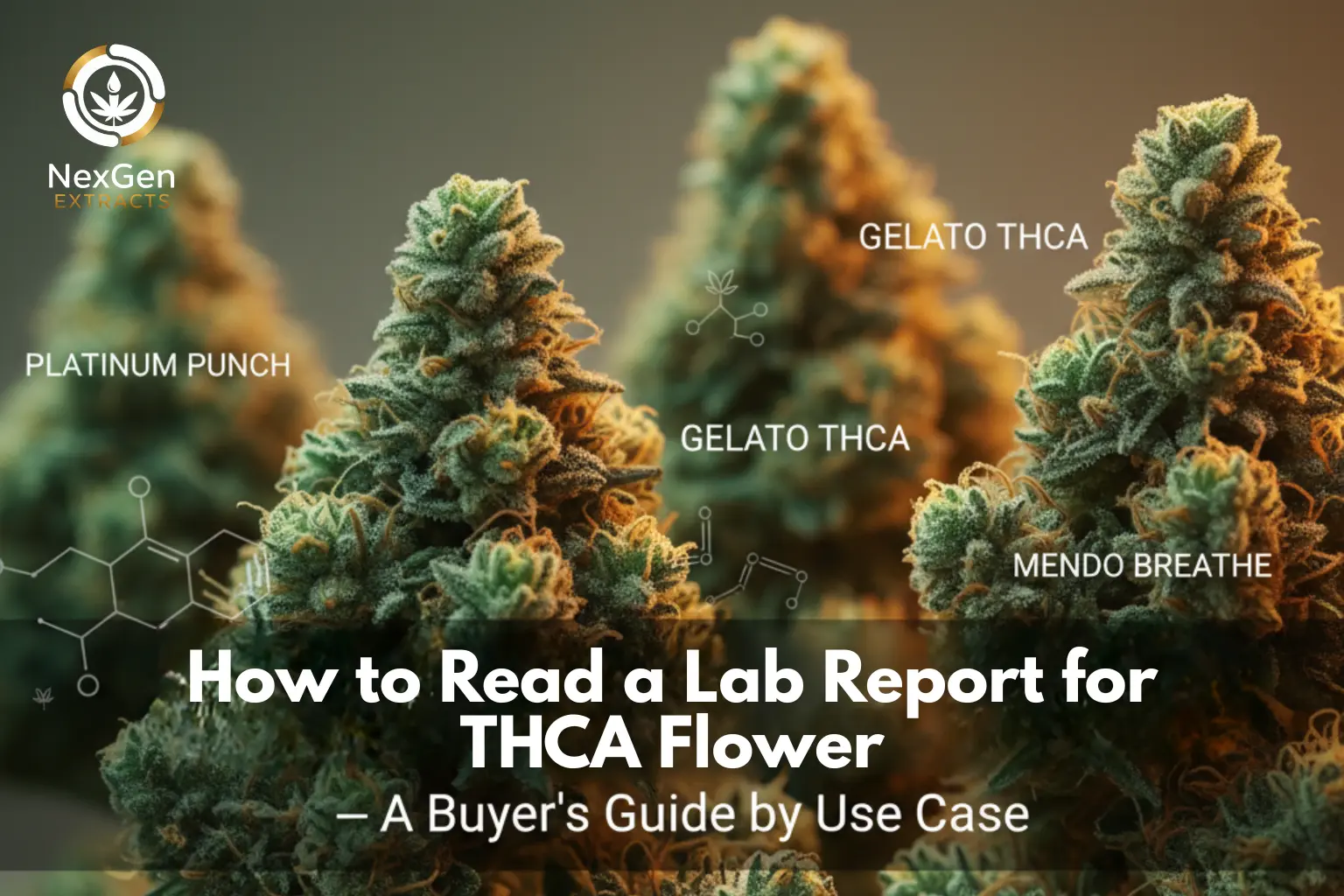
A NexGen Extracts Guide to THCA Science, Safety, and Smart Buying
THCA flower looks like traditional cannabis, smells like traditional cannabis, and—when heated—can feel very much like traditional cannabis. Yet legally and chemically, it lives in a different category. This unique position makes lab reports (Certificates of Analysis or COAs) absolutely critical.
For many consumers, lab reports feel intimidating: pages of numbers, percentages, and scientific terms that are easy to scroll past. But when it comes to THCA flower, understanding a lab report is the difference between buying a compliant, high-quality product and unknowingly taking on unnecessary risk.
This guide explains how to read a THCA flower lab report step by step, what each section actually means, how THCA compares to Delta-9 and other cannabinoids, how lab results shape legality and effects, and who should avoid THCA flower due to higher risk.
Why Lab Reports Matter More for THCA Flower Than Most Products
THCA flower exists in a regulatory gray area. Its legality depends almost entirely on lab-verified Delta-9 THC content, not how the product feels after use.
Unlike CBD or even Delta-8 products, THCA flower:
- can produce Delta-9 THC effects once heated
- must remain under strict Delta-9 limits on paper
- is often misunderstood by consumers
- can vary significantly in quality
A lab report is not marketing—it is the only objective proof of what the flower actually contains.
What a Lab Report (COA) Is and Why It Exists
A Certificate of Analysis is a document produced by an independent, third-party laboratory. It verifies:
- cannabinoid content
- compliance with legal thresholds
- absence of harmful contaminants
For THCA flower, a legitimate COA should be recent, batch-specific, and publicly accessible.
If a seller does not provide a full COA, that is a major red flag.
Section 1: Basic Product Information
At the top of a lab report, you should see:
- product name
- batch or lot number
- testing lab name
- test date
- sample ID
Why this matters
The batch number on the COA should match the batch being sold. If it doesn’t, the report may not apply to your product at all.
Old lab reports or generic reports reused across products indicate poor transparency.
Section 2: Cannabinoid Profile (The Most Important Part)
This section shows the percentage of each cannabinoid present in the flower.
Key cannabinoids to look for
- THCA
- Delta-9 THC
- Delta-8 THC
- CBD / CBDA (sometimes present in small amounts)
Understanding THCA percentage
THCA is usually listed as a percentage by dry weight. High-THCA flower often ranges from:
- 15% to 30% THCA
This number tells you potential potency after heating, not current intoxication level.
Section 3: Delta-9 THC — The Legal Line
This is the most critical number on the entire report.
Under federal hemp guidelines, Delta-9 THC must remain at or below 0.3% by dry weight.
What to check
- Delta-9 THC % (not “Total THC”)
- whether the result is clearly under 0.3%
- whether it is listed separately from THCA
Red flags
- Delta-9 THC listed as “ND” without context
- Delta-9 combined with THCA into “Total THC”
- unclear formatting that obscures Delta-9 content
THCA flower can be legally compliant while still becoming intoxicating when heated. That legality depends entirely on this number.
Section 4: Total THC (Why It Can Be Misleading)
Some lab reports calculate “Total THC” using a formula that estimates how much Delta-9 THC could be produced after heating THCA.
This number is not used for federal hemp legality, but it does matter for consumer awareness.
Why Total THC matters
- it reflects potential intensity
- it helps explain why THCA flower can feel strong
- it prevents misunderstanding about effects
A product can be legally compliant and still feel powerful once heated.
Section 5: Terpene Profile (Often Overlooked, Very Important)
Terpenes are aromatic compounds that influence:
- relaxation vs stimulation
- body vs mental effects
- anxiety potential
- overall experience
Common terpenes include:
- myrcene
- limonene
- caryophyllene
- pinene
Two THCA flowers with identical THCA percentages can feel very different due to terpene composition.
A quality lab report will include:
- terpene names
- individual percentages
- total terpene content
Section 6: Contaminant Testing (Non-Negotiable)
Because THCA flower is inhaled, contaminant testing is critical.
Look for testing of
- pesticides
- heavy metals
- mold and mildew
- microbial contaminants
Why this matters
Flower absorbs contaminants from soil, water, and air. Skipping this testing puts consumers at real health risk.
A report that only tests cannabinoids and ignores contaminants is incomplete.
Section 7: Solvent Testing (Especially Important for Hemp Products)
While THCA flower itself is not extracted, some hemp products undergo processing nearby.
Solvent testing ensures:
- no residual chemicals
- no cross-contamination
Absence of solvent testing raises questions about handling standards.
THCA Flower vs Delta-9: How Lab Reports Explain the Difference
Delta-9 products
- list active THC directly
- potency reflects current intoxication potential
- regulated through dispensaries
THCA flower
- lists non-intoxicating THCA
- Delta-9 appears low on paper
- intoxication occurs after heating
Lab reports bridge the gap between legality and experience.
THCA Flower vs Delta-8 and Other Cannabinoids
Delta-8
- lab reports must verify purity due to chemical conversion
- contaminants and byproducts are a larger concern
CBD
- lab reports focus on non-intoxicating compliance
- fewer psychoactive risks
THCA
- lab accuracy determines legality
- terpene profile determines experience
- user misunderstanding creates risk
Each cannabinoid category relies on lab reports differently—but THCA flower relies on them most.
Who Should Avoid THCA Flower (Based on Science and Risk)
Because THCA converts into Delta-9 THC when heated, many THC-related risks apply.
People who should avoid THCA flower entirely
- individuals with psychotic disorders or schizophrenia
- those with severe anxiety or panic disorders
- pregnant or breastfeeding individuals
- people with serious cardiovascular conditions
- adolescents and young adults with developing brains
People who should use extreme caution
- individuals taking prescription medications
- people highly sensitive to THC
- first-time cannabinoid users
- those with mood instability
Lab reports cannot eliminate these risks—they only inform responsible decision-making.
Common Lab Report Red Flags to Avoid
- missing Delta-9 THC value
- outdated COAs
- mismatched batch numbers
- no contaminant testing
- vague or cropped screenshots
- labs without accreditation
A legitimate brand welcomes scrutiny. A questionable one avoids it.
Why Reading a Lab Report Protects You
Understanding a COA allows you to:
- verify legal compliance
- anticipate effects accurately
- avoid contaminated products
- choose strains aligned with your tolerance
- avoid misleading marketing
Education replaces guesswork with confidence.
The Bigger Market Context
THCA flower exists because law, chemistry, and consumer demand intersect imperfectly. Until regulation catches up, lab literacy is the strongest form of consumer protection.
Brands that prioritize transparency help mature the market and reduce harm.
Final Thoughts
A lab report is not a technical formality—it is the truth behind the product. For THCA flower, reading a COA is essential because legality, potency, and safety are not obvious from appearance alone.
Understanding THCA science, cannabinoid breakdowns, terpene influence, and contamination risks empowers smarter choices and safer experiences.
At NexGen Extracts, education is part of quality. When consumers know how to read a lab report, they don’t just buy products—they buy with clarity.
About the Author