A NexGen Extracts Consumer Education & Market Insight Guide
One of the most common things consumers say about Delta-8 is this:
“It doesn’t feel the same every time.”
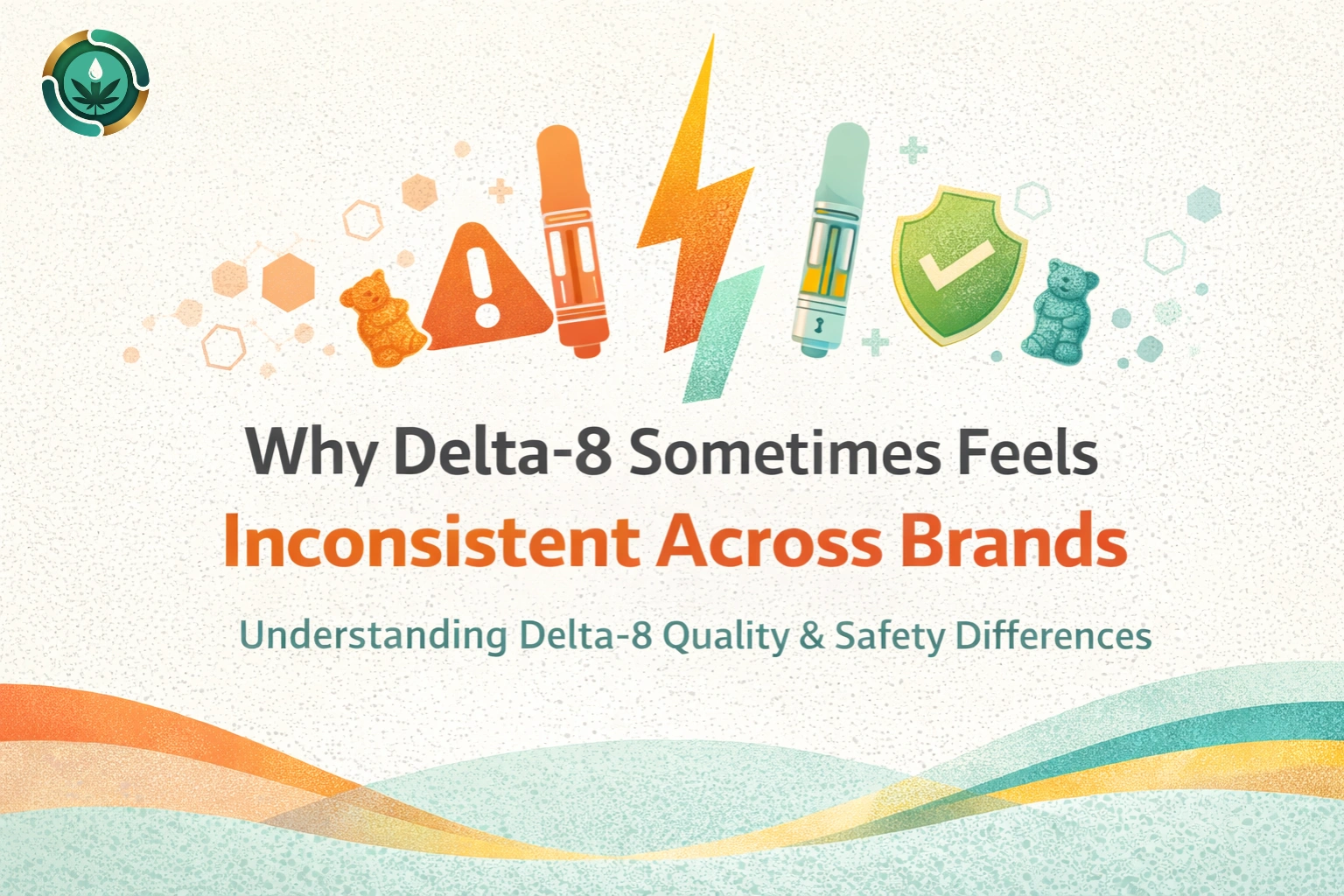
Some brands feel calming and smooth. Others feel weak, strange, overly intense, or barely noticeable. Two products with the same milligram count can produce completely different experiences. This inconsistency is not imagined—it is real, structural, and built into how the Delta-8 market currently operates.
Delta-8 exists in a unique space between hemp, cannabis, and regulation. It is widely available, legally complex, chemically processed, and inconsistently standardized. That combination makes experience variation across brands almost inevitable.
This article explains why Delta-8 feels inconsistent, how it compares with THCA flower and other cannabinoids, how product quality affects user experience, what this means in the wider market, and who should avoid THCA flower due to higher risk.
Understanding Delta-8 at the Source
Delta-8 THC occurs naturally in cannabis in extremely small amounts. Commercial Delta-8 is not typically extracted directly from the plant. Instead, it is chemically converted from hemp-derived CBD.
This conversion process matters.
Unlike naturally dominant cannabinoids like Delta-9 THC or CBD, Delta-8 depends on:
- chemical reactions
- lab precision
- purification methods
- post-processing quality control
This makes Delta-8 far more dependent on manufacturing quality than many other cannabinoids.
Reason #1: Not All Delta-8 Is Made the Same Way
The CBD-to-Delta-8 conversion process varies between manufacturers.
Differences may include:
- catalysts used
- reaction time
- temperature control
- purification methods
- filtration quality
- lab equipment standards
If conversion is poorly done, the final product may contain:
- leftover solvents
- unknown byproducts
- unwanted isomers
- inconsistent potency
These factors directly affect how Delta-8 feels in the body and mind.
Reason #2: Lack of Industry-Wide Standards
In regulated cannabis markets, Delta-9 THC products must meet strict testing and production standards. Delta-8 does not operate under a unified federal regulatory framework.
This means:
- no universal manufacturing protocols
- no standardized purity benchmarks
- inconsistent testing requirements
- variable enforcement
As a result, two brands can sell “25 mg Delta-8 gummies” that are chemically very different products.
Reason #3: Inaccurate or Misleading Lab Testing
Some brands publish lab reports that:
- test only cannabinoids, not contaminants
- use outdated reports
- test different batches than what is sold
- omit solvent and heavy metal testing
This creates a false sense of consistency.
When lab testing is incomplete or misleading, consumers are unknowingly comparing non-equivalent products under the same name.
Reason #4: Different Carrier Ingredients and Formulations
Especially in gummies, tinctures, and vapes, formulation matters.
Differences include:
- type of carrier oil
- emulsification methods
- terpene blends
- flavoring agents
- delivery systems
These factors influence:
- absorption speed
- onset time
- intensity
- duration
- body vs mental effect balance
Two Delta-8 gummies with identical potency can feel completely different due to formulation alone.
Reason #5: Isomer and Byproduct Presence
Poorly refined Delta-8 may contain other cannabinoids and byproducts such as:
- Delta-10
- unknown THC isomers
- reaction residues
- degradation compounds
These compounds can alter effects in unpredictable ways, contributing to inconsistent experiences between brands.
Reason #6: Marketing vs Chemistry
Branding often creates expectations that shape perception.
If a product is marketed as:
- “ultra-relaxing”
- “strongest legal THC”
- “indica-style calm”
- “sativa energy boost”
users may interpret sensations through those labels—even when the chemistry doesn’t match the messaging.
Expectation bias amplifies perceived inconsistency.
Delta-8 vs THCA: Consistency Comparison
Delta-8
- chemically converted
- highly dependent on processing quality
- large variation between brands
- formulation-sensitive
- regulatory gaps
THCA Flower
- naturally occurring cannabinoid
- consistency depends more on cultivation quality
- terpene profile drives experience
- less chemical processing
- experience becomes Delta-9-like when heated
While THCA flower has legal complexity, its chemical structure is more natural and stable than synthetic Delta-8 conversions, making the plant chemistry itself more consistent—though potency can still vary by strain and grower.
Delta-8 vs Delta-9: Stability Differences
Delta-9 THC is:
- naturally produced by the plant
- well-studied
- regulated in legal markets
- standardized in dispensaries
This creates experience predictability that Delta-8 lacks.
Delta-8’s inconsistency is not just a consumer issue—it is a structural market issue.
How Delta-8 and THCA Compare to Other Cannabinoids
CBD
CBD is highly standardized and widely tested. Experiences are more consistent because extraction methods are mature and regulated.
HHC and Novel Cannabinoids
These often show even greater inconsistency than Delta-8 due to novelty and limited research.
Market reality
The more chemically processed a cannabinoid is, the more consistency depends on manufacturer ethics and expertise.
Why Consumers Experience Delta-8 Differently Even with the Same Brand
Even within a single brand, inconsistency can occur due to:
- batch variations
- storage conditions
- shelf life
- oxidation
- terpene degradation
Delta-8 is sensitive to light, heat, and air exposure, which can change potency and effect profile over time.
The Role of Terpenes in Perceived Consistency
Many Delta-8 products add terpenes to shape effects.
Terpene profiles influence:
- stimulation vs sedation
- body vs mental dominance
- anxiety potential
- mood response
Inconsistent terpene blending can make the same Delta-8 base feel very different across products.
Why Inconsistency Creates Risk
Unpredictable effects can lead to:
- accidental overconsumption
- anxiety reactions
- impaired functioning
- safety issues
- negative user experiences
Consistency is not just about enjoyment—it is about safety and predictability.
Who Should Avoid THCA Flower (High-Risk Groups)
Because THCA flower converts into Delta-9 THC when heated, it carries similar risks to traditional cannabis.
People who should avoid THCA flower entirely
- individuals with psychotic disorders or schizophrenia
- those with severe anxiety or panic disorders
- pregnant or breastfeeding individuals
- people with serious cardiovascular conditions
- adolescents and neurologically developing individuals
People who should use extreme caution
- individuals taking prescription medications
- people highly sensitive to THC
- first-time cannabinoid users
- those with mood instability
THCA flower’s legal status does not reduce these risks.
Delta-8 + THCA in the Wider Market Context
The cannabinoid market is fragmented into:
- regulated cannabis markets
- hemp-derived markets
- online retail channels
- state-by-state legal interpretations
This fragmentation produces quality inconsistency, consumer confusion, and uneven safety standards.
Delta-8 is most affected because it exists entirely within this fragmented space.
How Consumers Can Reduce Inconsistency Risk
Practical steps include:
- choosing brands with full-panel lab tests
- avoiding “too cheap to be true” pricing
- looking for batch numbers and traceability
- avoiding exaggerated marketing claims
- sticking to brands with consistent formulations
Consistency comes from transparency, not branding.
Why Market Maturity Will Change This
As regulation evolves, the Delta-8 market will likely see:
- tighter production standards
- standardized testing
- clearer labeling requirements
- reduced low-quality manufacturing
Until then, inconsistency remains part of the category.
Final Thoughts
Delta-8 feels inconsistent across brands because the market itself is inconsistent. Differences in chemical conversion methods, purification standards, lab testing, formulation quality, and regulatory oversight all shape user experience.
This is not a personal tolerance issue alone—it is a system-level issue.
Compared to Delta-9 and even THCA flower, Delta-8 depends more heavily on manufacturing integrity than plant biology. That makes brand trust and transparency more important than potency numbers or marketing claims.
As the cannabinoid market matures, consistency will improve. Until then, informed consumers remain the strongest layer of protection.
At NexGen Extracts, education is the foundation of trust. Understanding why experiences vary is the first step toward safer, smarter cannabinoid use.
About the Author