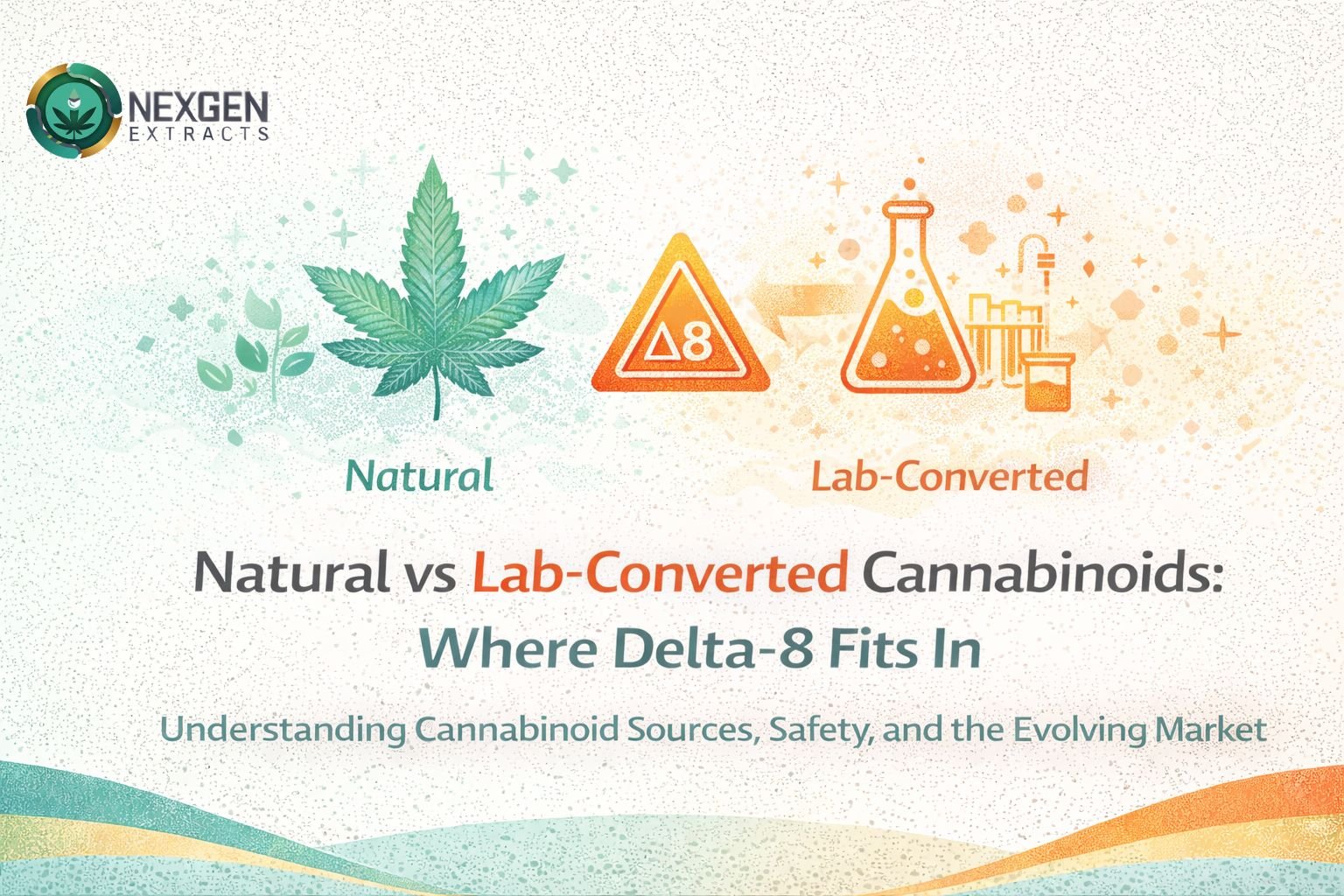
The cannabinoid market has evolved rapidly. What once revolved primarily around Delta-9 THC and CBD now includes Delta-8, THCA, HHC, THCP, and a growing list of lesser-known compounds. As options expand, so does confusion—especially around one important distinction: natural cannabinoids vs lab-converted cannabinoids.
Where do these compounds come from? Are they extracted directly from the plant, or are they created through chemical processes? Does the source affect safety, potency, or consistency? And where exactly does Delta-8 fit into all of this?
Understanding the difference between naturally occurring and lab-converted cannabinoids is essential for making informed choices. This guide explains the science behind both categories, compares them across the wider market, and outlines who should avoid certain cannabinoids due to higher risk factors.
What Are Natural Cannabinoids?
Natural cannabinoids are compounds produced directly by the cannabis plant. They develop through the plant’s internal biochemical processes during growth.
Common natural cannabinoids include:
- Delta-9 THC
- CBD
- THCA
- CBDA
- CBG
- CBN
These cannabinoids exist in measurable amounts in raw cannabis flower. When properly cultivated and harvested, they can be extracted without altering their chemical structure.
For example:
- THCA is naturally abundant in raw cannabis.
- Delta-9 THC is naturally formed when THCA is heated.
- CBD is naturally present in hemp varieties.
Natural cannabinoids are typically extracted using:
- CO₂ extraction
- ethanol extraction
- solventless methods
In these cases, the cannabinoid’s molecular structure is not chemically altered—it is simply isolated.
What Are Lab-Converted Cannabinoids?
Lab-converted cannabinoids begin as one naturally occurring compound but are chemically transformed into another.
The most common example is Delta-8 THC.
Delta-8 occurs naturally in cannabis—but only in very small amounts. Because direct extraction would be inefficient and expensive, manufacturers typically convert CBD (derived from hemp) into Delta-8 using chemical processes.
This process involves:
- dissolving CBD in a solvent
- applying acids or catalysts
- rearranging molecular bonds
- purifying the final compound
The result is a cannabinoid that exists naturally—but is rarely found in usable concentrations without conversion.
Other cannabinoids that are often lab-converted include:
- Delta-10
- HHC
- certain minor THC isomers
The difference is not whether the compound exists in nature—it does. The difference is how it reaches the final product.
Where Delta-8 Fits In
Delta-8 occupies a middle ground in the cannabinoid landscape.
- It is a naturally occurring cannabinoid.
- It is rarely extracted directly.
- It is usually lab-converted from CBD.
- It produces psychoactive effects, but milder than Delta-9.
Because Delta-8 is derived from hemp-based CBD, it entered the market through hemp regulations rather than traditional cannabis laws. This positioned it as a legal alternative in many areas where Delta-9 remains restricted.
However, its lab-converted origin makes manufacturing quality extremely important.
Natural vs Lab-Converted: Key Differences
1. Source and Production
Natural cannabinoids
- directly extracted
- minimal chemical alteration
- plant-driven profile
Lab-converted cannabinoids
- chemically transformed
- dependent on lab precision
- require purification
The more processing involved, the more quality depends on the manufacturer.
2. Consistency
Natural cannabinoids, especially those grown in regulated markets, often provide:
- more predictable potency
- clearer terpene profiles
- fewer synthetic byproducts
Lab-converted cannabinoids can vary significantly depending on:
- conversion method
- purification standards
- lab testing transparency
This explains why Delta-8 products sometimes feel inconsistent across brands.
3. Regulatory Oversight
Delta-9 THC in regulated cannabis markets is subject to strict testing and compliance.
Delta-8 and other lab-converted cannabinoids often operate under hemp laws, which may involve:
- less consistent oversight
- varying state interpretations
- fewer uniform manufacturing standards
Regulation differences impact consumer confidence and quality control.
Comparing Delta-8 to Other Cannabinoids
Delta-8 vs Delta-9 THC
Delta-9:
- naturally abundant in cannabis
- stronger psychoactive profile
- more studied
Delta-8:
- milder psychoactive intensity
- smoother body effects for many users
- dependent on chemical conversion
Delta-9 tends to produce stronger mental stimulation. Delta-8 often feels more relaxed and body-oriented, though individual experiences vary.
Delta-8 vs THCA
THCA:
- naturally abundant in raw flower
- non-intoxicating until heated
- converts into Delta-9 THC
Delta-8:
- already psychoactive
- does not require heating conversion
- usually lab-converted
THCA flower relies on decarboxylation (heat activation). Delta-8 does not require this step.
Delta-8 vs CBD
CBD:
- non-intoxicating
- naturally extracted
- widely researched
Delta-8:
- psychoactive
- conversion-dependent
- less studied long-term
CBD remains preferred by individuals seeking calm without intoxication.
Safety Considerations: Natural Does Not Mean Risk-Free
It’s important to clarify: “natural” does not mean “harmless.”
Delta-9 THC is natural—but can trigger anxiety, impaired judgment, or discomfort at high doses.
THCA is natural—but becomes intoxicating once heated.
Lab-converted cannabinoids introduce additional manufacturing variables, but all psychoactive cannabinoids carry potential risks.
Who Should Avoid Certain Cannabinoids
Certain individuals should avoid or use extreme caution with psychoactive cannabinoids, whether natural or converted.
Avoid Delta-8, Delta-9, or heated THCA if you have:
- a history of psychosis or schizophrenia
- severe anxiety or panic disorders
- bipolar disorder with manic episodes
- serious cardiovascular conditions
- pregnancy or breastfeeding status
Use caution if you:
- take prescription psychiatric medications
- are highly sensitive to THC
- are new to cannabinoids
- have unstable mood patterns
Natural origin does not eliminate these risks. Psychoactivity remains the central factor.
Market Trends: Why Lab-Converted Cannabinoids Exist
Lab-converted cannabinoids became popular because:
- hemp-derived CBD was widely legal
- demand for psychoactive alternatives increased
- regulatory gaps allowed innovation
- consumers wanted new experiences
Delta-8 filled a market demand where Delta-9 access was limited.
However, as regulations evolve, the distinction between natural and converted cannabinoids may become more standardized.
Quality and Transparency Matter More Than Labels
The most important factor in choosing between natural and lab-converted cannabinoids is not ideology—it is transparency.
Consumers should look for:
- full-panel third-party lab testing
- clear cannabinoid breakdowns
- contaminant screening
- batch numbers
- reputable brand presence
Conversion itself is not inherently unsafe—but poor conversion practices are.
The Future of Cannabinoid Production
As the market matures, likely developments include:
- tighter testing requirements
- clearer federal guidelines
- improved manufacturing standards
- increased consumer education
This will reduce inconsistency and improve safety across both natural and lab-converted categories.
Final Thoughts
Natural and lab-converted cannabinoids both have a place in the modern market. Natural cannabinoids like Delta-9 and THCA originate directly from the plant and often provide a more traditional experience. Lab-converted cannabinoids like Delta-8 rely on chemical transformation but offer alternative intensity and accessibility.
Delta-8 sits at the intersection of innovation and regulation. It is neither purely synthetic nor purely plant-extracted. It exists because science made it scalable and market demand made it popular.
Ultimately, safety depends less on whether a cannabinoid is natural or converted—and more on dose, quality control, individual sensitivity, and informed use.
At NexGen Extracts, clarity matters. Understanding where your cannabinoids come from empowers smarter, safer decisions in an evolving market.
About the Author