A NexGen Extracts Consumer Safety & Market Awareness Guide
The online cannabinoid market has grown faster than almost any other wellness category. Delta-8 gummies, THCA flower, vapes, and tinctures are now available with a few clicks, often shipped directly to consumers in states without legal cannabis programs.
While this accessibility has opened doors, it has also created a serious problem: not all online cannabinoid sellers are trustworthy.
Unlike regulated cannabis dispensaries, much of the Delta-8 and THCA market exists in a loosely regulated space. This makes it easier for low-quality, misleading, or unsafe products to reach consumers—especially those who don’t know what to look for.
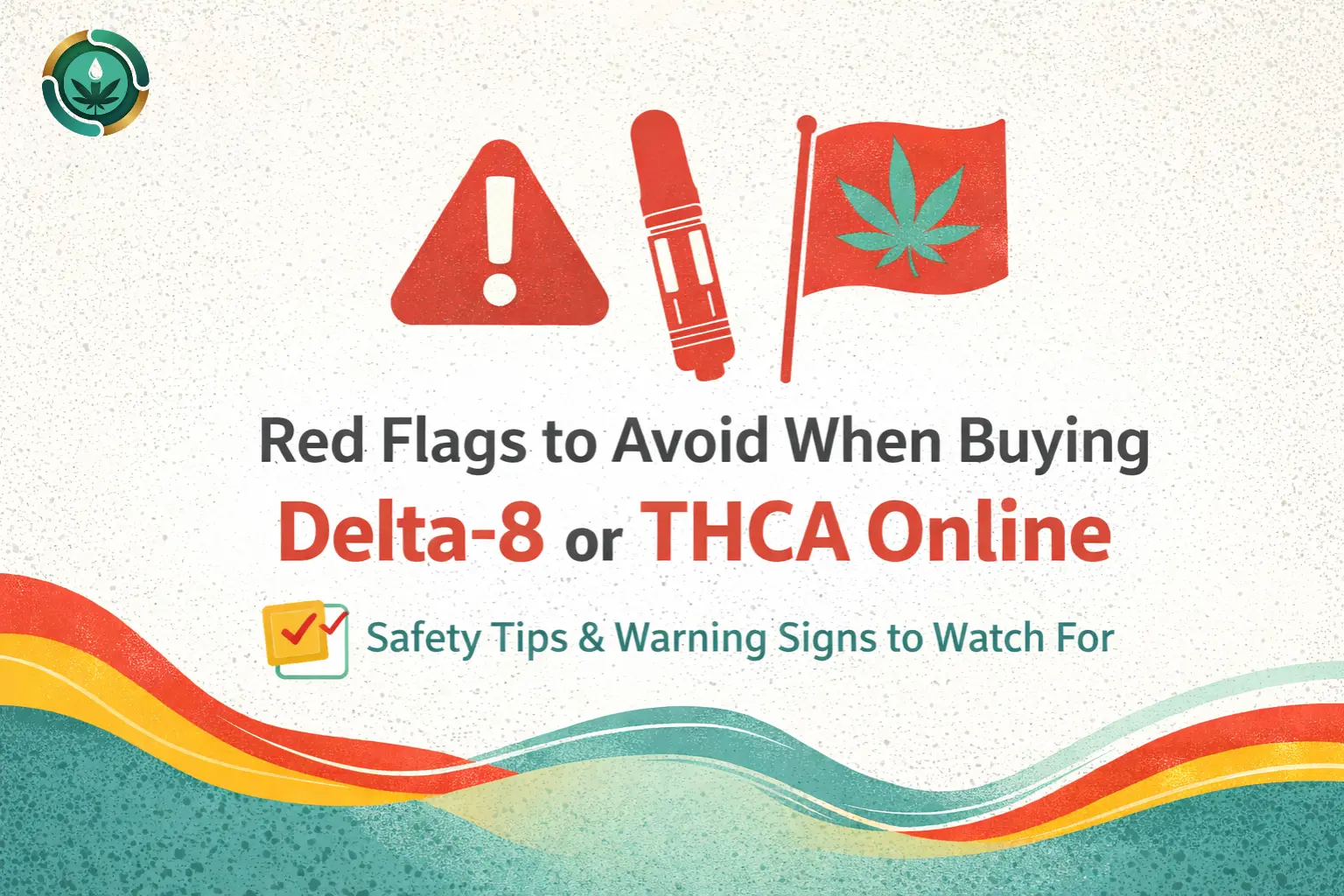
This guide explains the biggest red flags to avoid when buying Delta-8 or THCA products online, compares these products to Delta-9 and other cannabinoids, explains where they fit in the wider market, and clarifies who should not use THCA flower due to elevated risk.
Why Online Delta-8 and THCA Shopping Requires Extra Caution
Delta-8 and THCA products are often sold under hemp regulations, not cannabis regulations. This means:
- no universal manufacturing standards
- inconsistent testing requirements
- varying state interpretations of legality
- little enforcement against misleading marketing
As a result, the burden of safety often falls on the consumer.
Knowing the warning signs can help you avoid ineffective, contaminated, or misrepresented products.
Red Flag #1: No Third-Party Lab Reports (COAs)
One of the most important indicators of product quality is a Certificate of Analysis (COA) from an independent lab.
What a legitimate COA should show
- cannabinoid breakdown (Delta-8, THCA, Delta-9, CBD, etc.)
- confirmation that Delta-9 THC is within legal limits
- testing for pesticides, heavy metals, solvents, and microbes
- lab name, date, batch number
Major warning signs
- no lab reports available
- “lab tested” claims without proof
- COAs that don’t match the product name
- screenshots instead of downloadable reports
If a seller cannot or will not provide a real COA, that product should be avoided.
Red Flag #2: Vague or Misleading Product Descriptions
Trustworthy brands clearly explain what they are selling. Shady sellers rely on buzzwords.
Be cautious of descriptions like
- “gets you higher than anything else”
- “strongest legal THC ever”
- “no side effects”
- “completely safe for everyone”
- “non-psychoactive THCA flower” (without context)
THCA flower, once heated, converts into Delta-9 THC. Sellers who ignore this fact are either uninformed or intentionally misleading.
Red Flag #3: No Clear Ingredient List
For edibles, vapes, or tinctures, transparency matters.
Watch out for
- no ingredient list
- “proprietary blend” language with no explanation
- unknown flavoring agents
- no carrier oil disclosure (for tinctures)
Delta-8 is often created through chemical conversion. If ingredients and processing methods are not clearly disclosed, contamination risk increases.
Red Flag #4: Unrealistically Cheap Prices
High-quality cannabinoid products are not free to produce. Extremely low prices often signal:
- diluted cannabinoids
- inaccurate potency
- poor raw materials
- lack of proper testing
If a THCA flower ounce or Delta-8 vape is priced far below market norms, that is a warning—not a bargain.
Red Flag #5: No Brand Identity or Company Information
Legitimate companies stand behind their products.
Avoid sellers that
- have no physical address
- list no company name or leadership
- lack customer support contact information
- operate only through temporary websites
A trustworthy brand provides transparency, not anonymity.
Red Flag #6: Overpromising Medical or Health Claims
It is illegal and unethical to market cannabinoids as cures or treatments without approval.
Be skeptical of claims like
- “treats anxiety or depression”
- “replaces prescription medication”
- “guaranteed sleep solution”
- “zero risk, zero side effects”
Delta-8, Delta-9, and THCA are not medications, and such claims suggest a lack of compliance and integrity.
Red Flag #7: No Age Verification
Responsible sellers restrict access.
If a website:
- allows checkout without age confirmation
- markets products with youth-oriented graphics
- minimizes intoxication risks
…it is likely cutting corners in other areas as well.
Delta-8 vs THCA vs Delta-9: Why Red Flags Matter More for Some Products
Delta-9 THC
In regulated cannabis markets, Delta-9 products are subject to strict testing and oversight. Online hemp-derived Delta-9 edibles still require caution but operate under tighter limits.
Delta-8 THC
Delta-8 products carry higher risk because:
- they are often chemically converted from CBD
- improper processing can leave harmful byproducts
- regulation varies widely
THCA Flower
THCA flower appears “legal” on paper but behaves like traditional cannabis when heated. This creates risk for:
- unsuspecting users
- high-risk populations
- those assuming non-intoxicating effects
Because THCA flower looks and smells like marijuana, quality and labeling accuracy are critical.
Who Should Not Use THCA Flower (High-Risk Groups)
Even high-quality THCA flower is not appropriate for everyone.
People who should avoid THCA flower entirely
- individuals with a history of psychosis or schizophrenia
- those with severe anxiety or panic disorders
- pregnant or breastfeeding individuals
- people with serious cardiovascular conditions
- adolescents and young adults with developing brains
People who should use extreme caution
- individuals taking prescription medications
- people highly sensitive to THC
- first-time cannabinoid users
- those with mood disorders
Because THCA converts to Delta-9 THC when heated, these risks mirror traditional cannabis use—even if the product is sold legally online.
How THCA and Delta-8 Compare to Other Cannabinoids in the Wider Market
Compared to CBD
CBD is non-intoxicating and generally considered lower risk. Delta-8 and THCA (heated) produce psychoactive effects and require more caution.
Compared to HHC and newer cannabinoids
Novel cannabinoids often have even less safety data. Delta-8 and THCA are better understood than many alternatives, but still demand careful sourcing.
Market reality
The more “legal gray area” a cannabinoid occupies, the more important brand trust and transparency become.
Why Regulation Hasn’t Caught Up (Yet)
The cannabinoid market evolved faster than policy. As a result:
- enforcement is inconsistent
- consumer education lags
- unsafe products can circulate
Until clearer federal and state frameworks exist, consumers must act as their own first line of defense.
Practical Checklist Before Buying Online
Before purchasing Delta-8 or THCA products online, ask:
- Is there a current third-party COA?
- Are ingredients clearly listed?
- Is the brand transparent and reachable?
- Are effects described honestly, not exaggerated?
- Are risks acknowledged rather than dismissed?
If the answer to any of these is “no,” it’s best to walk away.
Why Education Is the New Consumer Protection
The safest products are not always the loudest or cheapest. They are the ones backed by:
- transparency
- testing
- realistic messaging
- respect for consumer safety
Brands that prioritize education help normalize responsible cannabinoid use and protect the market long-term.
Final Thoughts
Buying Delta-8 or THCA products online does not have to be risky—but only if consumers know what to avoid. Red flags like missing lab reports, misleading claims, unclear sourcing, and unrealistic promises should never be ignored.
THCA flower and Delta-8 products can be enjoyable and useful for some adults, but they are not suitable for everyone, and quality matters enormously. Legal status does not eliminate risk—especially for vulnerable groups.
At NexGen Extracts, informed decisions are the foundation of responsible use. Knowing when to say “no” is just as important as knowing what to buy.
About the Author