Introduction
The Hidden Transformation Happening Inside Every THCA Flower
If you’ve spent any time researching cannabis or hemp products in 2026, you’ve probably come across THCA flower, THCA vapes, or THCA concentrates. And if you’re like most consumers, one question immediately comes to mind:
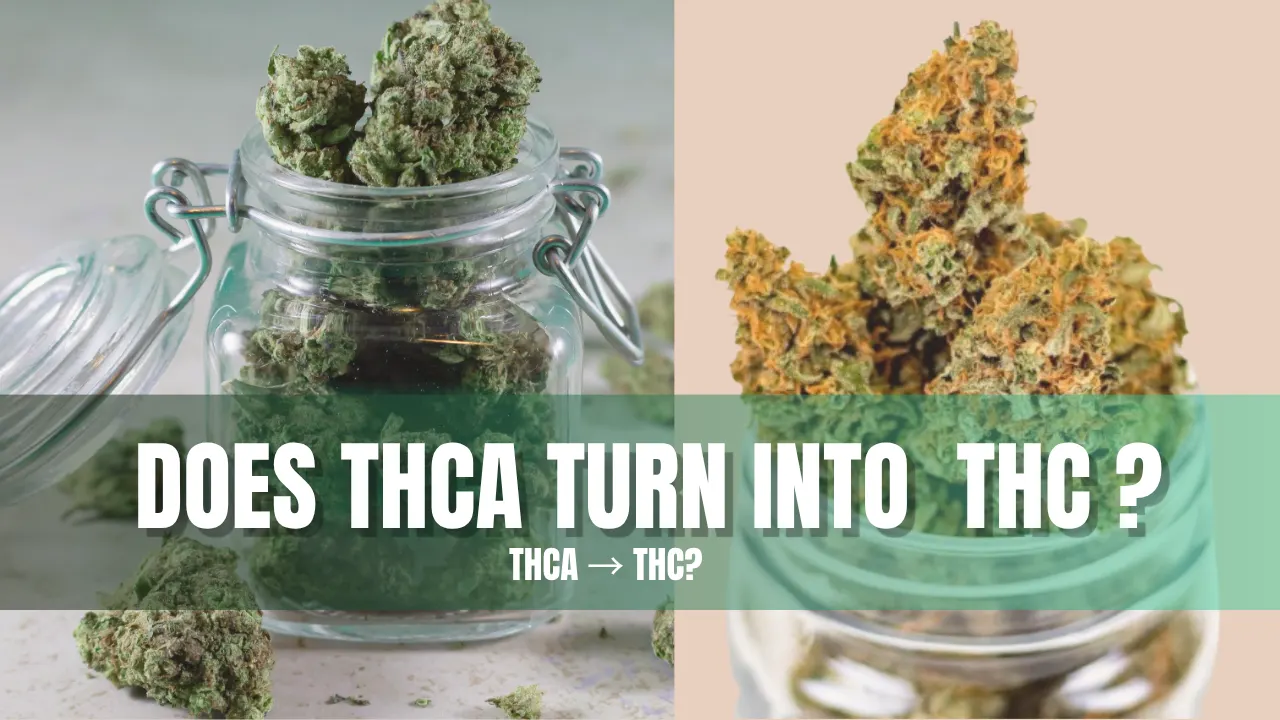
Does THCA turn into THC?
The answer is yes ,but the science behind that transformation is far more interesting than most people realize.
In fact, every time someone lights a THCA pre-roll, uses a vape, or cooks cannabis into an edible, a remarkable chemical reaction takes place. Within seconds, THCA transforms into THC, changing the way the compound interacts with the body.
This conversion process is the reason THCA has become one of the fastest-growing cannabinoid categories in the hemp industry. It is also why understanding THCA is essential for anyone shopping for cannabis products today.
But how exactly does THCA become THC?
Why doesn’t THCA behave the same way before heating?
What temperature is required for the conversion?
Can THCA turn into THC naturally over time?
And how much THC is actually created from THCA?
In this comprehensive guide, we’ll break down everything you need to know about THCA, THC, decarboxylation, cannabinoid chemistry, and the factors that influence this fascinating transformation.
By the end, you’ll understand not only whether THCA turns into THC, but also why that process matters when choosing cannabis products in 2026.
What Is THCA?
Before understanding how THCA becomes THC, it’s important to understand what THCA actually is.
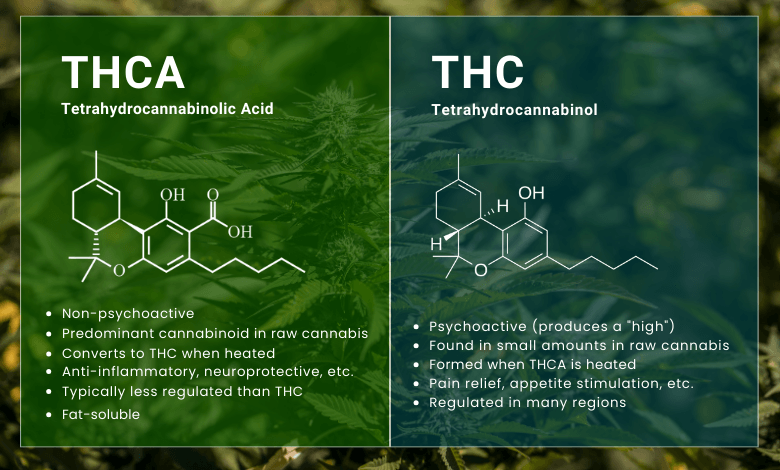
THCA stands for tetrahydrocannabinolic acid.
It is one of the primary cannabinoids naturally produced by cannabis and hemp plants.
Many people assume cannabis plants naturally produce THC. Surprisingly, that’s not entirely accurate.
Fresh cannabis plants primarily produce THCA ,not THC.
In its natural state, cannabis contains acidic cannabinoids, including:
- THCA
- CBDA
- CBGA
- CBCA
These compounds serve as the raw building blocks for other cannabinoids.
THCA is essentially the precursor to THC.
Think of it as THC’s original form before activation occurs.
When cannabis flowers are freshly harvested, THCA levels are often extremely high while THC levels remain relatively low.
A typical lab report might show:
- THCA: 28%
- THC: 0.5%
At first glance, this may seem confusing.
How can a product with less than 1% THC produce effects associated with cannabis?
The answer lies in what happens when heat enters the equation.
As consumer interest in cannabinoids continues to grow, THCA has emerged as one of the fastest-rising compounds in the hemp market. What was once a niche product category is now attracting widespread attention from both new and experienced consumers. To understand the bigger picture behind this trend, read “Why THCA Is Taking Over the Hemp Industry in 2026.”
Does THCA Turn Into THC?
Yes.
THCA absolutely turns into THC.
This transformation happens through a process known as decarboxylation.
Decarboxylation is a chemical reaction that removes a carboxyl group from the THCA molecule.
Once this small molecular component is removed, THCA becomes THC.
The resulting THC molecule can interact with the body’s cannabinoid receptors much more effectively than THCA.
Without decarboxylation, THCA remains in its original acidic form.
With decarboxylation, THC is created.
This is why heating cannabis fundamentally changes its cannabinoid profile.
Whether you’re smoking, vaping, dabbing, or cooking cannabis, you’re triggering the same basic conversion process.
Understanding Decarboxylation: The Key to THCA Conversion
The term “decarboxylation” may sound intimidating, but the concept is surprisingly simple.
Every THCA molecule contains an extra chemical group called a carboxyl group.
This group consists of:
- Carbon
- Oxygen
- Hydrogen
When sufficient heat is applied, that group breaks away from the molecule.
As a result:
THCA → THC + Carbon Dioxide
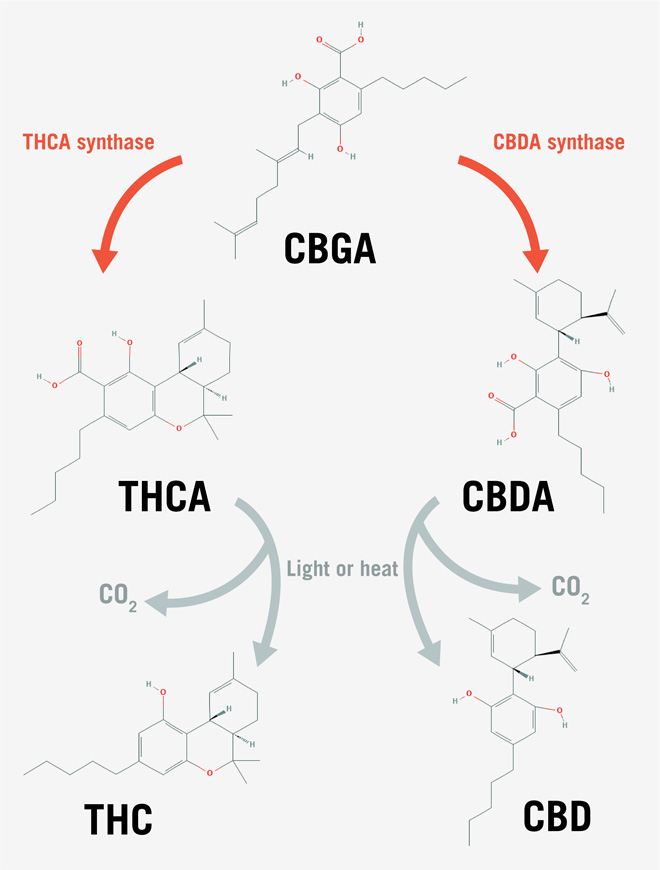
The release of carbon dioxide is what allows the molecule to change shape.
That change in shape dramatically alters how the cannabinoid behaves.
A single molecular adjustment creates a completely different interaction with the body’s endocannabinoid system.
It’s one of the most important transformations in cannabis science.
Why Doesn’t THCA Produce the Same Effects as THC?
This is one of the most common questions among new consumers.
If THCA and THC are so closely related, why don’t they act exactly the same?
The answer comes down to molecular structure.
THCA contains an additional carboxyl group that THC does not.
That extra component changes the size and shape of the molecule.
As a result, THCA interacts differently with cannabinoid receptors throughout the body.
The human body contains an extensive network called the endocannabinoid system.
This system includes:
- CB1 receptors
- CB2 receptors
THC can bind effectively with CB1 receptors.
These receptors play important roles in:
- Mood
- Memory
- Perception
- Coordination
- Sensory processing
THCA’s larger structure prevents it from interacting with CB1 receptors in the same way.
Even though THCA and THC are chemically related, they behave very differently because of this structural difference.
Once heat removes the carboxyl group, the THC molecule becomes much more compatible with these receptors.
That is the primary reason decarboxylation changes everything.
How Does THCA Turn Into THC?
Many consumers assume conversion only occurs during smoking.
In reality, several different factors can convert THCA into THC.
Let’s explore each one.
1. Smoking THCA Flower
Smoking is perhaps the most familiar method of conversion.
When a lighter ignites cannabis flower, temperatures can exceed 900°F at the point of combustion.
This temperature is far above the threshold needed for decarboxylation.
As the flower burns:
- THCA rapidly converts into THC
- THC enters the smoke
- The smoke is inhaled
- Cannabinoids enter the bloodstream
The process happens almost instantly.
Within seconds, cannabinoids move from plant material into the body.
This rapid conversion explains why smoking remains one of the fastest methods of cannabinoid delivery.
2. Vaping THCA Products
Vaping also converts THCA into THC.
However, vaping does so more gently than smoking.
Most vaporizers operate between:
- 315°F
- 450°F
These temperatures are sufficient for efficient decarboxylation without causing combustion.
Many consumers prefer vaping because it offers:
- Better temperature control
- Enhanced flavor preservation
- Reduced combustion byproducts
- Greater terpene retention
Regardless of the device used, the core principle remains unchanged.
Heat activates THCA and transforms it into THC.
3. Dabbing THCA Concentrates
THCA diamonds and concentrates are particularly interesting because they often contain extremely high concentrations of THCA.
Some products exceed 95% THCA.
When dabbed:
- Extreme heat is applied
- THCA converts almost instantly
- THC-rich vapor is produced
This conversion process is highly efficient due to the purity of the concentrate.
4. Cooking and Baking
Edibles rely heavily on decarboxylation.
Raw cannabis flower typically contains mostly THCA.
If cannabis is added directly to recipes without decarboxylation, much of the THCA remains unconverted.
That is why many edible recipes include a decarb step before infusion.
During this process:
- Flower is heated gently
- THCA converts into THC
- THC infuses into oils or butter
The resulting ingredients can then be used in recipes.
Without proper decarboxylation, edible potency may be significantly reduced.
What Temperature Converts THCA Into THC?
Temperature plays a major role in successful conversion.
Too little heat leads to incomplete activation.
Too much heat may destroy valuable cannabinoids and terpenes.
Most experts recommend temperatures between:
220°F and 245°F
Within this range, THCA converts efficiently while preserving many desirable compounds.
Some enthusiasts prefer lower temperatures for longer periods because it allows more controlled decarboxylation.
Temperature management is especially important for:
- Homemade edibles
- Cannabis infusions
- Concentrate production
Finding the proper balance helps maximize cannabinoid preservation.
Does THCA Convert Into THC Naturally?
Yes.
Heat is not the only factor capable of triggering conversion.
THCA slowly converts into THC over time through natural aging.
Several environmental factors contribute to this process:
Oxygen Exposure
Oxygen gradually alters cannabinoids.
Over long periods, exposure can encourage conversion and degradation.
Light Exposure
Ultraviolet light can accelerate chemical changes within cannabis.
This is one reason proper storage is so important.
Time
Even under ideal conditions, cannabinoids continue to evolve.
Months or years of storage may lead to measurable changes in cannabinoid content.
However, natural conversion occurs much more slowly than heat-induced decarboxylation.
Smoking can convert THCA within seconds.
Natural aging may require months or years.
Does All THCA Become THC?
One of the biggest misconceptions in cannabis science is the belief that THCA converts to THC at a 1:1 ratio.
This is not true.
The conversion process involves molecular weight loss.
During decarboxylation, THCA releases carbon dioxide.
As a result, some mass is lost.
Scientists generally use a conversion factor of approximately 0.877.
This means:
1 milligram of THCA does not become 1 milligram of THC.
Instead, the maximum theoretical THC yield is approximately 87.7%.
Understanding this relationship is crucial when interpreting lab reports.
Understanding Total THC Calculations
Because THCA converts into THC, cannabis testing laboratories often calculate Total THC.
The standard formula is:
Total THC = (THCA × 0.877) + THC
This formula estimates the amount of THC available after complete decarboxylation.
For example:
THCA: 30%
THC: 1%
Calculation:
30 × 0.877 = 26.31
26.31 + 1 = 27.31%
Total THC = 27.31%
This provides a more realistic picture of potency than THC percentages alone.
Why THCA Flower Has Become So Popular in 2026
The cannabis market has evolved dramatically.
Consumers today understand cannabinoids better than ever before.
THCA flower has become especially popular for several reasons.
Premium Genetics
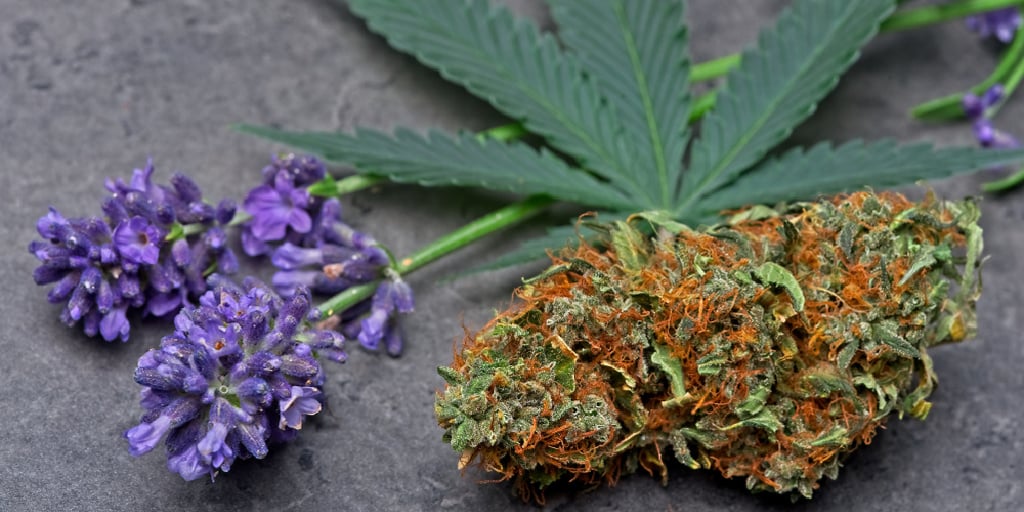
Modern cultivators produce THCA flower that rivals traditional cannabis in appearance and aroma.
Dense buds, vibrant colors, and rich terpene profiles attract experienced consumers.
Strong Cannabinoid Content
Many THCA flowers contain:
- 20%+ THCA
- 25%+ THCA
- Even 30%+ THCA
This creates significant conversion potential when heated.
Consumer Education
Today’s buyers increasingly examine:
- Cannabinoid percentages
- Terpene profiles
- Lab reports
- Cultivation methods
Consumers are becoming more informed than ever.
As THCA products continue to gain popularity, many consumers are surprised to learn that THCA flower occupies a unique position within current hemp regulations. If you’re wondering how THCA products remain available in 2026 despite their THC conversion potential, check out our detailed guide on How THCA Remains Legal in 2026: The Complete Guide to THCA Laws, Hemp Regulations, and What Consumers Need to Know for a deeper look at the legal landscape surrounding THCA.
Factors That Affect THCA Conversion
Not all decarboxylation is equal.
Several variables influence conversion efficiency.
Temperature
Higher temperatures increase conversion speed.
However, excessive heat may destroy cannabinoids.
Time
Longer exposure often improves conversion.
Balance remains important.
Moisture Content
Moisture levels influence heat transfer and chemical reactions.
Flower Density
Dense flowers may require different decarboxylation conditions than loose material.
Storage Conditions
Improper storage can alter cannabinoid profiles before conversion even occurs.
Understanding these variables helps maximize product quality.
Common Myths About THCA and THC
Myth 1: THCA Is Fake THC
False.
THCA is a naturally occurring cannabinoid found in cannabis plants.
It serves as the direct precursor to THC.
Myth 2: THCA Never Becomes THC
False.
THCA converts into THC through heat, aging, and environmental exposure.
Myth 3: More Heat Always Means Better Results
False.
Excessive heat can damage cannabinoids and terpenes.
Proper temperature control matters.
Myth 4: THC Percentage Is All That Matters
False.
THCA content often provides a more accurate indication of potential potency.
Myth 5: Fresh Cannabis Contains Mostly THC
False.
Fresh cannabis primarily contains THCA.
THC develops through conversion processes.
How to Store THCA Flower Properly
Proper storage helps preserve cannabinoid integrity.
Follow these best practices:
Use Airtight Containers
Reduce oxygen exposure.
Avoid Direct Sunlight
Store products in dark locations.
Maintain Stable Temperatures
Avoid extreme heat.
Monitor Humidity
Excessive moisture may encourage mold growth.
Limit Frequent Opening
Repeated exposure to air can accelerate degradation.
Proper storage preserves both cannabinoids and terpenes.
Not all THCA flower is created equal. Factors such as genetics, cultivation practices, curing methods, and cannabinoid content can significantly impact quality. Readers interested in exploring highly rated options can check out this list of the best THCA flower products available in 2026.
The Future of THCA Research
Research into THCA continues expanding rapidly.
Scientists are investigating:
- Cannabinoid biosynthesis
- Conversion efficiency
- Storage stability
- Terpene interactions
- Extraction technologies
As the hemp industry grows, understanding cannabinoid chemistry becomes increasingly important.
THCA will likely remain one of the most discussed cannabinoids for years to come.
THCA isn’t only a topic of interest among cannabis enthusiasts. Discussions around cannabinoid use for animals have grown significantly in recent years. Before considering any hemp-derived product for a pet, read “THCa for Pets: Is It Safe or Just a Trend?” for a closer look at the potential benefits, risks, and expert considerations surrounding THCA and pets.
Final Verdict: Does THCA Turn Into THC?
Yes, THCA absolutely turns into THC.
The transformation occurs through decarboxylation, a natural chemical process triggered primarily by heat.
Whether you’re smoking a THCA flower, vaping a cartridge, using a concentrate, or preparing edibles, heat removes a carboxyl group from the THCA molecule and converts it into THC.
This conversion explains why THCA-rich products can behave similarly to traditional cannabis once heated.
Understanding the relationship between THCA and THC helps consumers:
- Read lab reports accurately
- Understand potency calculations
- Store products properly
- Make informed purchasing decisions
As cannabis science continues evolving in 2026, one fact remains clear:
THCA is the starting point, heat is the catalyst, and THC is the result.
The next time you see a THCA percentage on a product label, you’ll know exactly what it means—and why that number matters.
About the Author