A NexGen Extracts Consumer Reality Guide
Cannabinoids are no longer discussed only in dispensaries or underground circles. Today, Delta-8, Delta-9, and THCA flower are part of mainstream conversations. Social media often paints these compounds in extremes—either unbelievably euphoric or completely harmless. Real user experience, however, is far more nuanced.
Understanding how Delta-8 actually feels compared to Delta-9, and where THCA flower fits into this picture, helps consumers make informed decisions instead of chasing hype or falling into unnecessary risk.
This article breaks down the real-world experience of Delta-8 versus Delta-9, explains how THCA flower overlaps with both, compares them to other cannabinoids in the wider market, and clearly outlines who should avoid THCA flower altogether.
Starting with the Basics: Delta-8, Delta-9, and THCA Explained Simply
Before discussing how these cannabinoids feel, it helps to understand what they are.
Delta-9 THC
This is the primary psychoactive compound in traditional cannabis. It is responsible for the classic “high” most people associate with marijuana.
Delta-8 THC
Delta-8 is chemically similar to Delta-9 but tends to produce milder psychoactive effects for many users. It occurs naturally in very small amounts and is typically derived from hemp-based CBD.
THCA (Tetrahydrocannabinolic Acid)
THCA is the raw, non-intoxicating precursor to THC found in cannabis flower. When heated through smoking or vaping, THCA converts into Delta-9 THC.
This conversion is critical. In raw form, THCA does not cause a high. Once heated, the experience can resemble traditional Delta-9 cannabis.
What Delta-9 Actually Feels Like (Beyond the Hype)
Delta-9 THC is often described as intense, euphoric, or mind-altering, but real experiences vary widely.
Common Delta-9 effects reported by users
- noticeable mental shift
- altered perception of time
- enhanced sensory awareness
- emotional amplification
- body relaxation or heaviness
- appetite stimulation
For many, Delta-9 produces a strong cerebral experience. Thoughts may become more introspective or abstract. Music and visuals often feel richer. However, intensity is a double-edged sword.
Potential downsides users frequently report
- anxiety or paranoia
- racing thoughts
- impaired focus
- short-term memory disruption
- social discomfort in higher doses
Delta-9 is powerful, and for some users, especially those sensitive to THC, the experience can become overwhelming rather than enjoyable.
What Delta-8 Actually Feels Like in Comparison
Delta-8 is often marketed as “weed-lite” or “THC without anxiety.” While not universally true, many users do experience Delta-8 as gentler.
Common Delta-8 user experiences
- calm mental state
- smoother body relaxation
- less racing thoughts
- milder euphoria
- improved mood without intensity
Many users describe Delta-8 as indica-leaning, even though cannabinoids themselves are not strains. The experience often feels more grounded and physical rather than head-heavy.
What Delta-8 usually does not feel like
- it rarely feels overwhelming
- it usually does not cause intense paranoia
- it tends to allow better mental clarity
That said, Delta-8 is still psychoactive. High doses or frequent use can still cause discomfort, especially in sensitive individuals.
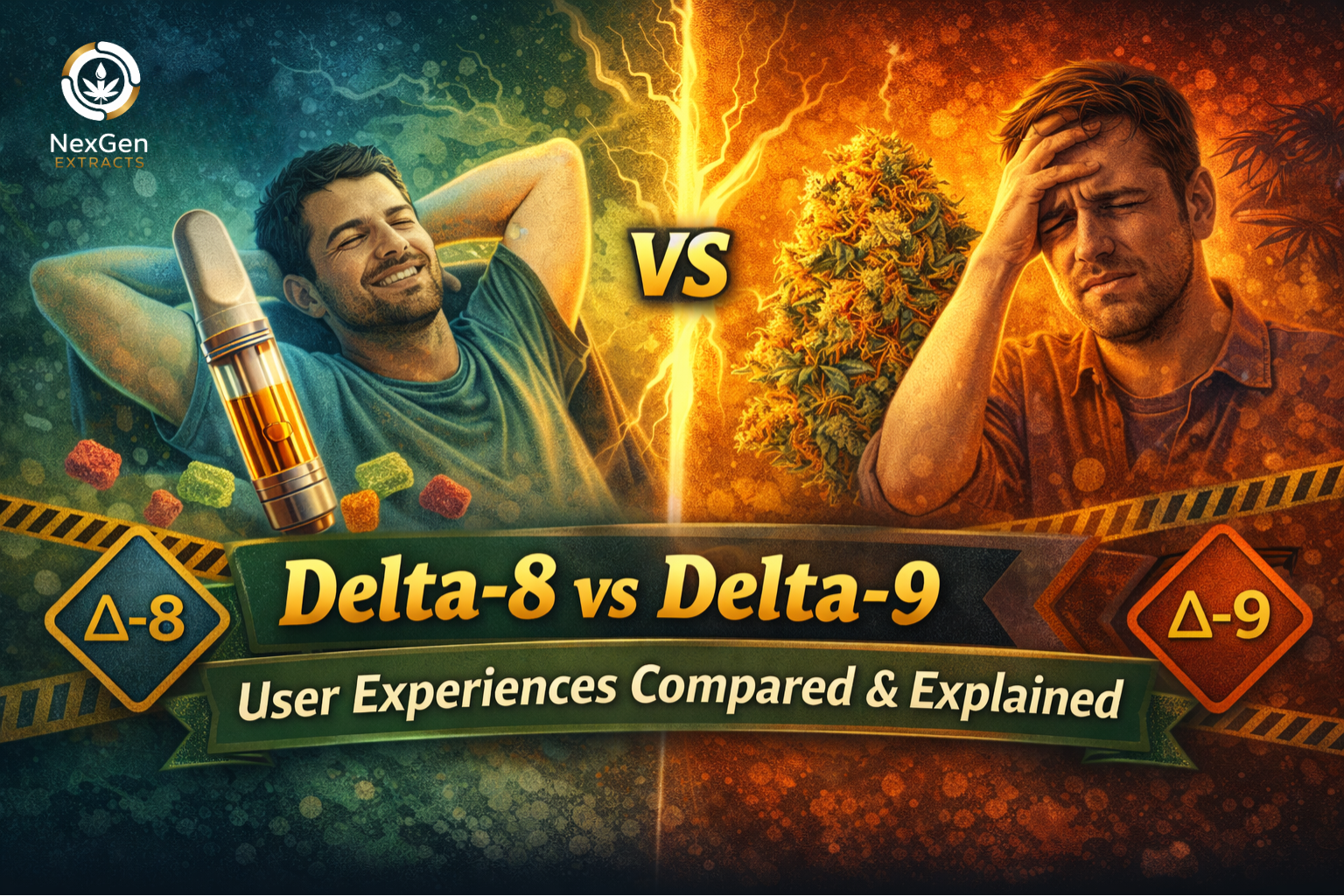
Delta-8 vs Delta-9: Side-by-Side User Experience Comparison
Delta-9 THC
- stronger mental effects
- faster onset when smoked or vaped
- more intense euphoria
- higher risk of anxiety
- better for experienced users
Delta-8 THC
- smoother onset
- more body-focused relaxation
- less mental overstimulation
- preferred by newer or cautious users
- better suited for evening relaxation
In real-world use, Delta-8 often appeals to people who found Delta-9 “too much,” while Delta-9 remains preferred by users seeking strong psychoactive effects.
Where THCA Flower Fits into the Experience Spectrum
THCA flower creates confusion because its experience depends entirely on how it is used.
Raw THCA flower (unheated)
- non-intoxicating
- minimal psychoactive effect
- subtle body awareness at most
Heated THCA flower (smoked or vaped)
- THCA converts to Delta-9 THC
- effects can feel nearly identical to traditional cannabis
- potency depends on THCA percentage and heating method
In practice, many users experience heated THCA flower closer to Delta-9 than Delta-8, especially when the flower is high-THCA and terpene-rich.
THCA Flower vs Delta-8 vs Delta-9: Experience Summary
- Delta-9 → strongest mental and sensory effects
- Delta-8 → smoother, calmer, more body-oriented
- THCA flower (heated) → similar to Delta-9
- THCA flower (raw) → no intoxication
This makes THCA flower appealing to experienced users, but it also introduces significant risks for certain groups.
Who Should Avoid THCA Flower (High-Risk Groups)
Because heated THCA flower converts into Delta-9 THC, many of the same risks apply.
People who should avoid THCA flower entirely
- individuals with a history of psychosis or schizophrenia
- those with severe anxiety or panic disorders
- pregnant or breastfeeding individuals
- people with serious heart conditions
- adolescents and young adults with developing brains
People who should use extreme caution and consult a professional
- those taking prescription medications
- individuals sensitive to THC
- people with mood disorders
- first-time cannabinoid users
THCA flower is often misunderstood as “non-psychoactive,” which can lead to accidental overconsumption once heat is applied.
Delta-8 and THCA vs Other Cannabinoids in the Wider Market
Compared to CBD
CBD is non-intoxicating and often preferred for daytime use. Delta-8 and THCA (heated) produce noticeable psychoactive effects.
Compared to HHC and newer cannabinoids
HHC and other novel cannabinoids sit between Delta-8 and Delta-9 in strength, but have less research. Delta-8 remains more predictable, while THCA flower mimics traditional cannabis most closely.
Market reality
- Delta-8 dominates the legal relaxation market
- Delta-9 dominates regulated cannabis markets
- THCA flower bridges both worlds through legality and experience
Why User Expectations Matter More Than Labels
Many negative experiences come not from the cannabinoid itself, but from mismatched expectations.
- Delta-8 is not “CBD-like”
- THCA flower is not “non-psychoactive” once heated
- Delta-9 is not universally euphoric
Understanding how these cannabinoids actually feel allows users to choose products aligned with their tolerance, lifestyle, and mental health.
Practical Takeaways for Consumers
- Delta-8 feels calmer and more manageable for most users
- Delta-9 feels stronger and more mentally immersive
- THCA flower can feel just as strong as Delta-9 when heated
- legality does not equal safety for everyone
- high-risk individuals should avoid THCA flower
Final Thoughts
Delta-8, Delta-9, and THCA flower are not interchangeable, even though they share chemical relationships. Their user experiences differ meaningfully, and those differences matter—especially when safety and mental health are involved.
Delta-8 often appeals to users seeking relaxation without overwhelm. Delta-9 remains the most intense and immersive option. THCA flower, while legally distinct, can produce traditional THC effects once heated and should be treated with the same respect.
At NexGen Extracts, education is as important as access. Understanding what these cannabinoids actually feel like, rather than what marketing suggests, empowers safer and more intentional choices in an increasingly complex cannabinoid market.
About the Author