A NexGen Extracts Consumer Safety & Education Guide
THCA flower has quickly become one of the most talked-about products in the modern hemp and cannabis space. To many consumers, it feels like traditional cannabis flower with fewer legal barriers. To others, it appears to be a loophole or a safer alternative to Delta-9 THC.
But “legal” does not automatically mean “risk-free.”
THCA flower sits in a unique position where chemistry, legality, and consumer perception do not always align. While many adults use THCA flower without major issues, there are specific groups for whom THCA flower may carry increased risks—especially once heat is applied and THCA converts into Delta-9 THC.
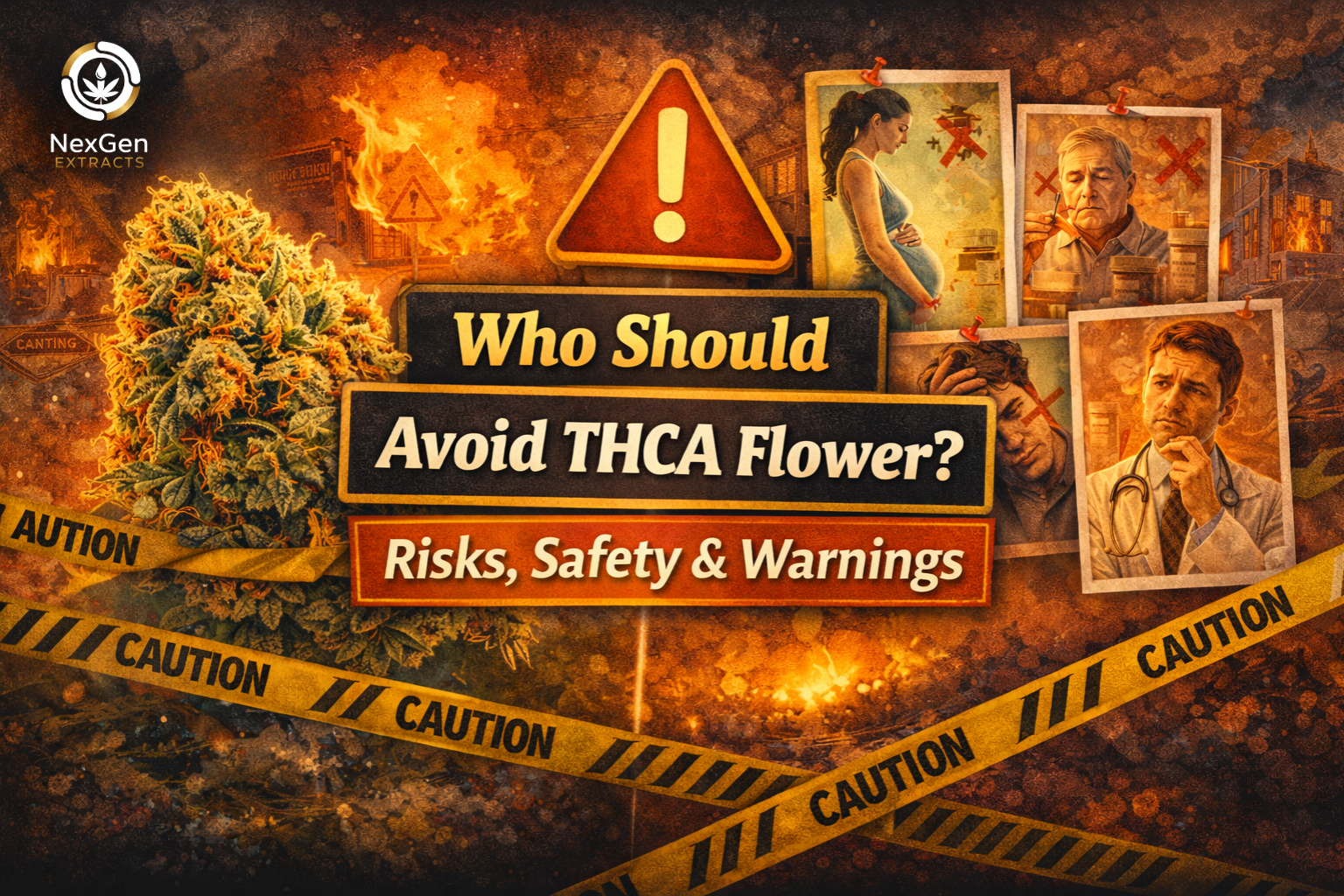
This guide explains what THCA flower is, how it works, how it compares to other cannabinoids, and—most importantly—who should avoid THCA flower or approach it with extreme caution.
What Is THCA Flower, in Simple Terms?
THCA (tetrahydrocannabinolic acid) is the naturally occurring precursor to THC found in raw cannabis plants. In its unheated form, THCA is non-intoxicating.
THCA flower is cannabis flower that:
- contains high levels of THCA
- contains very low Delta-9 THC by dry weight
- is often sold under hemp regulations
Once THCA flower is smoked, vaporized, or heated, THCA converts into Delta-9 THC through a process called decarboxylation. At that point, the experience can closely resemble traditional marijuana flower.
This conversion is central to both THCA flower’s appeal and its risk profile.
Why Safety Discussions Around THCA Flower Matter
Many consumers assume THCA flower is “gentler” or “safer” because:
- it is legally sold in hemp markets
- it is described as non-psychoactive in raw form
- it is often marketed with minimal warnings
However, once heated, THCA flower is functionally a THC product. That means the same groups who may be at risk with Delta-9 THC may also face risks with THCA flower.
Understanding who should avoid THCA flower helps prevent unpleasant, unsafe, or harmful outcomes.
High-Risk Group #1: Individuals with Anxiety Disorders or Panic Disorders
THC can intensify internal sensations, racing thoughts, and emotional responses. For individuals with:
- generalized anxiety disorder
- panic disorder
- PTSD with hyperarousal symptoms
THCA flower—once heated—may:
- trigger panic attacks
- increase heart-rate awareness
- amplify intrusive thoughts
- worsen feelings of loss of control
Even low doses can feel overwhelming in sensitive individuals.
Safety guidance:
People with anxiety disorders should avoid THCA flower or consult a healthcare professional before use. If cannabinoid use is desired, non-intoxicating options like CBD may be more appropriate.
High-Risk Group #2: Individuals with a History of Psychosis or Severe Mental Illness
THC has been linked in research to increased risk of psychotic episodes in susceptible individuals, particularly those with:
- schizophrenia
- schizoaffective disorder
- bipolar disorder with manic or psychotic features
- family history of psychosis
THCA flower, once activated, may:
- increase hallucinations or delusions
- destabilize mood
- worsen cognitive disorganization
This risk exists regardless of legality or product quality.
Safety guidance:
Individuals with current or past psychotic disorders should avoid THCA flower entirely.
High-Risk Group #3: People Taking Certain Medications
THCA itself is not fully studied in medication interactions, but once converted to THC, known interaction risks apply.
Potential concerns exist for people taking:
- antidepressants and anti-anxiety medications
- antipsychotics
- blood thinners
- heart or blood-pressure medications
- anti-seizure drugs
- sedatives or sleep medications
THC can interfere with liver enzymes responsible for drug metabolism, potentially leading to:
- stronger side effects
- reduced medication effectiveness
- unpredictable blood levels
Safety guidance:
Anyone taking prescription medications should consult a healthcare professional before using THCA flower.
High-Risk Group #4: Individuals with Cardiovascular Conditions
THC can affect heart rate and blood pressure. People with:
- heart disease
- arrhythmias
- history of stroke
- uncontrolled hypertension
may experience:
- increased heart rate
- palpitations
- blood pressure fluctuations
- increased cardiovascular strain
THCA flower, once heated, presents similar concerns as traditional THC products.
Safety guidance:
Individuals with cardiovascular conditions should avoid THCA flower unless cleared by a medical professional.
High-Risk Group #5: Pregnant or Breastfeeding Individuals
There is no safe threshold established for THC exposure during pregnancy or breastfeeding.
Potential concerns include:
- fetal development effects
- low birth weight
- neurodevelopmental impacts
- transfer through breast milk
Even though THCA itself is non-intoxicating, typical use of THCA flower involves heating and THC exposure.
Safety guidance:
Pregnant and breastfeeding individuals should not use THCA flower.
High-Risk Group #6: Adolescents and Young Adults
The human brain continues developing into the mid-20s. THC exposure during this period has been associated with:
- memory and attention changes
- learning difficulties
- altered emotional regulation
THCA flower is often visually and aromatically indistinguishable from marijuana, increasing misuse risk.
Safety guidance:
THCA flower is not appropriate for minors or young adults whose brains are still developing.
High-Risk Group #7: Individuals Sensitive to THC or New to Cannabinoids
Some people are naturally more sensitive to THC, regardless of experience level.
Possible reactions include:
- dizziness
- nausea
- confusion
- anxiety
- disorientation
Because THCA flower potency can be high once heated, inexperienced users may consume more than intended.
Safety guidance:
First-time cannabinoid users should avoid THCA flower or approach with extreme caution and professional guidance.
THCA Flower vs Other Cannabinoids: A Safety Perspective
Understanding how THCA compares helps clarify risk.
THCA Flower vs Delta-9 THC
Once heated, effects and risks are similar. Legal status differs, but physiological impact can overlap significantly.
THCA Flower vs Delta-8
Delta-8 is often described as milder, though it still carries interaction and impairment risks. THCA flower typically produces stronger effects once activated.
THCA Flower vs CBD
CBD is non-intoxicating and does not produce a “high.” For high-risk groups, CBD may be a safer option under guidance.
THCA Flower vs HHC and Novel Cannabinoids
Newer cannabinoids often have even less safety data. THCA flower is better understood than many synthetics, but still not risk-free.
Market Reality: Why Education Lags Behind Access
THCA flower exists in a regulatory gray area. It is:
- widely available
- often marketed without strong warnings
- sometimes misunderstood as “non-psychoactive”
This gap between availability and education places responsibility on consumers to seek accurate information.
Brands that prioritize transparency help reduce harm by encouraging informed decisions rather than minimizing risks.
Practical Safety Checklist: Who Should Avoid THCA Flower
You should avoid THCA flower if you:
- have a history of psychosis or severe mental illness
- are pregnant or breastfeeding
- have serious heart conditions
- are under 21 or neurologically vulnerable
You should use extreme caution and consult a professional if you:
- have anxiety or panic disorders
- take prescription medications
- are new to cannabinoids
- have a family history of mental illness
Why Consultation Matters
Healthcare consultation is not about judgment. It is about:
- identifying interaction risks
- understanding personal vulnerability
- avoiding preventable harm
Many providers are increasingly open to discussing cannabinoid use when approached honestly.
Silence creates risk. Transparency reduces it.
Final Thoughts
THCA flower is not inherently dangerous, but it is not appropriate for everyone. Its ability to convert into Delta-9 THC means it carries many of the same risks as traditional cannabis—despite being sold through different legal channels.
Understanding who should avoid THCA flower is a critical step toward responsible consumption and a more mature cannabinoid market. Education, not hype, protects consumers.
At NexGen Extracts, informed use begins with honest conversations. Knowing when not to use a product is just as important as knowing how it works.
About the Author