
Introduction
Sleep problems are more common than ever. Whether it’s stress, screen time, anxiety, chronic pain, or a racing mind at night, millions of people struggle to get quality rest. That’s why CBD has become one of the most talked-about natural sleep aids in recent years. But one question keeps coming up: how do you actually take CBD for sleep the right way?
The answer depends on several factors, including the type of CBD product you use, your body weight, your sleep issues, and most importantly, the timing and dosage. Taking too little may not help. Taking it too late may delay effects. And choosing the wrong product can leave you frustrated instead of rested.
In this guide, you’ll learn exactly how to take CBD for sleep, how much to start with, when to take it, which types work best, and what mistakes to avoid. If you’re new to CBD or trying to improve your nighttime routine, this article will help you understand everything in a simple and realistic way.
What Is CBD and How Does It Affect Sleep?
CBD, short for cannabidiol, is a natural compound found in hemp plants. Unlike THC, CBD does not produce a strong intoxicating “high.” Instead, many people use it to promote relaxation, calmness, stress relief, and better sleep quality.
CBD interacts with the body’s endocannabinoid system, which helps regulate mood, stress, pain, sleep cycles, and overall balance. Researchers believe CBD may indirectly support sleep by helping reduce the issues that keep people awake, such as:
- Anxiety and racing thoughts
- Stress after long workdays
- Physical discomfort or soreness
- Restlessness
- Overthinking at night
- Irregular sleep patterns
Instead of knocking you out like traditional sleep medications, CBD may help create a calmer mental and physical state that allows natural sleep to happen more easily.
Many people exploring natural sleep support also compare products like CBD oils, gummies, and even newer hemp options discussed in articles such as “Best CBD Gummies” or trending hemp wellness products online.
If your sleep problems are linked to stress or anxiety, pairing this guide with “CBD for Sleep: Does It Actually Work?” creates a more complete understanding of how CBD may support nighttime recovery.
Why Timing Matters When Taking CBD for Sleep
One of the biggest mistakes beginners make is taking CBD at the wrong time. CBD is not always instant. Different products absorb differently in the body.
Some forms work within minutes, while others can take over an hour.
If you take CBD too early, the effects may wear off before bedtime. If you take it too late, you may stay awake waiting for it to kick in.
That’s why understanding timing is extremely important.
Best Time to Take CBD for Sleep
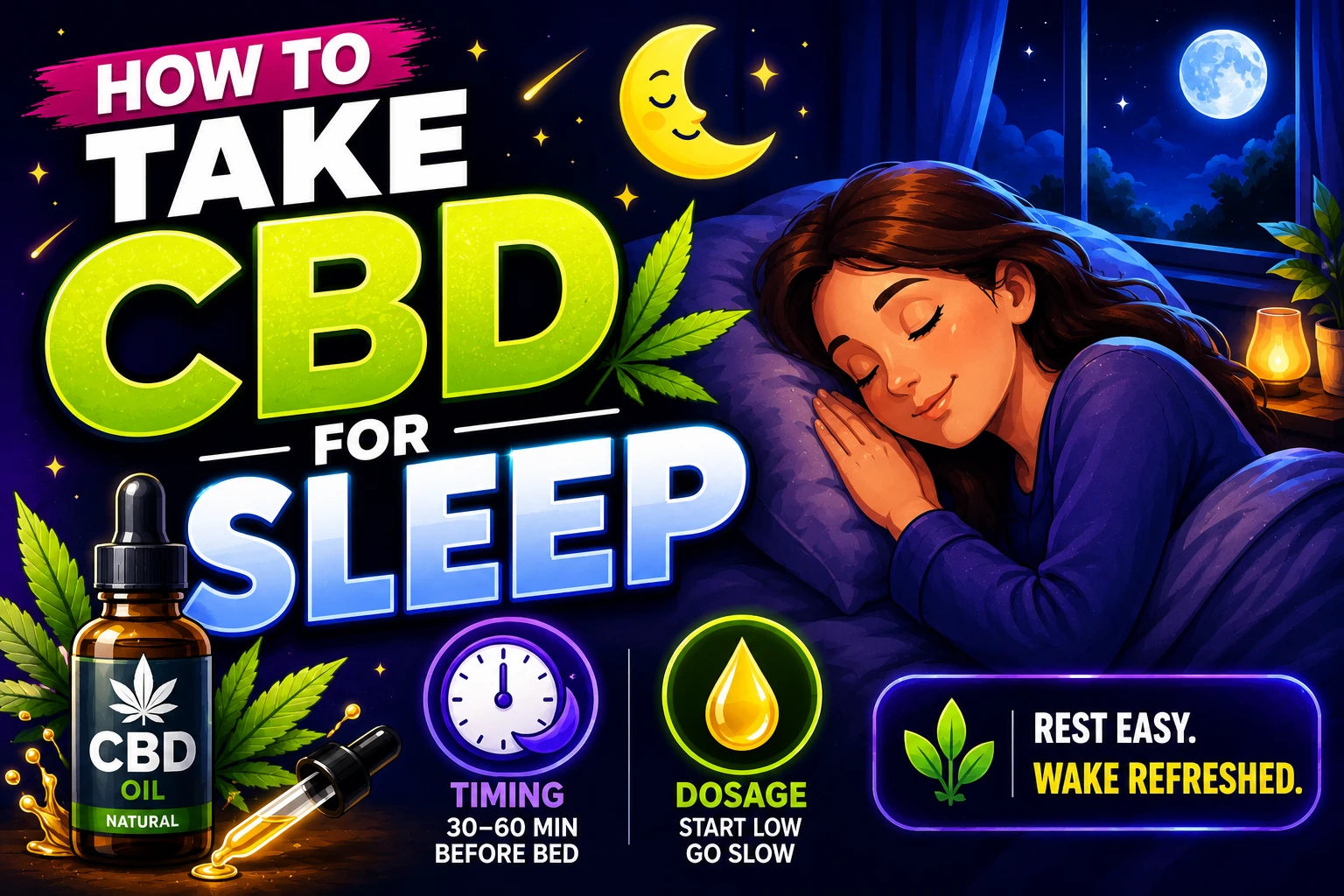
1. CBD Oil Tinctures: 30–60 Minutes Before Bed
CBD oils are among the most popular sleep options because they absorb relatively fast under the tongue.
Most people feel effects within:
- 15 to 45 minutes
- Peak effects around 1–2 hours
For sleep support, the ideal timing is usually:
30 to 60 minutes before bedtime
This gives the CBD enough time to enter your system and help your body relax naturally.
Pro Tip:
Hold the oil under your tongue for 30–60 seconds before swallowing. This improves absorption.
2. CBD Gummies and Edibles: 1–2 Hours Before Bed
CBD gummies take longer because they must pass through digestion first.
Typical onset:
-
45 minutes to 2 hours
Best timing:
Take gummies about 1–2 hours before sleep
Many people prefer gummies because:
- They taste better
- Dosage is easier to measure
- Effects last longer through the night
This is why gummies are often chosen by people who wake up frequently during sleep.
Sleep-focused CBD users frequently choose gummies because of their long-lasting effects, which is discussed further in How Many CBD Gummies Should I Take? A Beginner-Friendly Dosage Guide.
3. CBD Vapes: 5–15 Minutes Before Bed
Vaping CBD works much faster than oils or edibles.
Effects may begin in:
-
2 to 10 minutes
Best timing:
5–15 minutes before sleep
However, vaping may not last as long through the night compared to gummies or oils.
4. CBD Capsules: Around 1 Hour Before Bed
Capsules behave similarly to edibles because digestion affects absorption.
Best timing:
45–90 minutes before bedtime
Capsules are convenient for consistent nightly routines.
Choosing between tinctures and capsules can affect how quickly CBD works before bed, which is why readers often check CBD Oil vs Capsules: Which Is Better for Daily Use? (2026 Guide) before building a sleep routine.
How Much CBD Should You Take for Sleep?
There is no universal dosage because everyone responds differently to CBD.
Your ideal dose depends on:
- Body weight
- Metabolism
- Sleep severity
- Stress levels
- Product strength
- CBD tolerance
The safest strategy is:
Start low and increase slowly.
Beginner CBD Dosage for Sleep
Here’s a simple starting guideline many beginners use:
| Experience Level | Suggested CBD Dose |
|---|---|
| Beginner | 10–15 mg |
| Moderate User | 15–30 mg |
| Experienced User | 30–60 mg+ |
Many people find their “sweet spot” between:
20–40 mg of CBD before bed
But starting low helps you avoid taking more than needed.
How to Find Your Ideal CBD Sleep Dose
Step 1: Start Small
Begin with:
-
10 mg nightly for 3–5 days
Track:
- Time you fall asleep
- Night awakenings
- Sleep quality
- Morning grogginess
Step 2: Increase Slowly
If you don’t notice results:
-
Increase by 5–10 mg every few nights
Avoid jumping to high doses immediately.
Step 3: Stay Consistent
CBD often works better with regular use.
Some users notice benefits:
- The first night
- After several days
- After 2–3 weeks of consistent use
Consistency matters more than huge doses.
Should You Take CBD Every Night?
Many people do.
CBD is commonly used as part of a nightly wellness routine similar to herbal teas, magnesium, or meditation.
People often take CBD nightly for:
- Stress management
- Relaxation
- Chronic sleep issues
- Recovery after workouts
- Anxiety before bedtime
However, if you have medical conditions or take prescription medications, talk with a healthcare professional first.
Best Types of CBD for Sleep
Not all CBD products are the same. Some are more effective for nighttime use than others.
1. Full-Spectrum CBD
Full-spectrum CBD contains:
- CBD
- Minor cannabinoids
- Terpenes
- Small legal traces of THC
Many users report stronger relaxation effects due to the “entourage effect,” where compounds work together.
This is often considered one of the best options for sleep support.
2. Broad-Spectrum CBD
Broad-spectrum CBD contains:
- Multiple cannabinoids
- No THC
Good for people wanting hemp benefits without THC exposure.
3. CBD Isolate
Contains only pure CBD.
Some people prefer isolate for:
- THC-free routines
- Drug-testing concerns
- Simpler ingredient lists
However, many users say full-spectrum products feel more effective for sleep.
CBD Gummies vs CBD Oil for Sleep
Both are popular, but each has advantages.
CBD Gummies
Pros:
- Easy dosing
- Longer-lasting effects
- Tasty and convenient
Cons:
-
Slower onset
Best for:
-
Staying asleep longer
CBD Oil
Pros:
- Faster absorption
- Flexible dosing
- Easier to adjust dosage
Cons:
-
Earthy taste
Best for:
-
Falling asleep faster
Many users actually combine both:
- Gummies for long-lasting support
- Oil for quicker relaxation
Since CBD regulations can vary depending on product type and state interpretation, it’s smart to review the latest CBD legality reality check for Americans before ordering sleep gummies or oils online.
Can CBD Help Anxiety-Related Sleep Problems?

One major reason people use CBD at night is anxiety.
Overthinking is a huge sleep disruptor.
CBD may help by supporting:
- Mental calmness
- Relaxation
- Reduced nighttime stress
- A quieter mind before bed
People dealing with racing thoughts often report that CBD helps them feel mentally “settled” enough to fall asleep naturally.
This is also why many readers interested in sleep-focused hemp products often explore educational content like “CBD for Sleep: Does It Actually Work?” before deciding which products to try.
Does CBD Make You Sleepy?
CBD affects people differently.
Low doses may feel:
- Calming
- Mentally clear
- Relaxing
Higher doses may feel:
- More sedating
- Physically calming
Some people become sleepy quickly, while others simply feel more relaxed.
CBD itself isn’t always a traditional sedative. Instead, it may help remove the obstacles preventing sleep.
What Happens If You Take Too Much CBD?
CBD is generally well tolerated, but taking too much may cause:
- Drowsiness
- Dry mouth
- Digestive discomfort
- Grogginess
- Fatigue
This is why gradual dosing matters.
More CBD does not always mean better sleep.
Common Mistakes People Make With CBD for Sleep
1. Taking Too Much Too Soon
Beginners often assume higher doses work better.
In reality:
- Too much may increase grogginess
- Moderate doses often work best
2. Using Low-Quality Products
Poor-quality CBD may contain:
- Incorrect potency
- Contaminants
- Weak ingredients
Always look for:
- Third-party lab testing
- Transparent hemp sourcing
- Clear ingredient labels
3. Taking It Inconsistently
CBD may work better as part of a regular nightly routine.
Random use can make results inconsistent.
4. Ignoring Sleep Habits
CBD is not magic.
Bad sleep habits can still interfere with results:
- Excess caffeine
- Late-night screens
- Stressful bedtime routines
- Irregular sleep schedules
CBD works best alongside healthy sleep hygiene.
How Long Does CBD Stay in Your System?
CBD effects may last:
-
2–8 hours depending on product type
But traces can remain in the body longer.
Factors include:
- Dosage
- Frequency of use
- Metabolism
- Body fat percentage
For sleep purposes, most people focus more on timing the active effects rather than how long CBD remains detectable.
Can You Take Melatonin and CBD Together?
Some sleep products combine:
- CBD
- Melatonin
- Herbal ingredients like chamomile or L-theanine
Many users enjoy this combination because:
- Melatonin supports sleep cycles
- CBD supports relaxation
However, starting with CBD alone first helps you understand how your body responds.
Is CBD Better Than Traditional Sleep Aids?
Traditional sleep medications may work quickly, but some people dislike:
- Grogginess
- Dependency concerns
- Brain fog
- Next-day drowsiness
CBD is often chosen because users want:
- A more natural nighttime routine
- Relaxation without heavy sedation
- Better recovery and calmness
That said, CBD is not a guaranteed cure for insomnia.
Results vary by person.
How to Build a CBD Nighttime Routine
A good sleep routine can improve CBD results significantly.
Here’s a simple example:
2 Hours Before Bed
- Reduce caffeine
- Dim bright lights
1 Hour Before Bed
-
Take CBD gummies or capsules
30 Minutes Before Bed
- Take CBD oil if desired
- Avoid phone scrolling
Bedtime
- Keep room cool and dark
- Practice relaxation or breathing exercises
Combining CBD with healthier habits usually works better than relying on CBD alone.
Who Should Avoid CBD for Sleep?
You should talk with a doctor before using CBD if you:
- Take prescription medications
- Are pregnant or breastfeeding
- Have liver conditions
- Take sedatives or blood thinners
CBD may interact with certain medications similarly to grapefruit interactions.
This is why many people research topics like “CBD Interactions: Which Medications Interact & What Your Doctor Needs to Know” before starting regular CBD use.
Signs Your CBD Dose Is Working
You may notice:
- Falling asleep faster
- Feeling calmer before bed
- Fewer nighttime awakenings
- Improved sleep quality
- Better morning mood
Results can sometimes be subtle rather than dramatic.
How Long Does It Take for CBD Sleep Benefits to Work?
Some people notice changes immediately.
Others may need:
- Several days
- 1–2 weeks of consistency
Your body’s endocannabinoid system may respond gradually over time.
Patience matters.
Final Thoughts
CBD has become a popular nighttime wellness option for people looking to relax, reduce stress, and improve sleep quality naturally. But getting the best results depends heavily on timing, dosage, consistency, and product quality.
For most beginners:
- Start with 10–15 mg
- Take it 30–60 minutes before bed for oils
- Take gummies 1–2 hours before bedtime
- Increase slowly if needed
Remember that CBD works differently for everyone. Some people feel calmer immediately, while others notice gradual improvements after consistent use.
The key is finding the routine that fits your body and your sleep habits.
When combined with healthy nighttime routines, quality CBD products may help support deeper relaxation and more restful sleep without the heavy grogginess many traditional sleep aids can cause.
About the Author