Introduction
If you’ve ever searched “Is CBD legal in all 50 states?”, you’ve probably seen a quick yes or no. But in 2026, the real answer is far more complicated—and way more important to understand before you buy or travel with CBD.
CBD is everywhere right now—sold in wellness shops, online stores, and even gas stations. But just because it’s easy to find doesn’t mean it’s fully legal everywhere in the same way.
So let’s break it all down in plain English—no legal jargon, no confusion.
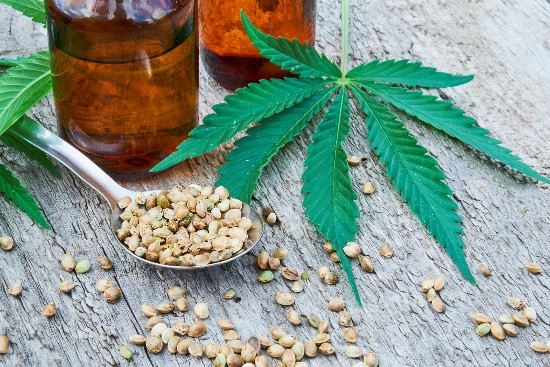
What Is CBD (And Why Its Legal Status Gets Confusing)
CBD (cannabidiol) is a natural compound found in cannabis plants. Unlike THC, it doesn’t make you feel “high,” which is why it’s widely used for things like stress, sleep, and general wellness.
But here’s the catch:
CBD can come from two different sources:
- Hemp
- Marijuana
And legally, those two are treated very differently in the United States.
That’s where most of the confusion begins.
The 2018 Farm Bill: The Law That Changed Everything
CBD became widely accessible after the 2018 Farm Bill was passed.
This law:
- Legalized hemp at the federal level
- Removed it from the Controlled Substances list
- Allowed hemp-derived products to be sold nationwide
However, there’s one critical rule:
Hemp products must contain no more than 0.3% THC
If they go above that limit, they’re legally considered marijuana—which is still federally illegal.
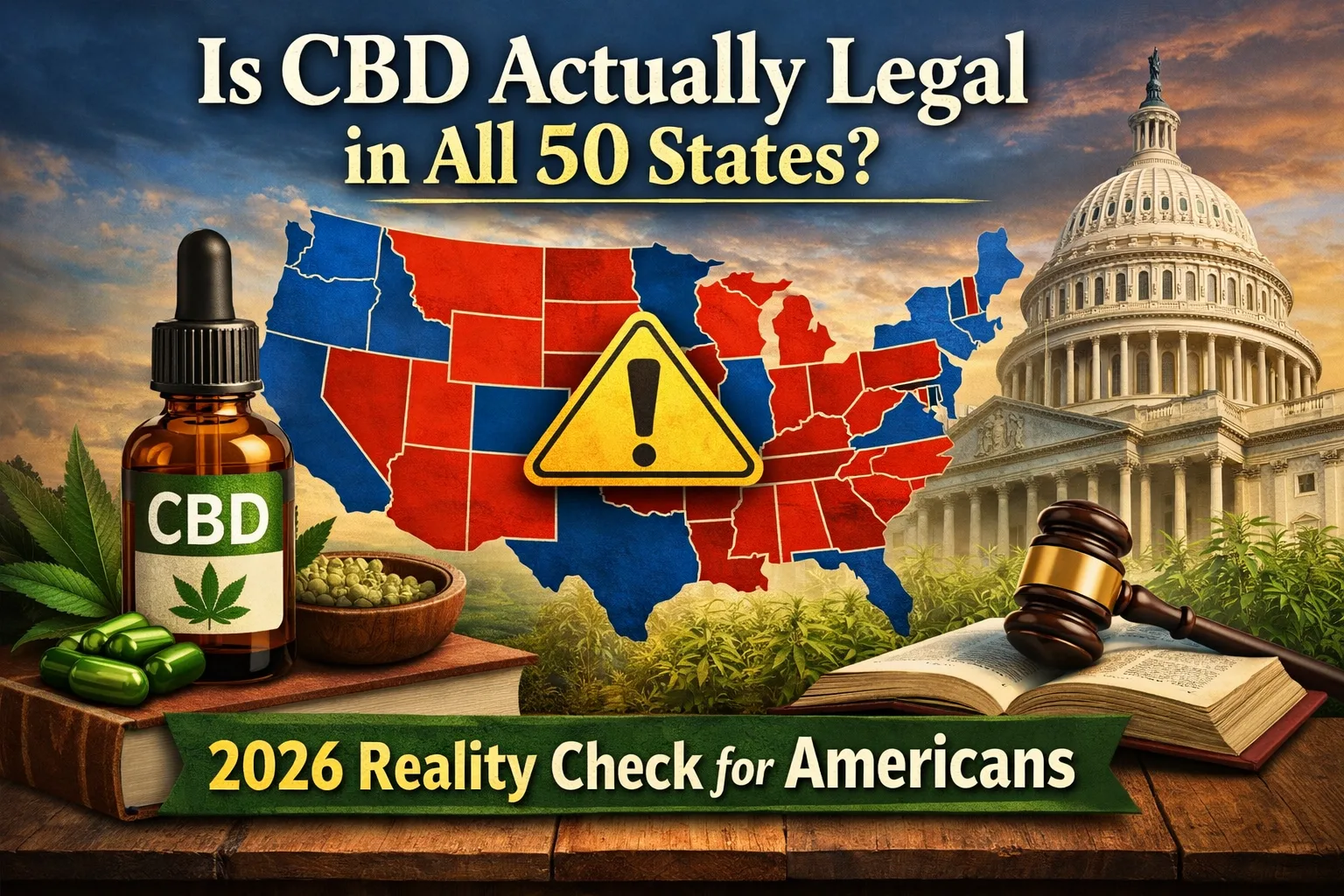
So, Is CBD Legal in All 50 States?
The Short Answer: Yes but with conditions.
The Real Answer:
CBD is technically legal in all 50 states, but not in the same way everywhere.
Each state has its own rules about:
- THC limits
- Product types
- Labeling requirements
- How CBD can be sold or consumed
So while you can access CBD in all states, you can’t assume every product is legal everywhere.
Why CBD Laws Vary From State to State
Even though federal law allows hemp-derived CBD, states have the power to create their own restrictions.
This creates a patchwork of laws across the country.
Example:
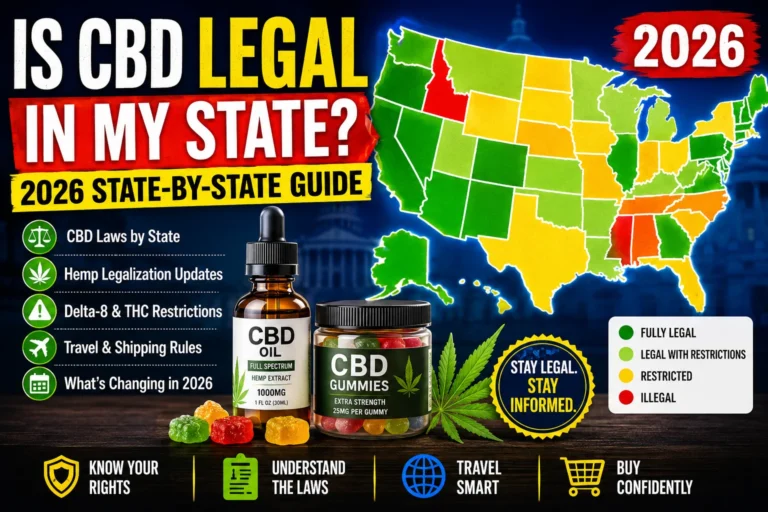
- California & Colorado → Very relaxed CBD laws
- Texas & Florida → Legal, but regulated
- Idaho → Extremely strict (requires 0% THC)
That means a product that’s legal in one state might be illegal in another, even if it’s sold online.
2026 Legal Update: Things Are Getting Stricter
CBD laws are evolving fast, and 2026 is bringing some major changes.
What’s Changing:
- New limits on total THC per product
- Crackdowns on synthetic cannabinoids (like Delta-8)
- Stricter testing and labeling requirements
Translation:
The CBD market is becoming more regulated, and low-quality or “loophole” products are starting to disappear.
This is actually a good thing for consumers—but it also means you need to be more careful about what you buy.
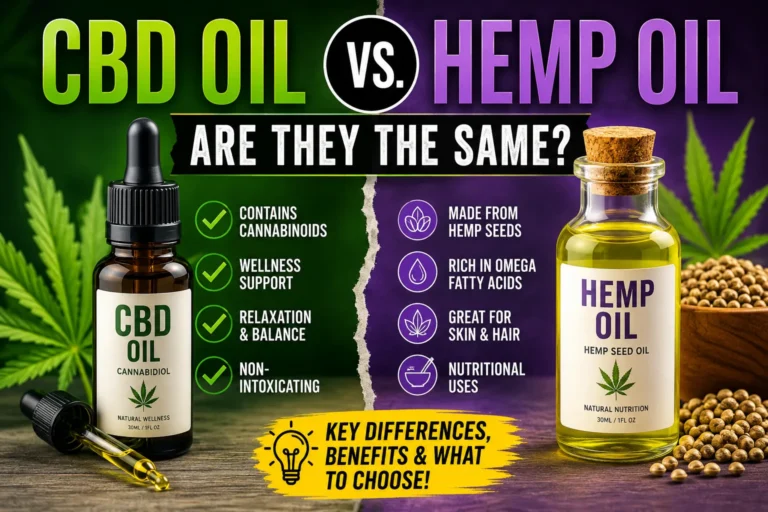
Hemp-Derived vs Marijuana-Derived CBD
This is one of the most important distinctions.
Hemp-Derived CBD
- Federally legal
- Contains ≤ 0.3% THC
- Sold online and in stores
Marijuana-Derived CBD
- Federally illegal
- Only legal in states with medical or recreational cannabis laws
- Typically sold through licensed dispensaries
If you’re buying CBD online, it’s almost always hemp-derived.
Are CBD Gummies, Oils, and Vapes All Legal?
Not necessarily.
Even if CBD itself is legal, the type of product matters.

Common Restrictions:
- CBD edibles (like gummies) → Restricted in some states
- CBD flower (smokable hemp) → Banned in certain areas
- Vapes → Heavily regulated
Also, the FDA still hasn’t fully approved CBD in:
- Food products
- Dietary supplements
So technically, some CBD products exist in a regulatory gray area, even if they’re widely sold.
Still unsure about effectiveness? Here’s a detailed look at which works better for stress—CBD oils or gummies?
The FDA’s Role: Why Regulation Still Feels Messy
The FDA (Food and Drug Administration) has not fully legalized CBD as a food or supplement ingredient.
This creates confusion because:
- Companies can sell CBD—but can’t market it with medical claims
- Labels are often inconsistent
- Quality varies widely between brands
That’s why you’ll see CBD everywhere—but still hear that it’s “not fully approved.”
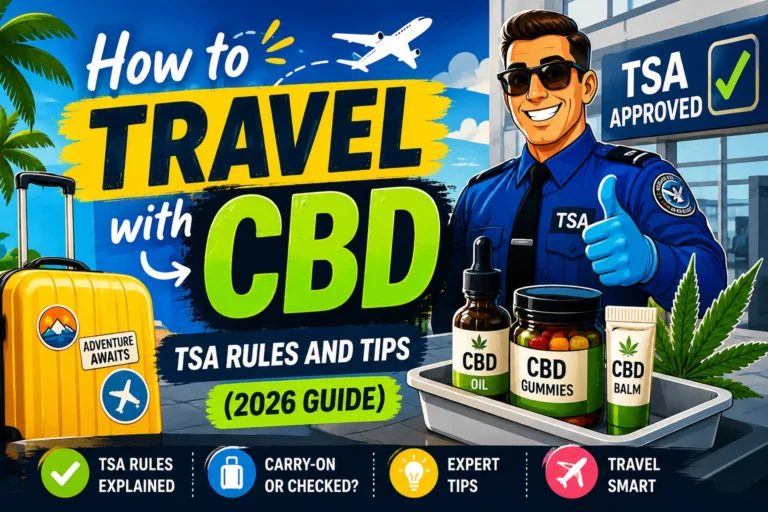
Can You Travel With CBD in the U.S.?
Yes—but you need to be cautious.
Safe Travel Guidelines:
- Stick to hemp-derived CBD
- Ensure THC is within legal limits
- Keep products in original packaging
- Carry lab reports if possible
Important:
Even legal CBD can cause issues if:
- It looks like marijuana
- It’s unlabeled
- THC content is unclear
Airports and law enforcement may not always distinguish between CBD and cannabis products.
CBD vs Delta-8 vs THC: Legal Differences in 2026
This is where things get even more confusing.
CBD
- Non-intoxicating
- Federally legal (if hemp-derived)
Delta-8 THC
- Mildly psychoactive
- Legal in some states, banned in others
- Facing stricter bans in 2026
Delta-9 THC (Marijuana)
- Psychoactive
- Federally illegal
- Legal only in certain states
Many people accidentally buy Delta-8 thinking it’s CBD—which can cause legal issues depending on your state.
If you’re curious how Delta-8 fits into the legal gray area, check out our guide on best Delta-8 gummies of 2026 to see which products are still widely available despite changing laws.
How to Choose Legal CBD Products (2026 Buyer Checklist)
If you want to stay on the safe side, follow this checklist:
Look for Third-Party Lab Reports (COA)
Confirms THC levels and purity
Check THC Content
Must be ≤ 0.3% (or lower depending on state)
Buy From Reputable Brands
Avoid gas station or unverified products
Read Labels Carefully
Make sure it clearly says “hemp-derived CBD”
Avoid Medical Claims
Products claiming to “cure” diseases are not compliant
Why CBD Feels Legal—but Risky at the Same Time
CBD sits in a unique position:
- Legal at the federal level
- Controlled at the state level
- Poorly standardized at the industry level
This creates a situation where:
- You can legally buy CBD
- But still accidentally buy a non-compliant product
That’s why education matters more than ever in 2026.
To stay updated on premium hemp options, you can explore this guide on Best THCA Flowers in 2026 for detailed insights and brand comparisons.
Common Myths About CBD Legality
Myth 1: CBD is 100% legal everywhere
Reality: Laws vary by state
Myth 2: All CBD products are the same
Reality: THC content and type matter
Myth 3: If it’s sold in stores, it’s legal
Reality: Some products exist in loopholes
Myth 4: CBD and THC are basically the same
Reality: They have completely different legal statuses
2026 Reality Check: What Americans Should Know
Here’s the honest truth:
- CBD is federally legal if hemp-derived
- States can impose stricter rules
- Product type matters
- Laws are changing quickly
- Not all CBD products are compliant
Final Verdict
Is CBD actually legal in all 50 states?
Yes but not universally, and not without conditions.
CBD is best understood as:
“Legal—but regulated, restricted, and constantly evolving.”
If you stay informed and buy from reputable sources, you’re unlikely to run into issues. But assuming all CBD is legal everywhere can definitely get you into trouble.
About the Author