As cannabis laws, products, and consumer awareness continue to evolve, two terms are appearing more often—and often causing confusion: THCA flower and Delta-9 THC. On the surface, these products can look and even smell identical. Yet legally, chemically, and commercially, they occupy very different positions.
For consumers, retailers, and brands alike, understanding the real differences between THCA flower and Delta-9 is essential. This comparison goes beyond simple potency claims. It touches on chemistry, user experience, legality, product formats, and the direction the wider cannabinoid market is heading.
This guide breaks down what THCA flower is, what Delta-9 THC is, how they compare in effects and strength, how legality separates them, and why both exist side by side in today’s cannabis and hemp landscape.
Understanding the Basics: THCA and Delta-9 Are Closely Related
At the plant level, cannabis does not naturally produce large amounts of Delta-9 THC. Instead, it produces THCA (tetrahydrocannabinolic acid). THCA is the raw, acidic form of THC found in freshly harvested cannabis flower.
Delta-9 THC is created when THCA is exposed to heat, light, or time through a process known as decarboxylation.
In simple terms:
- THCA is the starting compound
- Delta-9 THC is the activated compound
This relationship is the foundation of the THCA flower vs Delta-9 discussion.
What Is THCA Flower?
THCA flower is cannabis flower that contains high levels of THCA and very low levels of Delta-9 THC by dry weight. Because federal law focuses on Delta-9 THC concentration, flower that meets the legal threshold can be classified as hemp—even if it looks and smells like traditional marijuana.
Key characteristics of THCA flower:
- visually indistinguishable from marijuana flower
- rich terpene profile
- high THCA percentage
- minimal Delta-9 THC before heating
In raw form, THCA flower is not intoxicating. However, when smoked or vaporized, THCA converts into Delta-9 THC, producing effects similar to traditional cannabis.
This duality—non-intoxicating on paper, intoxicating in practice—is what makes THCA flower such a unique product category.
What Is Delta-9 THC?
Delta-9 THC is the primary psychoactive cannabinoid associated with cannabis. It directly interacts with CB1 receptors in the brain, producing the classic “high” experience.
Delta-9 THC is found in:
- marijuana flower
- regulated cannabis edibles
- vapes and concentrates in legal markets
- some hemp-derived edibles formulated within legal limits
Delta-9 is widely studied and well understood compared to many newer cannabinoids. It is also the compound most heavily regulated across state and federal frameworks.
Effects: THCA Flower vs Delta-9 THC
Raw THCA Flower (Unheated)
When consumed without heat, THCA does not produce intoxication. Users may report:
- subtle body awareness
- mild relaxation
- no perceptible “high”
This is why THCA itself is classified as non-psychoactive.
Heated THCA Flower
Once smoked or vaporized, THCA converts into Delta-9 THC. At that point, the effects are functionally similar to Delta-9 cannabis flower, including:
- euphoria
- sensory enhancement
- altered perception
- relaxation or stimulation depending on terpene profile
In practice, most consumers experience THCA flower as traditional cannabis once activated.
Delta-9 THC Products
Delta-9 effects vary by product type:
- flower and vapes act quickly and taper off sooner
- edibles take longer to activate but last longer
- potency depends on dose, tolerance, and formulation
The experience can range from light relaxation to strong psychoactivity depending on strength and context.
Potency: Where Confusion Often Starts
Potency comparisons between THCA flower and Delta-9 are often misunderstood.
THCA Flower Potency
THCA flower may list:
- 20–30% THCA
- <0.3% Delta-9 THC
Once heated, much of that THCA converts to Delta-9 THC. The effective potency can feel similar to high-THC marijuana flower, depending on conversion efficiency and user tolerance.
Delta-9 THC Potency
Delta-9 flower lists potency directly as THC percentage. Edibles list milligrams per serving. These measurements reflect the compound already in its active form.
Key takeaway on potency
- THCA flower is not “weak” simply because Delta-9 content is low on paper
- the user experience after heating can be comparable
- terpene content, dose, and consumption method matter as much as raw percentages
Legality: The Biggest Divider
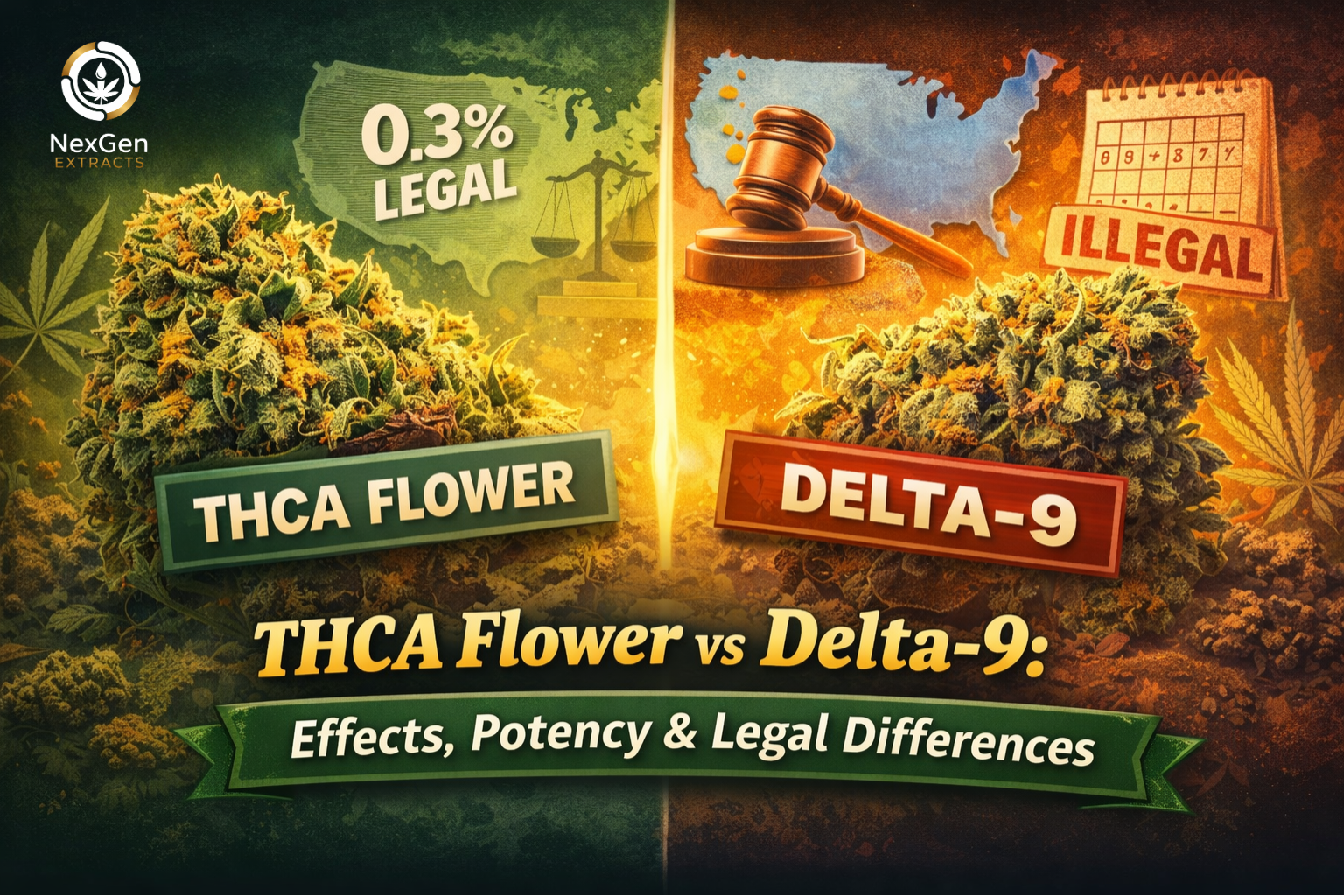
Legality is where THCA flower and Delta-9 diverge most clearly.
THCA Flower Legality
Under federal hemp law, products are legal if they contain no more than 0.3% Delta-9 THC by dry weight. THCA is not directly restricted under this definition.
As a result:
- THCA flower can be sold in many states where marijuana remains illegal
- it is regulated through the hemp market rather than cannabis dispensaries
- legality depends on state-level interpretation and enforcement
This has created a fast-growing, but sometimes uncertain, market.
Delta-9 THC Legality
Delta-9 THC derived from marijuana is:
- legal only in states with medical or recreational cannabis laws
- restricted to licensed dispensaries
- subject to strict testing and compliance rules
Hemp-derived Delta-9 edibles exist but must meet tight formulation limits, which restrict potency per serving.
THCA Flower vs Delta-9: Consumer Experience
Access
THCA flower offers access to a traditional cannabis experience in places without legal marijuana markets. Delta-9 products require legal cannabis access or compliance-based hemp formulations.
Familiarity
THCA flower appeals to consumers who value:
- grinding and rolling flower
- terpene-rich aroma
- traditional rituals
Delta-9 edibles and vapes appeal to those seeking:
- precise dosing
- discretion
- smoke-free options
Predictability
Delta-9 products in regulated markets offer more predictable dosing. THCA flower experiences can vary based on heating method and conversion efficiency.
How THCA and Delta-9 Compare to Other Cannabinoids
Compared to Delta-8
Delta-8 is milder and more body-focused. THCA (when heated) and Delta-9 tend to feel stronger and more cerebral.
Compared to CBD
CBD does not intoxicate. THCA flower and Delta-9 are chosen by users seeking noticeable psychoactive effects.
Compared to HHC and newer cannabinoids
HHC and others sit between Delta-8 and Delta-9 in perceived strength. THCA flower remains closer to traditional cannabis in both form and experience.
Market Positioning: Why Both Products Exist
THCA flower and Delta-9 serve different market needs.
THCA Flower Market Role
- bridges hemp and marijuana markets
- provides access in restrictive states
- appeals to traditional flower consumers
- benefits from legal gray areas
Delta-9 Market Role
- cornerstone of legal cannabis markets
- foundation for edibles, vapes, and concentrates
- backed by the most research and consumer familiarity
Rather than replacing one another, these products coexist because they serve different legal, cultural, and consumer contexts.
Quality and Transparency Matter More Than Category
Whether choosing THCA flower or Delta-9 products, quality considerations are critical:
- third-party lab testing
- clear cannabinoid breakdowns
- terpene transparency
- responsible sourcing
As markets mature, consumers increasingly value education and trust over novelty.
The Future of THCA and Delta-9
As regulations continue to evolve, several outcomes are possible:
- tighter oversight of THCA flower markets
- clearer legal definitions around THC precursors
- continued innovation in hemp-derived Delta-9 formulations
- increased consumer focus on terpene-driven experiences
What is unlikely to change is demand for plant-forward, full-spectrum experiences—a demand both THCA flower and Delta-9 products satisfy in different ways.
Final Thoughts
THCA flower and Delta-9 THC are not opposites. They are two points along the same chemical pathway, separated primarily by heat, law, and market structure. In effects and potency, heated THCA flower can feel very similar to Delta-9 cannabis. In legality and access, they are worlds apart.
Understanding these differences empowers consumers to make informed choices based on preference, location, and comfort level. As the cannabinoid market continues to expand, clarity—not hype—will define the most trusted brands and products.
At their core, both THCA flower and Delta-9 THC reflect the same truth: cannabis is a complex plant, and how it is classified matters as much as how it is consumed.
About the Author